

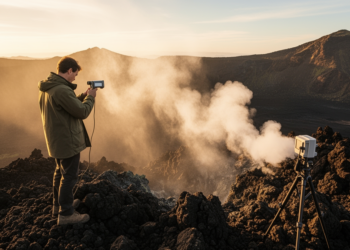
Volcanic Gases Caught in Scattered Sunlight: New Infrared Method Shows Promise and Limits
A new feasibility study shows that near-infrared FTIR spectroscopy of sky-scattered sunlight could enable continuous monitoring of volcanic halogen gases, ...
A new feasibility study shows that near-infrared FTIR spectroscopy of sky-scattered sunlight could enable continuous monitoring of volcanic halogen gases, ...
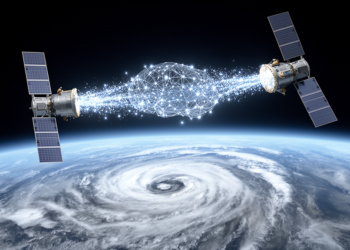
A new physics-constrained transfer learning framework lets AI retrieval algorithms trained on one weather satellite work accurately on another, improving ...
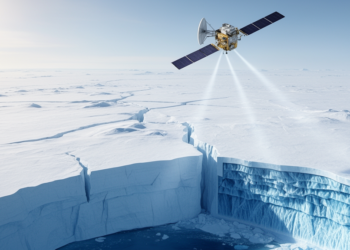
Researchers have combined fifteen years of ASCAT satellite radar data with firn and radiative transfer models to infer effective grain ...
A new open-source radiative transfer solver called EigenFlux combines mesh-based angular discretization, natural-reflectance stabilization, and eigenmode decomposition to remain accurate ...
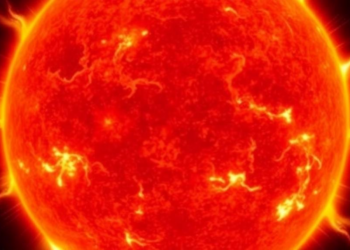
A new collection of studies shows that coronal rain, prominences, and solar eruptions are connected expressions of the same cooling ...
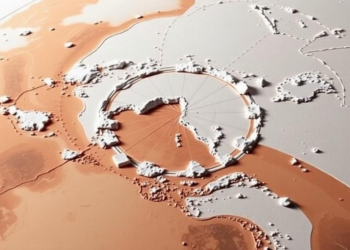
A University of Washington study using Earth-tested snow analysis methods finds that the north polar ice of Mars contains only ...
A new review charts the computational techniques that decode the spectra of supernovae and kilonovae, the cosmic explosions that forge ...
A new comprehensive review in Living Reviews in Computational Astrophysics provides researchers with a detailed guidebook for building, testing, and ...

A major review warns that the computational tools used to decode exoplanet atmospheres are straining under the unprecedented precision of ...
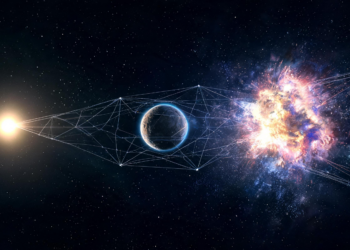
A review explains how three-dimensional non-local thermodynamic equilibrium radiation-transfer models can improve interpretations of stars, exoplanets, and kilonovae.


Embark on a thrilling journey of discovery with Scienmag.com—your ultimate source for cutting-edge breakthroughs. Immerse yourself in a world where curiosity knows no limits and tomorrow’s possibilities become today’s reality!