

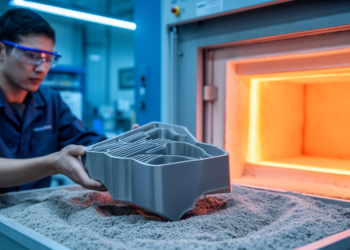
Thinner Layers and Shorter Sintering Unlock Near-Wrought Strength in Binder-Jetted Titanium
A systematic study of binder-jetted Ti-6Al-4V shows that reducing printing layer thickness to 40 micrometers and sintering for two hours ...
A systematic study of binder-jetted Ti-6Al-4V shows that reducing printing layer thickness to 40 micrometers and sintering for two hours ...

Researchers embedded slow-release nutrient pellets into porous ecological concrete, balancing slope-protection strength, controlled phosphorus release and early plant growth in ...

A four-well study of the Lower Miocene Asl Sandstone in the Gulf of Suez shows water saturation, not porosity, is ...
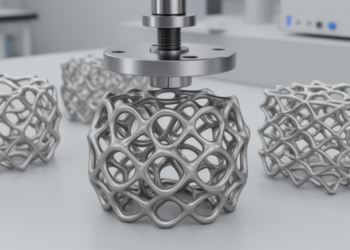
Experiments on electron-beam-manufactured Ti-6Al-4V gyroid lattices found that thicker walls increased stiffness and static strength, while all five designs exceeded ...

A cold-region field experiment found that straw and biochar combinations altered black-soil structure and nutrient availability, but the four treatments ...

An experimental study found that synthesis temperature and activation strategy were associated with differences in the porosity and hydrogen adsorption ...
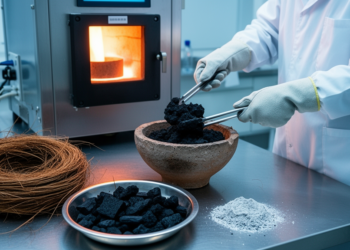
A laboratory study of coconut-frond biochar found that 350 °C maximized carbon recovery, while 550 °C produced a more ordered, ...
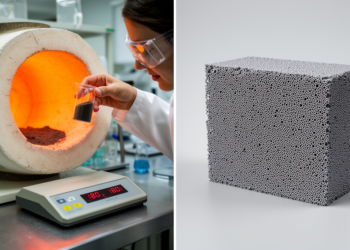
A parametric hydrothermal study shows niobium pentoxide converts fully into porous sodium niobate, with 180 degrees Celsius for 90 minutes ...

Researchers show that adjusting oxygen pressure during HVOF spraying optimizes zirconium carbonitride coatings, achieving record hardness, adhesion and wear resistance ...
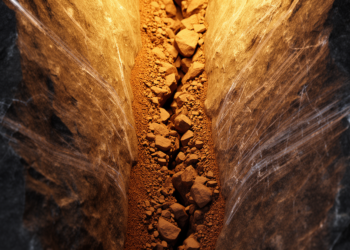
New simulations show that grain fragmentation builds fault zone architecture and drives the weakening that enables earthquakes to nucleate.


Embark on a thrilling journey of discovery with Scienmag.com—your ultimate source for cutting-edge breakthroughs. Immerse yourself in a world where curiosity knows no limits and tomorrow’s possibilities become today’s reality!