

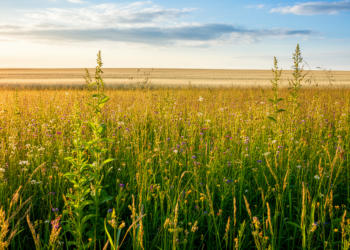
Losing Plant Diversity Could Cut Grassland CO₂ Uptake by 15 Percent by 2050
A new PNAS modeling study from PIK and Kiel University finds that losing plant diversity could cut global grassland CO₂ ...
A new PNAS modeling study from PIK and Kiel University finds that losing plant diversity could cut global grassland CO₂ ...

A large randomized controlled experiment by MIT Sloan and Johns Hopkins researchers shows that matching the Big Five personality traits ...

A PNAS special feature organized by Cary Institute researchers shows that segregation operates as a self-reinforcing social-ecological system shaping flood ...
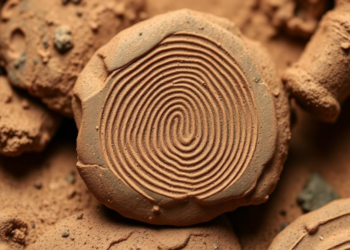
Researchers at UC San Diego's Scripps Institution of Oceanography have developed a magnetic test that distinguishes authentic ancient pottery from ...

A fifteen-year study of wild Bornean orangutans shows that mothers actively plan playdates for their infants, traveling farther and feeding ...
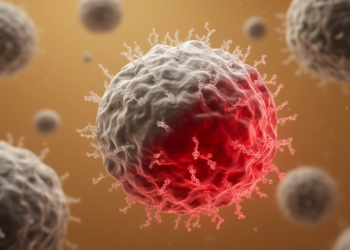
Researchers found that blocking the enzyme ST6GAL1 reverses a sugar-linkage switch on macrophages, restoring tumor-fighting behavior and slowing colorectal cancer ...

Technion researchers show that when multiple evolutionary paths offer equal fitness, populations deterministically drift toward flatter, more robust regions of ...
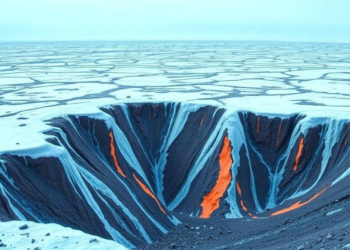
A study by GEOMAR researchers finds that climate-driven permafrost degradation likely amplified the impacts of a 2025 earthquake on Jan ...
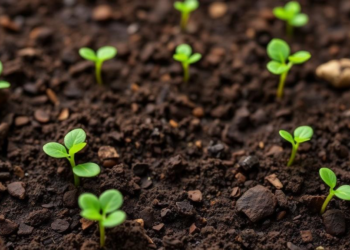
A large-scale European experiment shows that heatwaves push soil bacteria into survival mode, temporarily reducing antibiotic resistance genes, while cold, ...

New research shows that young coastal dune landscapes self-organize through phase-separation physics, revealing local tipping points beyond which damage to ...


Embark on a thrilling journey of discovery with Scienmag.com—your ultimate source for cutting-edge breakthroughs. Immerse yourself in a world where curiosity knows no limits and tomorrow’s possibilities become today’s reality!