

Arctic Haze Controls How Much Iron Reaches the Ocean, Study Finds
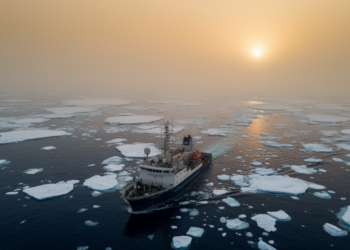
New GEOTRACES and MOSAiC measurements reveal that Arctic haze dramatically boosts the solubility of aerosol iron in winter, shifting the ...
New GEOTRACES and MOSAiC measurements reveal that Arctic haze dramatically boosts the solubility of aerosol iron in winter, shifting the ...

Greenland ice-core measurements show that although total iron deposition surged seventeen-fold during the Younger Dryas, the bioavailable labile fraction rose ...
New ocean model experiments show that declining chlorophyll a in the equatorial Atlantic warms the eastern basin, weakens upwelling, and ...
A biogeochemical model study shows that deeper winter mixing boosts subantarctic productivity by relieving iron limitation and suppressing grazing, explaining ...
Sedimentary biomarkers and diatom fossils from the southwestern Ross Sea reveal that sea ice duration has increased over the past ...
A new study argues that the ocean's euphotic zone should be defined by an absolute compensation irradiance rather than the ...
An autonomous glider captured a Category IV marine heatwave in a shelf sea, revealing a short-lived surface chlorophyll spike and ...
A decade-long audit of nearly 20,000 NASA-analyzed ocean samples shows phytoplankton pigment measurements meet satellite validation standards, with natural patchiness ...
First direct size-resolved measurements of marine primary organic aerosols reveal a bimodal distribution that major climate models underestimate threefold, with ...
A thousand-generation evolution experiment shows that ocean acidification combined with phosphate scarcity strips phosphorus from marine phytoplankton, with Earth system ...

Embark on a thrilling journey of discovery with Scienmag.com—your ultimate source for cutting-edge breakthroughs. Immerse yourself in a world where curiosity knows no limits and tomorrow’s possibilities become today’s reality!