

AI Model Reads Glucose from Wearable Signals, but Struggles with Unseen People
An uncertainty-aware AI framework estimated blood glucose from PPG and GSR signals with low error on familiar subjects but performed ...
An uncertainty-aware AI framework estimated blood glucose from PPG and GSR signals with low error on familiar subjects but performed ...
A four-tier wearable health monitoring framework combining multimodal deep learning, federated learning, differential privacy and blockchain auditability has reported strong ...

A new PLOS Digital Health study shows that cuff-less blood pressure prediction from PPG signals achieves low errors only when ...
A pilot study paired subjective music quality ratings with wrist-wearable EDA and PPG recordings, finding that variability-based autonomic markers track ...
Researchers have modeled the heart's post-extrasystolic potentiation as a second-order system and shown that a damping factor derived from smartwatch-style ...
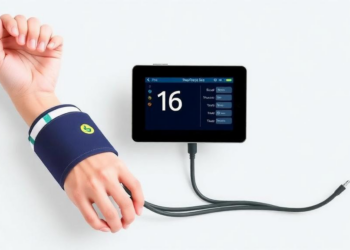
Taiwanese researchers have built a cuffless platform that synchronously records ECG and photoplethysmographic signals from all four limbs, detecting peripheral ...

Mayo Clinic researchers have publicly defended their validation of a photoplethysmography-based home sleep apnea test for children aged two to ...
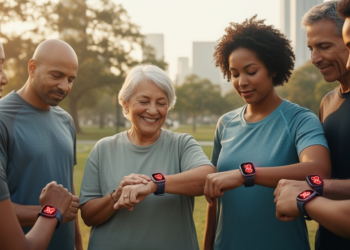
A PLOS Medicine editorial argues that smartwatch data could build a globally representative cardiovascular research database, but only if ethical, ...

A rigorous validation study of the FDA-cleared Samsung Galaxy Watch shows strong detection of high-risk sleep apnea but reveals specificity, ...
A deep learning model can estimate objective daytime sleepiness from a simple fingertip pulse wave recording, achieving about 80 percent ...


Embark on a thrilling journey of discovery with Scienmag.com—your ultimate source for cutting-edge breakthroughs. Immerse yourself in a world where curiosity knows no limits and tomorrow’s possibilities become today’s reality!