


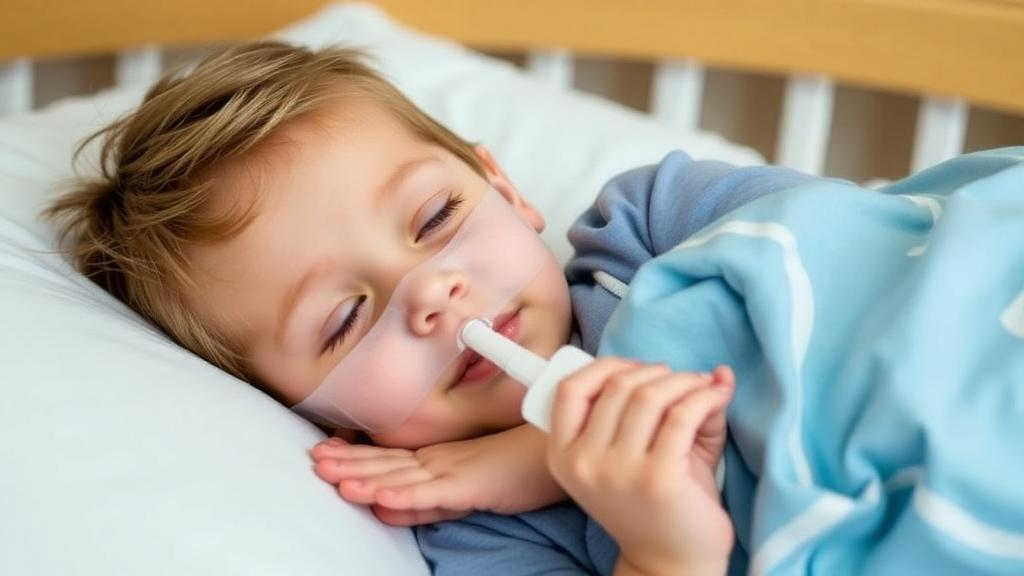
A quiet but consequential dispute has broken out in the world of sleep medicine, and its outcome could shape how millions of young children get tested for a disorder that often goes undiagnosed. At the center of the exchange is a team from the Mayo Clinic’s Center for Sleep Medicine, led by Ann M. Murray together with Timothy I. Morgenthaler, Allison LeMahieu, and Julie M. Baughn, whose recent validation study of a photoplethysmography-based home sleep apnea test in children aged two to six drew a pointed methodological critique from a fellow researcher. In a formal reply published in the Journal of Clinical Sleep Medicine, the Mayo authors defend their study design and push back against what they see as an overly narrow reading of how diagnostic accuracy should be measured for pediatric home testing.
The original study, published earlier in the same journal, compared a home sleep apnea test built around photoplethysmography, a small optical sensor that tracks blood volume pulses at the periphery, against the gold standard of in-laboratory polysomnography in children between two and six years of age. That age range matters enormously. Preschool children have shorter sleep cycles, faster breathing rates, and narrower upper airways than adults, which makes obstructive sleep apnea in this group both harder to detect and more consequential when missed. Untreated pediatric sleep apnea is associated with behavioral problems, impaired growth, cardiovascular strain, and disrupted cognitive development, so the stakes of getting the diagnostic pathway right are unusually high.
Polysomnography, the current reference standard, requires a child to sleep overnight in a sleep laboratory wired to an array of electrodes and sensors that record brain activity, eye movements, muscle tone, airflow, respiratory effort, and blood oxygenation. For a toddler, this is an alien and often distressing environment. Sleep laboratories that serve children routinely report first-night effects, in which the unfamiliar setting fragments sleep so severely that the recorded night fails to represent the child’s typical breathing at home. Access is another bottleneck: pediatric sleep laboratories are concentrated in academic medical centers, and waiting lists of many months are common. A reliable test that a child can wear in their own bed would, in principle, collapse both barriers at once.
Photoplethysmography is the technology wagering that it can deliver that reliability. The sensor emits light into the skin and measures how much is absorbed by pulsating blood, producing a waveform that encodes each heartbeat and, crucially, the modulations imposed on blood flow by breathing. When the upper airway collapses during an obstructive event, intrathoracic pressure swings and sympathetic nervous system responses leave characteristic signatures in the pulse waveform, including cyclic amplitude variation and transient vasoconstriction. Algorithms can extract an apnea-hypopnea index from these signals alone, dispensing with the airflow cannulas and chest bands that young children tend to pull off. The Mayo study put this proposition to a direct test, comparing the home device’s index against the one derived from simultaneous or paired polysomnography.
The critique that prompted the reply, authored by Devi and published in the journal’s correspondence section, raised methodological considerations about how the diagnostic accuracy of such home tests should be assessed in children. Questions of this kind are not academic hair-splitting. Diagnostic accuracy studies live or die on the details of their reference standard, their patient spectrum, and the statistical treatment of paired measurements. If a validation study enrolls children whose disease prevalence or severity differs from the population in which the device will actually be used, the reported sensitivity and specificity will not transfer. If the reference test itself is imperfect, as polysomnography is even under ideal conditions, then apparent device error may partly reflect error in the comparator rather than in the new test.
These concerns sharpen considerably in pediatric populations. Scoring rules for pediatric polysomnography differ from adult rules in ways that materially change the apnea-hypopnea index: respiratory events in children can be shorter, the threshold for hypopnea is defined differently, and the normal range of the index in healthy children is far lower than in adults, where an index of five events per hour is a common cutoff. A device validated against adult scoring conventions can look deceptively accurate or deceptively inaccurate when transplanted into a preschool cohort. Any methodological debate about pediatric home testing therefore has to grapple with which scoring standard was applied, how respiratory events were adjudicated, and whether the analysis accounted for the inherent variability of sleep breathing from one night to the next.
In their reply, the Mayo authors address the critique directly and defend the choices made in their validation study. The correspondence is brief by design, but its publication signals that the team regards the methodological questions as answerable within the framework of their original work rather than as fatal flaws. The authors report no competing interests and no external funding for the reply, and all four contributors state that they participated in drafting or critically revising the letter. The exchange follows the classic structure of scientific self-correction: a validation study, a public challenge to its methods, and a documented response that lets readers judge the strength of the evidence for themselves.
What makes this dispute worth wider attention is the clinical future it is arguing about. Home sleep apnea testing has already transformed adult sleep medicine, shifting routine diagnosis out of the laboratory and into the bedroom for large groups of patients. Children have been deliberately excluded from that shift, largely because the evidence base in pediatric populations has been thin and the consequences of a missed diagnosis are heavier. If photoplethysmography-based devices can be validated rigorously in preschool children, the pathway to care could shorten dramatically: a pediatrician could send a family home with a small sensor, obtain a night of breathing data in the child’s natural sleep environment, and reserve laboratory polysomnography for complex or ambiguous cases. That triage model would ease pressure on scarce pediatric sleep laboratories and reduce the number of children whose apnea is discovered only after years of snoring, restless sleep, and daytime behavioral problems.
The counterargument, embodied in the critique, is that enthusiasm should not outrun measurement rigor. A home test that performs well in a selected research cohort may falter in the broader clinic, where children with craniofacial anomalies, obesity, neuromuscular disease, or severe developmental differences present breathing patterns that the algorithms were never trained to interpret. Accuracy metrics such as sensitivity, specificity, and the area under the receiver operating characteristic curve are population-bound quantities, and the correspondence debate is ultimately about how carefully those boundaries are drawn and disclosed. The Mayo team’s willingness to engage the critique in print is itself part of the validation process, because a device destined for children’s bedrooms should be expected to survive exactly this kind of adversarial scrutiny before it is trusted to rule a disorder in or out.
For now, the practical takeaway is that the evidence for home sleep apnea testing in young children is advancing, but under active negotiation. The original validation study, the methodological critique, and the authors’ reply together form a public record that clinicians, guideline committees, and device regulators can weigh as they decide whether and how to extend home testing to the youngest patients. The correspondence was accepted in late September 2026 and published on 12 October 2026, and the underlying study remains available with its full data trail for independent assessment. Whether photoplethysmography can carry the diagnostic load in preschoolers is no longer a speculative question; it is a live research program with named proponents, named critics, and a defined evidentiary standard to meet. The children who snore through the night, and the parents lying awake listening, have a direct stake in how this argument is settled.
Subject of Research: Diagnostic accuracy of photoplethysmography-based home sleep apnea testing compared with polysomnography in young children
Article Title: Reply to “Methodological considerations in assessing diagnostic accuracy of home sleep apnea tests in children”
Article References: Murray, A. M., Morgenthaler, T. I., LeMahieu, A., & Baughn, J. M. (2026). Reply to “Methodological considerations in assessing diagnostic accuracy of home sleep apnea tests in children”. Journal of Clinical Sleep Medicine, 22(1), Article 193. https://doi.org/10.1007/s44470-026-00208-2
Image Credits: AI Generated
DOI: 10.1007/s44470-026-00208-2
Keywords: home sleep apnea test, photoplethysmography, pediatric sleep medicine, obstructive sleep apnea, polysomnography, diagnostic accuracy, children, Mayo Clinic, apnea-hypopnea index, sleep disorders, Journal of Clinical Sleep Medicine, validation study
Cite Scienmag News
Ophelia Keating. (October 12, 2026). Mayo Clinic Team Defends Home Sleep Apnea Test Accuracy for Young Children. Scienmag. https://scienmag.com/mayo-clinic-team-defends-home-sleep-apnea-test-accuracy-for-young-children/
Ophelia Keating. "Mayo Clinic Team Defends Home Sleep Apnea Test Accuracy for Young Children." Scienmag, 12 October 2026, https://scienmag.com/mayo-clinic-team-defends-home-sleep-apnea-test-accuracy-for-young-children/. Accessed 12 October 2026.
Ophelia Keating. "Mayo Clinic Team Defends Home Sleep Apnea Test Accuracy for Young Children." Scienmag. October 12, 2026. https://scienmag.com/mayo-clinic-team-defends-home-sleep-apnea-test-accuracy-for-young-children/


