


Paper-based sensor detects trace phenolic pollutants
A new paper-based biosensor using molybdenum disulfide and graphene oxide detects trace levels of 17β-Estradiol and hydroquinone in water.
A new paper-based biosensor using molybdenum disulfide and graphene oxide detects trace levels of 17β-Estradiol and hydroquinone in water.

A new study in the Journal of Translational Medicine reports that silver-decorated MoS2-PEG nanoparticles show promise in eradicating periodontal pathogens ...

Researchers have developed an etching-flux method using oxide barriers to reliably control nucleation positions and grow uniform two-dimensional semiconductor single ...
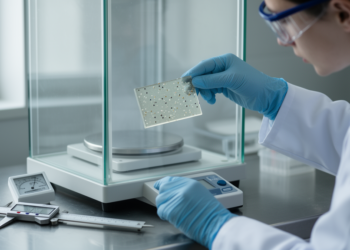
A new study finds that moisture absorption and coaxial measurement limitations, not the fillers, dominated the dielectric response of epoxy ...

A SnSe₂ contact increased p-type WSe₂ drive current by more than 1,000 times and enabled a billion-fold on/off ratio in ...
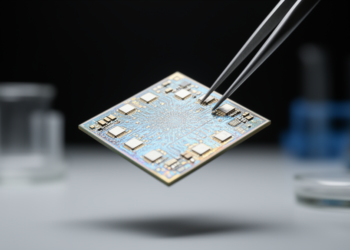
A new review argues that engineering atomically sharp interfaces in two-dimensional materials can break flash memory's long-standing trade-offs among speed, ...
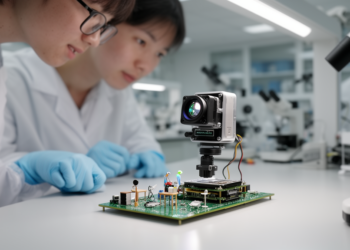
A reconfigurable transistor and neural-network-in-logic architecture reduced the hardware needed for handwritten-digit recognition in simulation and produced large estimated energy ...
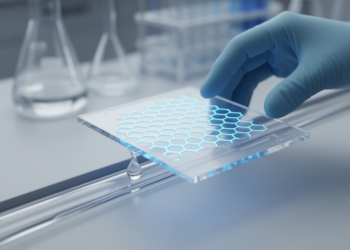
The emergence of two-dimensional nanomaterials as sensing elements reflects a broader shift in diagnostic thinking. Conventional clinical diagnostics often rely ...
Researchers at the University of Illinois Urbana-Champaign and the National Energy Technology Laboratory showed that coal-derived carbon nanodots enable the ...
Researchers have developed an etching-flux technique that forces single-crystal 2D semiconductors to nucleate deterministically at pattern centres, enabling high-mobility transistors ...


Embark on a thrilling journey of discovery with Scienmag.com—your ultimate source for cutting-edge breakthroughs. Immerse yourself in a world where curiosity knows no limits and tomorrow’s possibilities become today’s reality!