

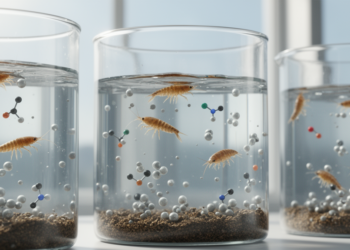
Nanoplastics shift acute chlorpyrifos toxicity in marine amphipods
A 96-hour laboratory study found that polyethylene nanoplastics altered acute chlorpyrifos toxicity in the marine amphipod Parhyale hawaiensis, while a ...
A 96-hour laboratory study found that polyethylene nanoplastics altered acute chlorpyrifos toxicity in the marine amphipod Parhyale hawaiensis, while a ...

Researchers have calibrated an amphibian energy budget model to single-pesticide toxicity data in painted frog larvae and shown that it ...
A new study shows that co-exposure to microplastics and bisphenol A suppresses NRF2-mediated antioxidant defense in largemouth bass, triggering oxidative ...
A 21-day laboratory study shows that polyethylene and polyvinyl chloride microplastics, especially in combination, cause anemia, liver and kidney stress, ...
A proof-of-concept study shows that co-formulants and secondary active substances in a plant protection product significantly alter the liver clearance ...
A new zebrafish study shows that the herbicide glufosinate-ammonium and copper oxide nanoparticles act synergistically, driving progressive oxidative stress, apoptosis, ...

Embark on a thrilling journey of discovery with Scienmag.com—your ultimate source for cutting-edge breakthroughs. Immerse yourself in a world where curiosity knows no limits and tomorrow’s possibilities become today’s reality!