

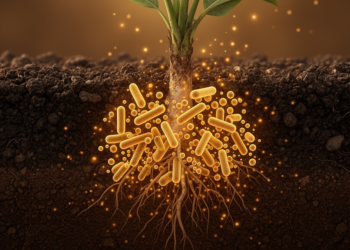
Fast-Growing Soil Microbes Emerge as Key Drivers of Carbon-Releasing Priming Effect
A new cybernetic modeling study shows that fast-growing copiotrophic microbes and their interactions with non-degrading neighbors determine whether fresh organic ...
A new cybernetic modeling study shows that fast-growing copiotrophic microbes and their interactions with non-degrading neighbors determine whether fresh organic ...

A multi-scale survey at One Tree Island on the Great Barrier Reef shows that lagoon-wide spatial and nutrient gradients, not ...
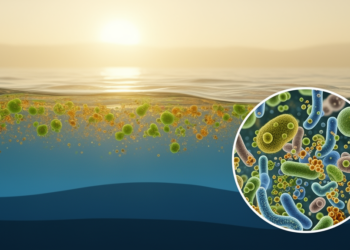
A simulated 8-degree heatwave in Lake Taihu mesocosms revealed that prokaryotic and eukaryotic microbial communities follow sharply different paths of ...
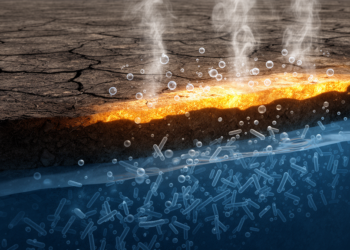
New research from the Australian Alps shows that peatland degradation disrupts the depth- and water-table-dependent organization of microbial communities and ...

A new genomic survey of the Clarion-Clipperton Fracture Zone reveals that over 99 percent of its sediment viruses are unknown ...
A systematic pairing of three carbon sources with three pollutants in electro-assisted bioreactors reveals that carbon-pollutant matching drives microbial succession ...

A sweeping survey of Placobdella leeches from American alligators across the southeastern United States reveals a conserved core microbiome, four ...

A new study links soil texture, micronutrient availability, and microbial reassembly across Amazon pastures to the prevalence of a debilitating ...

A new study finds that cultivated edible mushroom mycelia host bacterial communities that are conserved in diversity but strain-specific in ...

A 40-day column experiment shows that a bentonite seepage-control layer can cut antibiotic transport by nearly half and block antibiotic ...


Embark on a thrilling journey of discovery with Scienmag.com—your ultimate source for cutting-edge breakthroughs. Immerse yourself in a world where curiosity knows no limits and tomorrow’s possibilities become today’s reality!