

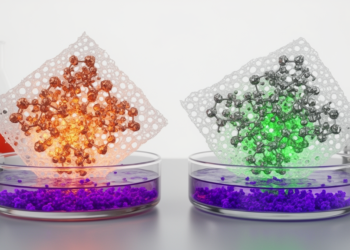
Copper or nickel: metal choice steers dye capture in cellulose-MOF films
Researchers fabricated two otherwise identical cellulose-supported MOF films and found the copper-based version adsorbed more methylene blue while the nickel-based ...
Researchers fabricated two otherwise identical cellulose-supported MOF films and found the copper-based version adsorbed more methylene blue while the nickel-based ...
A systematic review of 196 studies finds that Industry 5.0-enabled nanocatalysts show strong single-matrix pollution removal, but integrated air-water-soil remediation ...
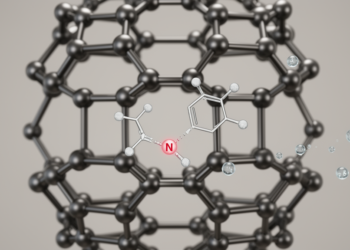
An iron-based metal-organic framework with pyridine nitrogen in its secondary coordination sphere converts about 90 percent of trace hydrogen peroxide ...
A Rice University study found that a ligand-modified metal-organic framework adsorbed three rare earth elements from wastewater despite iron at ...

A review finds that porous ZIF-67 can improve flame-retardant dispersion, promote protective char formation and support multifunctional polymer nanocomposites.
A bimetallic iron-manganese metal-organic framework with a 1:5 precursor ratio achieved the highest reported tetracycline hydrochloride adsorption capacity in the ...

A trimesic-acid-linked multimetal metal–organic framework achieved 60 mA cm−2 and stable cycling for more than 13 days in rechargeable zinc–air ...

A visible-light-responsive film combining chitosan, polyvinyl alcohol, thymol and a porphyrin framework delayed fish spoilage and preserved strawberries through laboratory ...

A laboratory study found that an interpenetrating twin morphology of ZIF-8-derived carbon supported high moisture absorption, 1407.5 kJ·kg−1 storage density ...

A review finds that distinct cesium adsorbents are needed for trace radiocesium analysis and large-volume nuclear wastewater treatment, with the ...


Embark on a thrilling journey of discovery with Scienmag.com—your ultimate source for cutting-edge breakthroughs. Immerse yourself in a world where curiosity knows no limits and tomorrow’s possibilities become today’s reality!