


Dual-Site Catalysts and 3D Nanoreactors Push CO2 Hydrogenation Forward
A new review details how dual-site catalysts and three-dimensional nanoreactors boost the activity, selectivity and stability of thermo-catalytic CO2 hydrogenation.
A new review details how dual-site catalysts and three-dimensional nanoreactors boost the activity, selectivity and stability of thermo-catalytic CO2 hydrogenation.

A new review in Discover Catalysis maps how pairing two metals in core-shell, nanocluster, framework and nanoflower structures boosts enzyme-mimicking ...

A new review details how doped, defective, and metal-decorated carbon catalysts selectively convert oxygen to hydrogen peroxide as a sustainable ...

A new review details how polyoxometalate–metal organic framework hybrids are boosting the performance of batteries, supercapacitors, fuel cells, water electrolyzers ...

A new review summarizes how metal–organic frameworks and covalent organic frameworks are used to extract and detect bisphenols in food ...

A new review finds nanomaterial-enabled biosensors achieve extraordinary detection limits in laboratories but rarely survive clinical translation due to reproducibility, ...
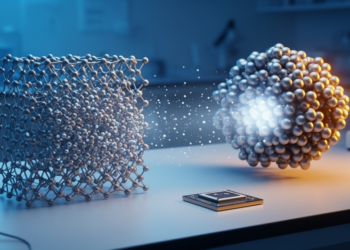
A review in the Journal of Materials Science synthesizes recent advances in metal-organic-framework-derived metal oxides for chemiresistive VOC sensing, from ...
A new review argues that enzymatic biosensor progress is stalled less by materials than by inconsistent reporting of apparent kinetics, ...

A reticular coordination strategy anchors single platinum atoms onto cerium-oxo clusters, yielding a 14.9 wt% atomically dispersed catalyst that resists ...
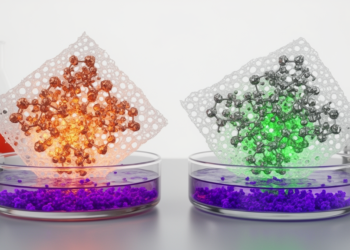
Researchers fabricated two otherwise identical cellulose-supported MOF films and found the copper-based version adsorbed more methylene blue while the nickel-based ...


Embark on a thrilling journey of discovery with Scienmag.com—your ultimate source for cutting-edge breakthroughs. Immerse yourself in a world where curiosity knows no limits and tomorrow’s possibilities become today’s reality!