

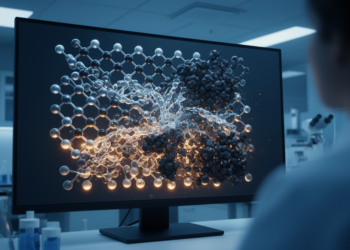
Machine learning simulations trace how plastic turns into hard carbon atom by atom
Oxford chemists used machine learning-driven atomistic simulations to show how the polymer PVDC breaks down into hard carbon, whose five- ...
Oxford chemists used machine learning-driven atomistic simulations to show how the polymer PVDC breaks down into hard carbon, whose five- ...
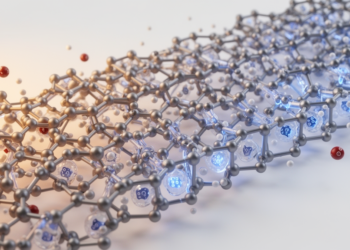
A peer-reviewed review finds that viologen-linked covalent organic frameworks combine permanent positive charge, reversible redox activity and tunable pores for ...

A UCLA-led study found that the amino acid arginine can stabilize a quantum electronic state in layered tantalum disulfide at ...

A review finds that porous ZIF-67 can improve flame-retardant dispersion, promote protective char formation and support multifunctional polymer nanocomposites.
A dual-carbon Li3V2(PO4)3 cathode combining PEG-derived coating with multi-walled carbon nanotubes delivered 127.2 mAh g−1 after 200 cycles at 1 ...
Researchers at IRCCS Fondazione Istituto Neurologico Carlo Besta and Politecnico di Milano have shown that mitochondria can be coated with ...
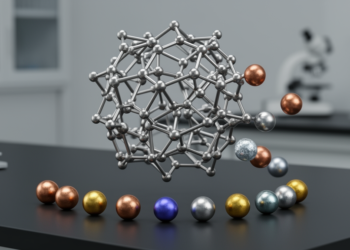
Chemists have created a metal-organic framework incorporating sixteen different metals, showing that simply adjusting the metallic recipe can tune magnetism, ...

A new class of preorganized porous polymers with rigid triangular pockets captures intact uranyl carbonate complexes from natural waters, overcoming ...
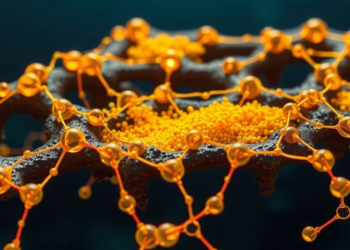
A structurally asymmetric covalent organic framework promises faster uranium uptake, bringing the vast oceanic uranium reserve closer to practical exploitation.
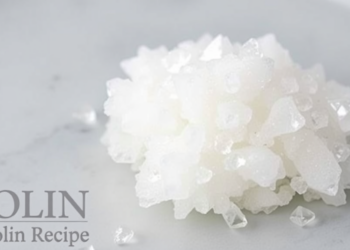
By varying the amount of metakaolin dissolved in sodium hydroxide, researchers can tune silica gel's chain length and hydroxyl content ...


Embark on a thrilling journey of discovery with Scienmag.com—your ultimate source for cutting-edge breakthroughs. Immerse yourself in a world where curiosity knows no limits and tomorrow’s possibilities become today’s reality!