

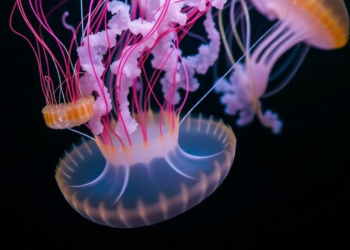
Upside-Down Jellyfish Emerge as Ecosystem Engineers and Pollution Watchdogs
A new review synthesizes decades of research showing that upside-down jellyfish of the genus Cassiopea act as ecosystem engineers, bioindicators ...
A new review synthesizes decades of research showing that upside-down jellyfish of the genus Cassiopea act as ecosystem engineers, bioindicators ...

A new study of the Lakshadweep Sea shows that marine heatwaves intensify with depth, peaking in cumulative intensity between 80 ...
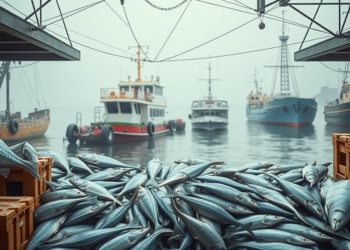
Researchers mapped Europe's largest seafood processing hub as a social-ecological network of 227 nodes and 595 links, revealing that production ...

A Nature Communications perspective distills the scaling of offshore floating wind, solar, and aquaculture platforms into ten critical questions spanning ...
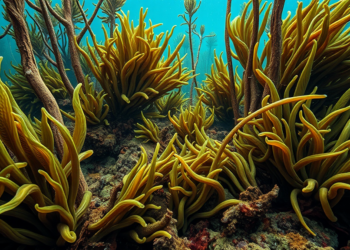
A new PLOS Biology analysis finds that climate-driven losses of kelp forests will reduce carbon sequestration by up to 30 ...
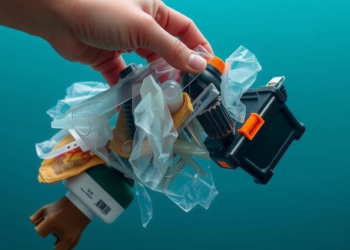
New modelling shows that halting marine plastic inputs by 2050 is essential but insufficient, because legacy debris will keep fragmenting ...
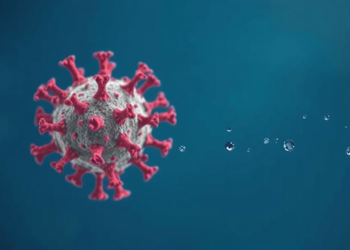
Kyoto University researchers have developed a digital PCR-based method that quantifies viral lysis of plankton by measuring cell-free rRNA in ...
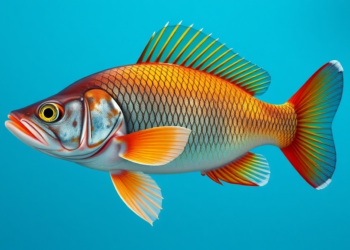
Researchers have developed an AI-driven multi-species toxicokinetic model that predicts tissue-specific chemical exposure and toxicity across 151 freshwater and marine ...

In August 2023, the German research vessel METEOR set sail on Expedition M192 to the Greek island of Milos with ...

In a groundbreaking study published in National Science Review, a research consortium led by Professor Dalin Shi from Xiamen University’s ...


Embark on a thrilling journey of discovery with Scienmag.com—your ultimate source for cutting-edge breakthroughs. Immerse yourself in a world where curiosity knows no limits and tomorrow’s possibilities become today’s reality!