

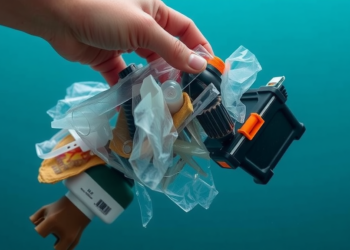
Stopping Ocean Plastic by 2050 Cuts New Inputs but Won’t Clear the Microplastics Already Building Up
New modelling shows that halting marine plastic inputs by 2050 is essential but insufficient, because legacy debris will keep fragmenting ...
New modelling shows that halting marine plastic inputs by 2050 is essential but insufficient, because legacy debris will keep fragmenting ...

Kyoto University researchers have developed a digital PCR-based method that quantifies viral lysis of plankton by measuring cell-free rRNA in ...
Researchers have developed an AI-driven multi-species toxicokinetic model that predicts tissue-specific chemical exposure and toxicity across 151 freshwater and marine ...
In August 2023, the German research vessel METEOR set sail on Expedition M192 to the Greek island of Milos with ...
In a groundbreaking study published in National Science Review, a research consortium led by Professor Dalin Shi from Xiamen University’s ...
Mesoscale eddies are intriguing and dynamic features of our oceans, representing swirling currents that typically span horizontal dimensions of 10 ...
Large marine protected areas (MPAs) are gaining attention for their potential to significantly enhance marine biodiversity while also boosting catch ...
A recent study conducted by marine scientists from the University of Sydney has uncovered profound insights into the distressing phenomenon ...

Embark on a thrilling journey of discovery with Scienmag.com—your ultimate source for cutting-edge breakthroughs. Immerse yourself in a world where curiosity knows no limits and tomorrow’s possibilities become today’s reality!