


Lightning Network Shows Structural Shifts But Stable Routing
Published in Applied Network Science, the study leverages a validated dataset of 336 topology snapshots spanning from January 2019 to ...
Published in Applied Network Science, the study leverages a validated dataset of 336 topology snapshots spanning from January 2019 to ...
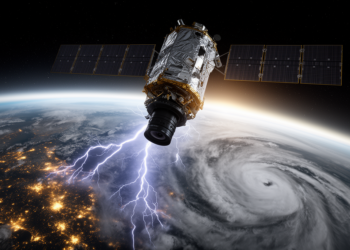
In its first year of operation, the Meteosat Third Generation Lightning Imager detected 595 million flashes and mapped lightning hot-spots ...

A study of Japanese lightning detection data links April bursts of cloud-to-ground flashes around the Nansei Islands to low-level inflow ...

Researchers redesigned an aerosol charge-measuring instrument using fluid simulations, cutting measurement uncertainty from about 15 percent to about 5 percent ...
Using more than 1,200 European GNSS receivers, researchers have tracked circular ripples in the ionosphere launched by five different types ...
A new study of six UK thunderstorms treats every lightning stroke as a point in time and space, extracting storm ...
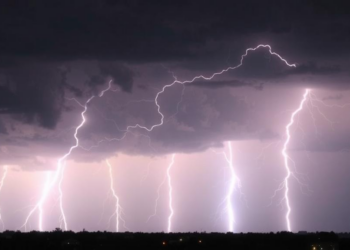
Researchers in Colombia have developed heuristic and hyper-heuristic algorithms that generate synthetic lightning paths with controlled tortuosity, achieving about 99 ...
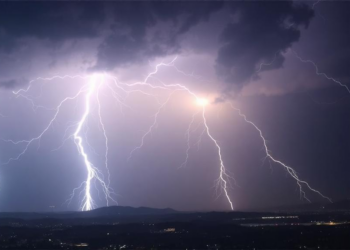
Combining Europe's new geostationary lightning imager with a dense ground-based mapping array, researchers show that longer, brighter and longer-lasting lightning ...
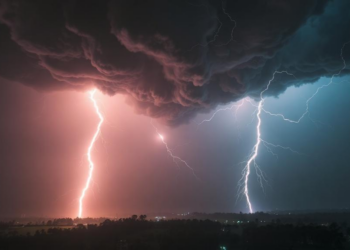
A new observational study reconstructs how two merging convective cells and a bow-echo-like mesoscale system produced winds of 120 km/h ...
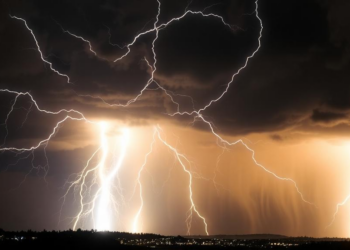
The GRAPES-3 muon telescope in India uses cosmic-ray muons to measure gigavolt electric fields inside thunderstorms and has explained why ...


Embark on a thrilling journey of discovery with Scienmag.com—your ultimate source for cutting-edge breakthroughs. Immerse yourself in a world where curiosity knows no limits and tomorrow’s possibilities become today’s reality!