


Sandfly Survey Along Tanzania’s Great Rift Valley Reveals Leishmaniasis Vector Risk
A new survey along Tanzania's Great Rift Valley documents eight sandfly species, including proven leishmaniasis vectors, revealing significant ecological risk ...
A new survey along Tanzania's Great Rift Valley documents eight sandfly species, including proven leishmaniasis vectors, revealing significant ecological risk ...
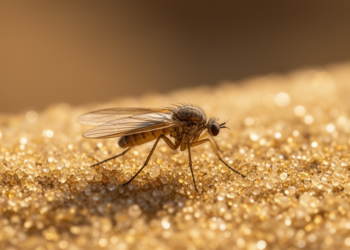
A first-of-its-kind molecular survey in Sri Lanka finds no detectable Wolbachia in sand fly vectors of cutaneous leishmaniasis, while revealing ...

A second-generation library of N,N′-disubstituted aliphatic diamines shows potent, selective activity against multiple Leishmania species, with compounds 12a, 12m, and ...

Researchers at the University of Liège and Rockefeller University have captured near-atomic-resolution cryo-EM structures of the trans-spliceosome, the essential RNA-processing ...
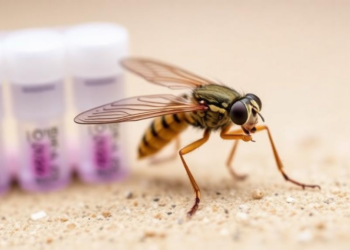
A new study shows that the cellular expression system used to produce the sand fly salivary protein SP32, particularly insect-derived ...
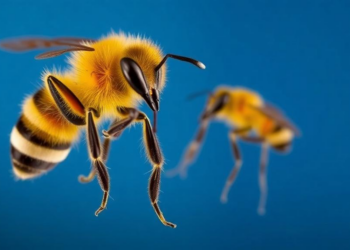
A new in vitro study reports that purified honey bee venom phospholipase A2 inhibits Leishmania major parasites at concentrations significantly ...
New research reveals that Leishmania parasites survive antimony treatment through active transcriptome remodeling, a transient persister state that may pave ...

A five-country analysis finds that socioeconomic conditions and human immunosuppression, rather than climate change alone, are the major drivers of ...
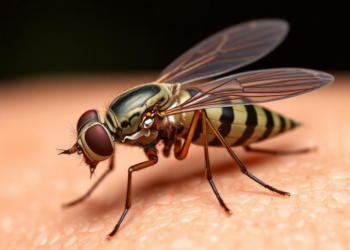
Researchers have recorded the leishmaniasis vector sand fly Phlebotomus sergenti in China for the first time, near the Kyrgyzstan border ...
Leishmaniasis, a parasitic disease transmitted by sandflies, remains one of the most under-recognized threats to global health. According to a ...


Embark on a thrilling journey of discovery with Scienmag.com—your ultimate source for cutting-edge breakthroughs. Immerse yourself in a world where curiosity knows no limits and tomorrow’s possibilities become today’s reality!