


Why Robots Creeping Up Behind You Feel Faster Than They Really Are
A Japanese study finds that 92 percent of people perceive objects approaching from behind as moving faster than identical frontal ...
A Japanese study finds that 92 percent of people perceive objects approaching from behind as moving faster than identical frontal ...
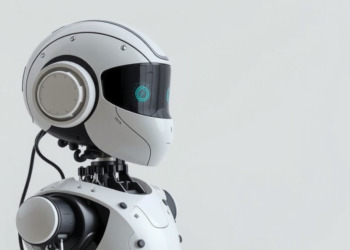
A critical review of six EU-funded social robotics projects argues that robot-assisted autism therapies rest on weak evidence and embed ...
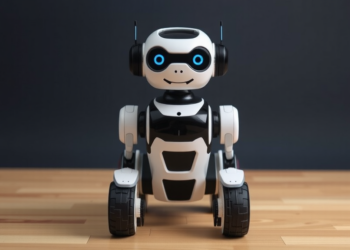
Researchers in Slovakia have built SMaRTAban, a voice-controlled large language model agent that lets a quadruped robot understand spoken English ...

Researchers have developed an imitation learning method called CIVIL that lets human teachers mark task-relevant objects and explain their actions, ...
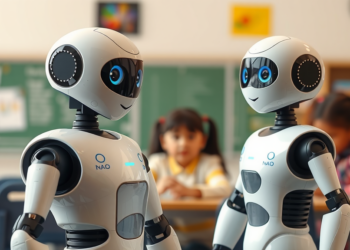
A new study finds that students with autism spectrum disorder showed significantly improved focus and classroom performance when lessons were ...

A new scoping review of 25 studies finds that embodied social robots reliably boost preschoolers' engagement and communication but offer ...

A unified planning strategy drives people toward critical decision points, letting robots infer human goals earlier and more accurately in ...

Robots are moving out of laboratories and into the spaces humans occupy every day: hospital corridors, airport concourses, grocery aisles, ...

A scoping review of 13 empirical studies finds that the Pepper social robot boosts motivation and engagement in formal education, ...

In an era where robotics increasingly intertwines with daily human activities, the challenge has persisted for robots to identify and ...


Embark on a thrilling journey of discovery with Scienmag.com—your ultimate source for cutting-edge breakthroughs. Immerse yourself in a world where curiosity knows no limits and tomorrow’s possibilities become today’s reality!