


Helpless by Design: When Robots Feign Weakness to Make Humans Serve Them
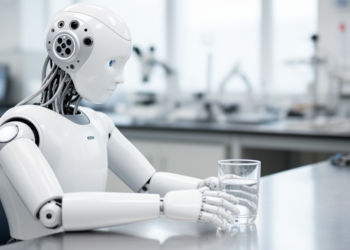
A new philosophical paper argues that robots deliberately designed to appear helpless in order to recruit bystander assistance can constitute ...
A new philosophical paper argues that robots deliberately designed to appear helpless in order to recruit bystander assistance can constitute ...
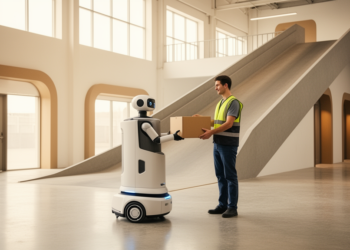
A Korean study proposes integrated building design standards that combine accessibility certification with robot-operation requirements for entrances, elevators, and passageways.
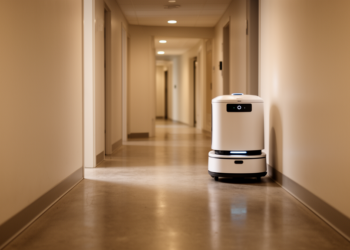
An in-person experiment with 35 participants found that a straight wall-following path was the most comfortable robot route in varying-width ...
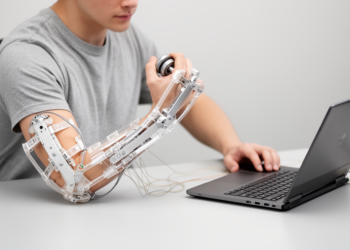
A two-degree-of-freedom upper-limb exoskeleton tested on ten healthy men revealed angle-dependent, torque-scaled muscle activation patterns and systematic attenuation of muscle ...
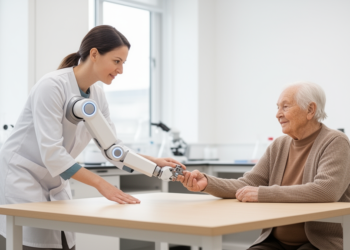
A position paper argues that robots' direct, unmediated coupling with the physical world makes human-centered AI and robotics a distinct ...
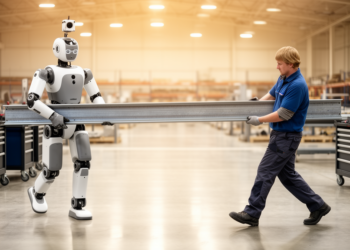
A control framework tested on the Digit humanoid enables compliant, versatile collaborative transportation with a human partner, including translation, turning ...
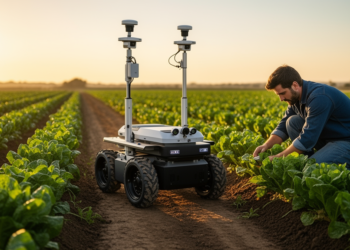
A new review argues that trustworthy agricultural autonomy depends on integrating robot learning, safe control and human-robot interaction rather than ...
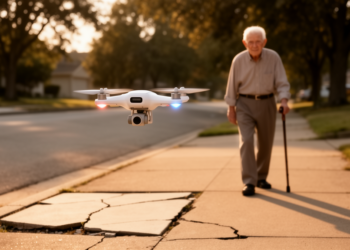
Researchers built a near-body assistive drone prototype and found older adults trusted its visible safety behaviours more than its promised ...
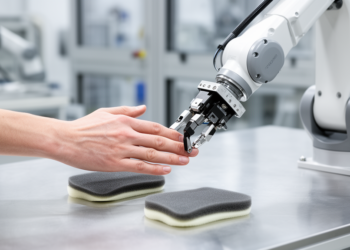
Researchers at the University of Twente argue that mechanical energy, not force alone, should organize how the ISO/TS 15066 standard ...
A new research collection spanning tactile arrays, sim-to-real tactile learning, LiDAR-camera calibration, structured visual reasoning and virtual social touch shows ...


Embark on a thrilling journey of discovery with Scienmag.com—your ultimate source for cutting-edge breakthroughs. Immerse yourself in a world where curiosity knows no limits and tomorrow’s possibilities become today’s reality!