


Kromdraai cave finally dated: uranium-lead clocks place famous hominin site between 1.94 and 2.67 million years old
The first uranium-lead dates for a key breccia block from Kromdraai constrain its age to between 1.94 ± 0.08 and ...
The first uranium-lead dates for a key breccia block from Kromdraai constrain its age to between 1.94 ± 0.08 and ...
The new fully open-access journal Discover Minerals launches with an editorial outlining a multidisciplinary scope spanning mineralogy, geochemistry, mining, sustainability ...
Scientists demonstrate that switching from the uranium-238 to the uranium-235 decay chain can yield accurate, precise dates for carbonate rocks ...
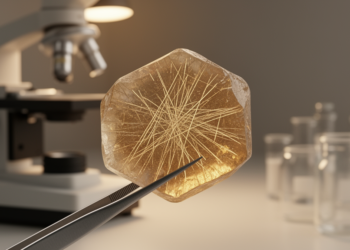
Direct measurements of apatite fission-track etch rates show the track etch rate is constant along tracks and unaffected by annealing ...
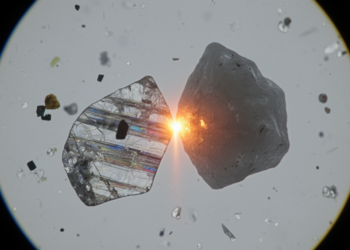
A laboratory study shows that one laser spot in mica or feldspar can yield coupled potassium–calcium and rubidium–strontium ages that ...
Nanoscale examination of saprolite shows that even crystalline zircon begins to dissolve and reprecipitate as uranium- and thorium-bearing amorphous zircon ...
Radium and thorium isotope measurements from Svalbard permafrost cores show that some ground ice is thousands of years old while ...
Single-grain measurements of potassium feldspars from Chilean rivers show that residual luminescence doses scale with natural dose rather than grain ...
New argon-argon dating shows Greece's Christiana volcano erupted around 2.6 million years ago, millions of years earlier than assumed, revealing ...
Laser-based microanalysis of biotite in the contact aureole of Labrador's Makhavinekh Lake Pluton shows that rubidium–strontium ages depend on grain-scale ...


Embark on a thrilling journey of discovery with Scienmag.com—your ultimate source for cutting-edge breakthroughs. Immerse yourself in a world where curiosity knows no limits and tomorrow’s possibilities become today’s reality!