


Massive Global Study Finds Self-Testing, Not AI Frequency, Drives Cognitive Gains in GenAI Learning
A machine learning study of 14,949 students across 40-plus countries found self-testing habits, not AI usage frequency, were the strongest ...
A machine learning study of 14,949 students across 40-plus countries found self-testing habits, not AI usage frequency, were the strongest ...

A conceptual paper argues that generative AI's text-based interaction paradigm structurally disadvantages deaf signers and proposes a visuo-spatial model for ...
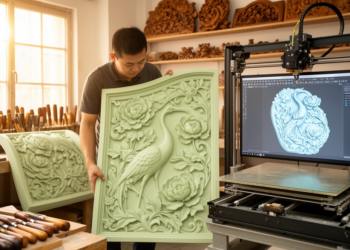
Researchers in China report a workflow that couples AI-generated stucco relief designs with structural testing and 3D-printed formwork to support ...

A Japanese pilot study found that AI-edited images of green spaces, modified according to a new psychological evaluation framework, received ...

A narrative review of 230 publications argues that integrated writing in L2 higher education is a coordinated, source-mediated form of ...

A study of three FLUX.1-based image-to-image workflows finds that image conditioning with FLUX.1 REDUX preserves architectural details better than text ...

A systematic review of 75 studies finds generative AI advancing renewable energy globally, but almost no African field validation exists ...

A randomized online experiment found that labeling an identical scenario as AI-assisted reduced its perceived credibility, expertise, and desirability, with ...
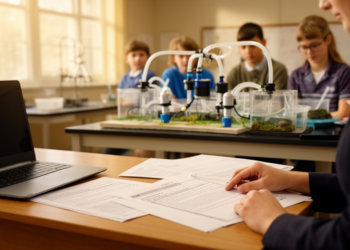
A document analysis of ChatGPT 3.5 outputs found that the chatbot produced a structured high school unit plan on cross-state ...

Interviews with seven Australian academics reveal cautious, conditional support for bringing generative AI into early childhood education and care policy.


Embark on a thrilling journey of discovery with Scienmag.com—your ultimate source for cutting-edge breakthroughs. Immerse yourself in a world where curiosity knows no limits and tomorrow’s possibilities become today’s reality!