

Amino Acid Nanoparticles Turn Indigo Dye Into Biocompatible Memory Devices
Researchers in South Korea have built flexible, biocompatible non-volatile memory devices using poly-L-lysine amino acid nanoparticles as the charge-trapping layer ...
Researchers in South Korea have built flexible, biocompatible non-volatile memory devices using poly-L-lysine amino acid nanoparticles as the charge-trapping layer ...
Researchers have printed a flexible artificial synapse from room-temperature liquid inks that switches in 26 nanoseconds, recognizes handwritten digits with ...
Researchers have transformed insulating polyvinyl alcohol into a tunable flexible dielectric by growing calcium manganite perovskite in situ within the ...
A new density functional theory study shows that the ferroelectric copolymer P(VDF-co-TrFE) reaches its maximum single-chain dipole and polarization near ...
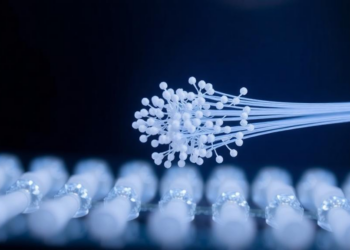
Researchers boosted the beta-phase content of electrospun PVDF fibers from about 66 to 87 percent using strontium-doped barium titanate particles, ...
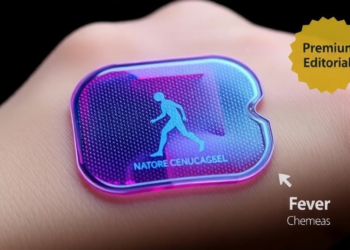
Researchers in Abu Dhabi and Australia have developed a graphene-reinforced double-network hydrogel that simultaneously senses body movement and fever-range temperature ...
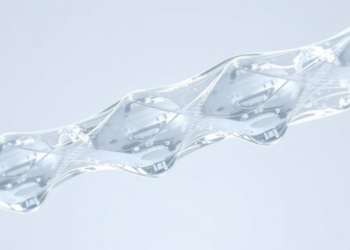
Researchers have built a tough, stretchable elastomer from natural rubber, guar gum, and a zinc-based ionic liquid that conducts ions ...
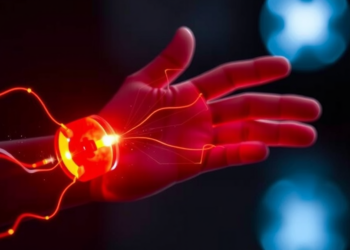
Researchers boosted the piezoelectric performance of P(VDF-TrFE) films by using fluoride fillers and cation-driven interfacial polarization, enabling durable self-powered sensors ...

Researchers at Donghua University have developed a programmable microfluidic spinning process that embeds working integrated circuit modules, from light emission ...

A Nature Electronics commentary highlights a microfluidic encoding strategy that transforms individual fibres into active circuit elements, paving the way ...


Embark on a thrilling journey of discovery with Scienmag.com—your ultimate source for cutting-edge breakthroughs. Immerse yourself in a world where curiosity knows no limits and tomorrow’s possibilities become today’s reality!