

Water From a Rain of Dry Pebbles: Hydrogen May Have Made Earth’s Oceans
New experiments show that dry silicate pebbles falling through Earth's hot hydrogen atmosphere could have generated the planet's water through ...
New experiments show that dry silicate pebbles falling through Earth's hot hydrogen atmosphere could have generated the planet's water through ...
In a landmark laboratory astrophysics study, researchers used high-energy lasers and simulations to show that stellar magnetic fields of about ...
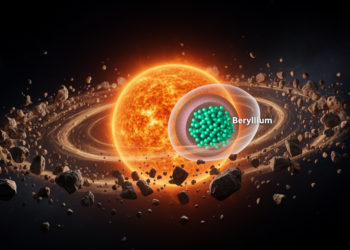
A new technique using beryllium abundance differences between twin stars has identified a Sun-like star that swallowed rocky material equivalent ...
Using the James Webb Space Telescope, astronomers have directly confirmed for the first time that water clouds on a world ...
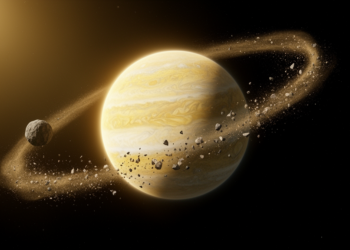
New UC Riverside research shows that Venus's extremely slow rotation and strong gravity would have caused any moon it ever ...
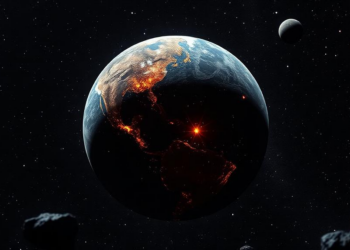
The detection of niobium in a polluted white dwarf suggests the contaminating debris came from a second-generation giant planet formed ...
CosmoAmautas, a Peruvian non-profit that has trained more than 200 teachers and reached over 10,000 students with inquiry-based planetary science, ...

Laboratory experiments show that dry silicate pebbles falling through a hot hydrogen atmosphere can generate oceans of water while also ...
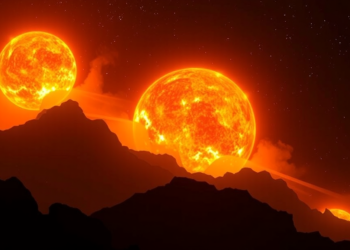
A new review of observations of young solar-type stars shows that superflares on stars like the infant Sun are accompanied ...
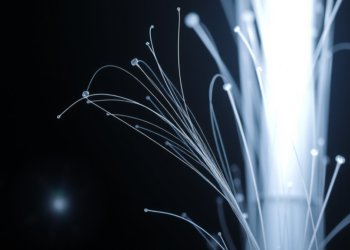
Laboratory tests and simulations show that tapered graded-index optical fibres can transmit up to 70 percent of coupled light while ...


Embark on a thrilling journey of discovery with Scienmag.com—your ultimate source for cutting-edge breakthroughs. Immerse yourself in a world where curiosity knows no limits and tomorrow’s possibilities become today’s reality!