


Larger Amazonian Frogs Harbor More Parasites in Modular Ecological Networks
A seven-year study in the Brazilian Amazon reveals that larger anuran hosts harbor greater helminth abundance within a modular, moderately ...
A seven-year study in the Brazilian Amazon reveals that larger anuran hosts harbor greater helminth abundance within a modular, moderately ...

Information theory reveals that ecosystem exchanges simultaneously reinforce network structure and provide the flexibility needed to respond to environmental disruptions.

A global analysis of more than 3,400 quantitative networks shows that plant–pollinator specialization lacks a single universal latitudinal gradient and ...

A botanical survey across an Italian ecological network shows that peripheral habitat nodes protect native plant richness and floristic uniqueness, ...

A survey of 296 stray cats and dogs in Peninsular Malaysia found flea-borne pathogens in most fleas, including previously uncharacterised ...
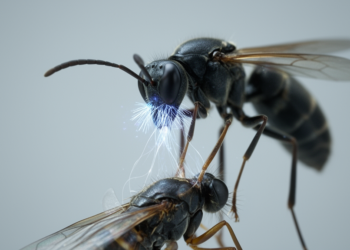
A laboratory study detected host DNA on the cuticles of adult parasitoid wasps in 49% of samples, offering a non-destructive ...
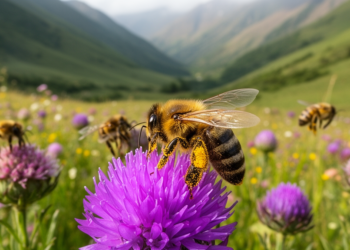
A new study shows that introduced bees, especially the bumblebee Bombus terrestris, have restructured Chile's plant-pollinator networks by displacing native ...

A six-month study in an arid Peruvian valley documented 349 plant-hummingbird interactions, revealing a temporally shifting network dominated by Tecoma ...

A new citizen science project called Who Eats Whom has turned thousands of iNaturalist photographs into a searchable global food ...

A study of wild spur-thighed tortoises in southeastern Spain shows that hindgut nematodes reduce male growth and body size while ...


Embark on a thrilling journey of discovery with Scienmag.com—your ultimate source for cutting-edge breakthroughs. Immerse yourself in a world where curiosity knows no limits and tomorrow’s possibilities become today’s reality!