


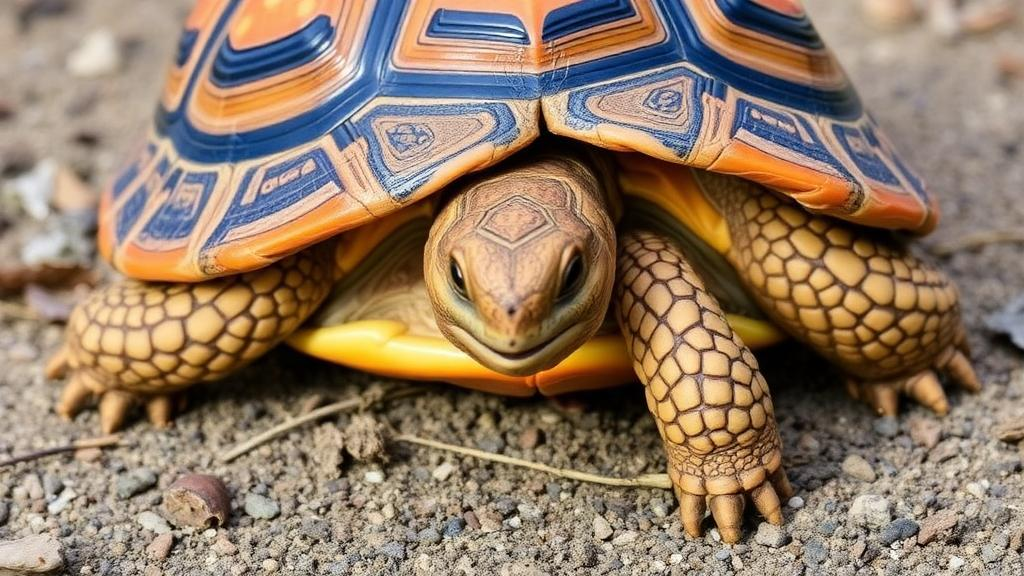
In the sun-baked, semiarid mountains of southeastern Spain, one of Europe’s most threatened reptiles is quietly revealing a secret about the hidden costs of being male. A new study of wild spur-thighed tortoises (Testudo graeca) has found that the relationship between these herbivorous reptiles and the pinworm nematodes living in their hindguts is sharply divided along sex lines. For female tortoises, carrying a gut full of nematodes appears to cost them almost nothing. For males, however, the same parasite burden is associated with smaller bodies and slower growth, suggesting that the worms behave as true parasites in one sex while remaining essentially harmless hitchhikers in the other.
The research, published in the journal Ecology and Evolution, examined 116 free-ranging adult tortoises captured across 22 localities spanning roughly 2,600 square kilometers of coastal mountains between the provinces of Almería and Murcia. This region, a recognized biodiversity hotspot that has endured centuries of human intervention, presents a mosaic of land uses: Mediterranean shrubland still covers about 53 percent of the sampled area, traditional dryland crops account for 24 percent, intensified agriculture 10 percent, pine plantations 7 percent, and unproductive land such as urban zones and infrastructure the remaining 6 percent. The team searched each one-square-kilometer site for at least seven and a half hours with three searchers, capturing, marking, and measuring every tortoise they encountered.
Each animal was sexed, aged from the growth rings of its carapace, and measured for weight, height, plastron width, and carapace length. A growth rate score was then calculated using the von Bertalanffy model, a mathematical framework that assumes growth declines with age and reconstructs an individual’s growth trajectory from birth to the moment of capture. Freshly collected fecal samples were kept cool for 48 hours before adult nematodes were extracted, preserved in ethanol, cleared in Amann’s lactophenol, and identified to species level using established taxonomic keys. The result was an unusually complete picture of the nematode communities inhabiting wild tortoises, a topic that had previously been studied almost exclusively in captive animals, where oxyurid infections can become pathogenic and even life threatening.
The scale of infestation was striking: 68 percent of all sampled tortoises carried nematodes, with 43 of 66 females and 34 of 50 males infected. Individual worm counts ranged from zero to a remarkable 4,901 nematodes in a single female and up to 3,368 in a male. Yet despite these enormous loads, the mean infestation intensity did not differ significantly between the sexes, averaging about 183 worms per infected female and 130 per infected male. In total, the researchers identified 15 nematode species, all belonging to the order Oxyurida and the family Pharyngodonidae, the pinworms characteristic of herbivorous reptiles.
The critical discovery emerged when the researchers linked infestation to body traits and growth. For males, higher nematode loads were significantly associated with lower body weight and shorter carapace length, and growth rates told an even more nuanced story: at low infestation levels, males actually grew faster than females, but as worm burdens climbed, male growth slowed dramatically while female growth remained unaffected. Statistical models confirmed that the effect of infestation on growth depended on sex, and a principal components analysis, which explained 78.3 percent of the variation in the data, cleanly separated males from females, with growth rate and nematode infestation emerging as the variables contributing most to the divergence between the sexes.
Why would males suffer while females do not? The authors point to a familiar pattern in vertebrate biology: across birds and mammals, mature males typically carry heavier parasite loads and suffer greater consequences, a phenomenon attributed in part to the immunosuppressive effects of testosterone and the physiological stress of mating displays. In tortoises, the behavioral differences between the sexes may be equally important. Males roam over larger distances in search of mates, potentially increasing their exposure to infective stages of the worms, which are transmitted through orofecal routes, geophagy, and possibly sexual contact. Females, which are considerably larger and heavier than males, move within patches offering high-quality food and suitable nesting sites, and their greater food intake may simply accommodate the worms without measurable cost. The researchers also caution that causality could run in reverse: nematode communities might depend on the host’s developmental stage rather than shaping it, and they call for future work to disentangle these mechanisms.
The landscape itself added another layer to the story. Growth rates were positively associated with the proportion of unproductive, vegetation-free land in a tortoise’s home range, regardless of sex, while nematode infestation declined as unproductive land increased. This counterintuitive finding suggests that open, degraded terrain, harsh as it appears, may actually benefit tortoises by allowing more effective thermoregulation. Reptiles depend on external heat sources to optimize digestion, and with no shrub cover to shade the ground, tortoises in barren areas may digest more efficiently and allocate more resources to growth rather than immune defense. Moreover, bare ground lacking vegetation, litter, and exposed soil offers fewer refuges for the free-living stages of nematodes, which spend part of their life cycles in the environment. Previous work by the same team had shown that the tortoise-nematode relationship flips from mutualistic in preserved habitats to negative in disturbed ones, but the new study is the first to show that these effects are filtered through sex.
The nematode communities themselves differed subtly between the sexes. Using coverage-based rarefaction methods that standardize diversity estimates regardless of sample size, the researchers found that species richness, the effective number of equally common species, and the effective number of dominant species were all significantly higher in females than in males, and female worm communities were slightly more even in their relative abundances. Compositional dissimilarity between the sexes, however, was very low at just 6 percent, with no species replacement detected at all; the same suite of worms infects both sexes, and only a single female harbored a unique species, Thaparia thapari, previously recorded only in captive tortoises. This suggests that female hindguts can sustain a richer, more balanced community of endosymbionts, possibly because the larger female gut provides more resources, or because competition among worm species plays out differently under the two sexes’ distinct physiological conditions.
Perhaps the most innovative part of the analysis was the construction of individual-based ecological networks, treating each tortoise as a node connected to the nematode species it carries. Both male and female networks were significantly nested, meaning that worms infecting few tortoises tended to be subsets of the worms found in heavily infected hosts, a structure that can facilitate coinfections spreading through the population. Female networks showed greater nestedness and higher interaction diversity than male networks, hinting that they may be more stable. Two species, Tachygonetria dentata and Tachygonetria longicollis, emerged as core species in both sexes, and the authors speculate that these abundant worms may even play a mutualistic role, contributing nitrogenous excretions that enhance their host’s digestion of tough plant matter.
For a species listed as threatened across its entire Mediterranean range, these findings carry real conservation weight. Negative effects of parasites on individual fitness are most concerning for vulnerable chelonians, and habitat degradation could exacerbate parasite impacts on wildlife communities. The study’s central message is that sex cannot be ignored: males and females of the same species, living in the same landscapes and carrying similar worm burdens, can experience fundamentally different biological outcomes. Conservation management of spur-thighed tortoises, and likely of other sexually dimorphic reptiles, will need to account for sex-specific susceptibility to parasites and for the quality of the habitats that sustain not just the animals themselves, but the intricate communities of symbionts they carry.
Subject of Research: Sex-biased interactions between spur-thighed tortoises and their hindgut nematode communities in Mediterranean landscapes
Article Title: Sex‐Biased Interactions Between Spur‐Thighed Tortoises (Testudo graeca) and Hindgut Nematodes
Article References: Benítez‐Malvido, J., Graciá, E., Giménez, A., Ávila‐Eulogio, I., Méndez, D. M., Rodríguez‐Caro, R. C., Ybáñez, R. R.-D., & Traveset, A. (2026). Sex‐Biased Interactions Between Spur‐Thighed Tortoises ( Testudo graeca ) and Hindgut Nematodes. Ecology and Evolution, 16(10), Article e74377. https://doi.org/10.1002/ece3.74377
Image Credits: AI Generated
DOI: 10.1002/ece3.74377
Keywords: spur-thighed tortoise, Testudo graeca, nematodes, parasitology, sex-biased parasitism, host-parasite interactions, ecological networks, habitat loss, Mediterranean shrubland, growth rates, conservation, oxyurid pinworms
Cite Scienmag News
Margaret Porter. (October 4, 2026). Male Tortoises Pay the Price: Gut Nematodes Hit Males Harder Than Females. Scienmag. https://scienmag.com/male-tortoises-pay-the-price-gut-nematodes-hit-males-harder-than-females/
Margaret Porter. "Male Tortoises Pay the Price: Gut Nematodes Hit Males Harder Than Females." Scienmag, 4 October 2026, https://scienmag.com/male-tortoises-pay-the-price-gut-nematodes-hit-males-harder-than-females/. Accessed 4 October 2026.
Margaret Porter. "Male Tortoises Pay the Price: Gut Nematodes Hit Males Harder Than Females." Scienmag. October 4, 2026. https://scienmag.com/male-tortoises-pay-the-price-gut-nematodes-hit-males-harder-than-females/


