


Copper oxide nanoparticles detect trace hydrazine at picomolar levels
A hydrothermally synthesized copper oxide nanoparticle electrode detected hydrazine down to 7.15 picomolar with five-week stability.
A hydrothermally synthesized copper oxide nanoparticle electrode detected hydrazine down to 7.15 picomolar with five-week stability.
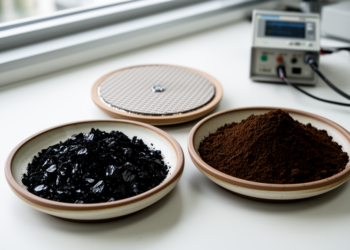
A new study finds coconut shell-derived carbon electrodes achieve far higher capacitance and conductivity than kluwak shell-derived counterparts for electrical ...

A combined experimental and computational study shows that overoxidizing PEDOT films above about 1 volt cuts their currents, raises sheet ...

Researchers report a Caesalpinia bonducella-derived Ag/CuO nanocomposite that detects nitrite down to 0.1 nanomolar by cyclic voltammetry and shows antibacterial ...
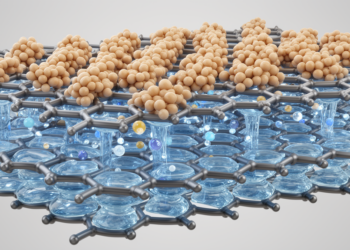
A finite-element model of a cerium dioxide–reduced graphene oxide electrode reported 2,758.7 mF cm−2 peak areal capacitance and 71% capacitance ...
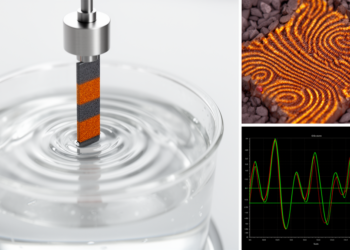
Ultrasonic processing reduced iron-signal clustering in a 20.0 wt% hematite BiVO₄ electrode and lowered its fitted charge-transfer resistance from 10.848 ...
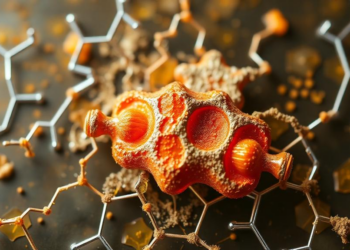
Researchers in Iran have shown that the oxidized form of the antipsychotic drug chlorpromazine acts as an efficient electrocatalytic mediator ...

Brazilian researchers used guaraná seed extract to synthesize silver nanoparticles that showed diffusion-influenced electrochemical responses to a commercial deltamethrin formulation ...

Researchers in India have shown how deposition potential, pH, and bath concentration switch nickel electrodeposition between instantaneous, progressive, and mixed ...

Scientists have synthesized silver nanowires coated with zinc and zinc/nickel mixed oxides that show faster pollutant degradation, tunable band gaps ...


Embark on a thrilling journey of discovery with Scienmag.com—your ultimate source for cutting-edge breakthroughs. Immerse yourself in a world where curiosity knows no limits and tomorrow’s possibilities become today’s reality!