


Melatonin Enhances Cotton Drought Tolerance Through Antioxidant and Hormonal Pathways
Exogenous melatonin improves drought tolerance in cotton by activating antioxidants, modulating hormonal networks, and promoting gibberellin synthesis.
Exogenous melatonin improves drought tolerance in cotton by activating antioxidants, modulating hormonal networks, and promoting gibberellin synthesis.

Researchers have developed a portable colorimetric sensor using disodium EDTA-functionalized gold nanoparticles on synthetic cotton fibers to rapidly detect toxic ...

A study in Cell Biology and Toxicology identifies GhECA8 as a key regulator of salt tolerance in cotton by maintaining ...

A single promoter SNP that boosts GaOFP17 expression reduces cotton boll and seed sizes by engaging the transcription factor NF-YC4 ...

A new review proposes that the histone marks H3K4me3 and H3K27me3 may keep cold-responsive genes in cotton poised for rapid ...

Researchers report that the transcription factor GhMYB63 activates the peptide gene GhIDL1 to promote boll abscission in cotton.
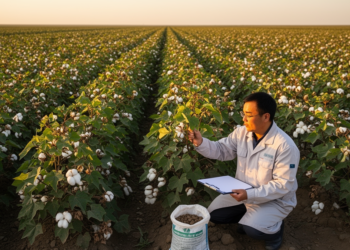
A one-year Xinjiang field trial found that organic fertilizer combined with a composite microbial inoculant raised cotton photosynthesis and seed ...
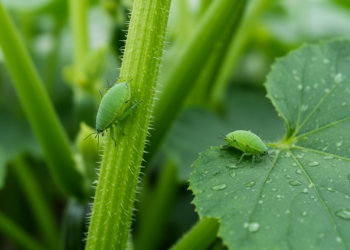
A new study finds zucchini's high amino acid content lowers the nutritional barrier for cotton-melon aphids moving from cotton to ...

A new study from Bahawalpur, Pakistan, finds that transformer models, led by the Swin Transformer, classify cotton leaf diseases more ...

A 20-year study of China's Tarim River Basin finds that combining an optimal crop mix with full drip irrigation could ...


Embark on a thrilling journey of discovery with Scienmag.com—your ultimate source for cutting-edge breakthroughs. Immerse yourself in a world where curiosity knows no limits and tomorrow’s possibilities become today’s reality!