

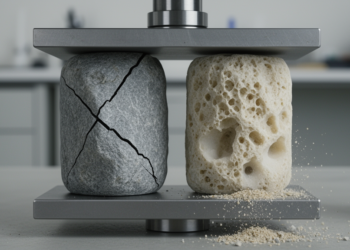
Dissolution Alters Failure in Rock-Like Specimens Under Uniaxial Compression
Controlled uniaxial compression tests found that increasing dissolution weakened rock-like specimens and changed failure from a dominant-crack event to progressive ...
Controlled uniaxial compression tests found that increasing dissolution weakened rock-like specimens and changed failure from a dominant-crack event to progressive ...
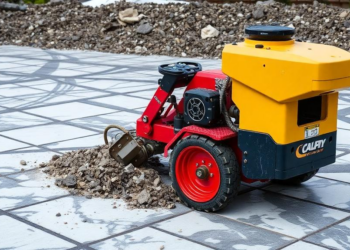
A machine learning study shows that waste marble dust can replace up to 32 percent of the cement in semi-flexible ...

An experimental study in Ecuador found that a hybrid steel-polypropylene fiber mix boosted concrete's energy absorption roughly 18-fold while cutting ...
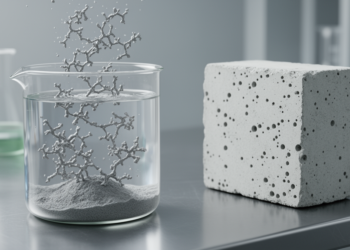
A new study links the fractal geometry of pore structures in activated red mud cementitious materials to both compressive strength ...
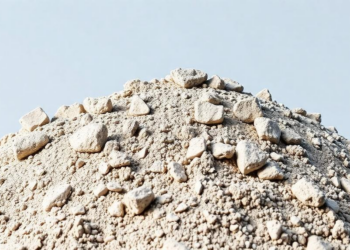
The study's framing of geopolymer optimization reflects a broader shift in construction materials research away from single-property maximization toward balanced, ...

Researchers found that shredded watermelon vine waste can both reinforce ecological porous concrete and neutralize its alkalinity, enabling over 80 ...
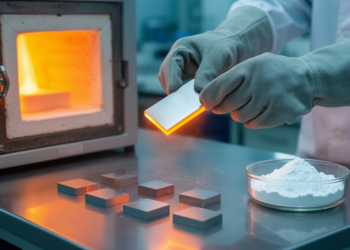
Adding zirconium oxide to yttria-strengthened tungsten refines grains and boosts compressive strength by up to 44 percent at room temperature ...
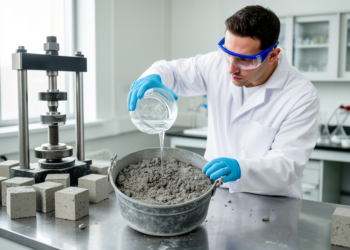
The distinction between Class C and Class F fly ash plays a central role in understanding why the mortar mixes ...
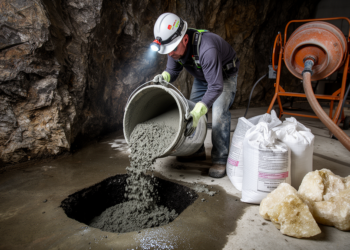
A sequential laboratory study shows that combining bentonite, metakaolin and quicklime can cut cement content in underground backfill grouts while ...
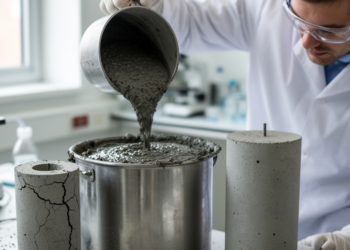
Researchers at Vellore Institute of Technology show that adding just 0.04 percent graphene oxide by weight of cement densifies the ...


Embark on a thrilling journey of discovery with Scienmag.com—your ultimate source for cutting-edge breakthroughs. Immerse yourself in a world where curiosity knows no limits and tomorrow’s possibilities become today’s reality!