

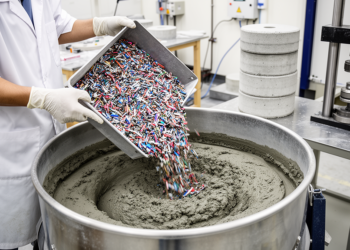
Ground Waste Plastic Replaces River Sand in Concrete, With Measured Strength Trade-Offs
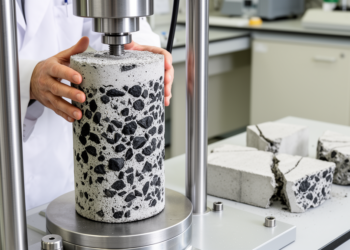
A combined laboratory and ABAQUS modeling study shows that waste plastic powder replacing river sand reduces concrete workability, compressive strength, ...
A combined laboratory and ABAQUS modeling study shows that waste plastic powder replacing river sand reduces concrete workability, compressive strength, ...
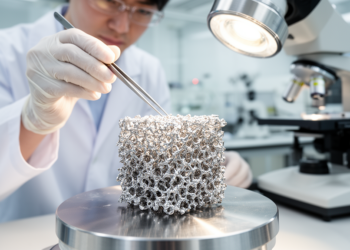
A laboratory study prepared porous Ni–Cr alloy foam by vacuum-depositing chromium onto nickel foam and measured its composition, compressive strength ...
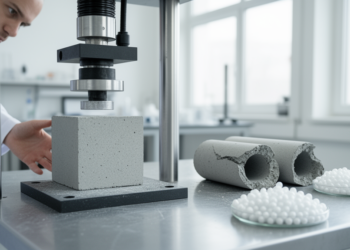
Researchers combined new laboratory tests with an interpretable machine-learning framework to predict the compressive strength of microcapsule-modified concrete, achieving an ...

A laboratory study of 15 concrete mixes shows that replacing natural aggregates with porous palm oil clinker cuts strength by ...
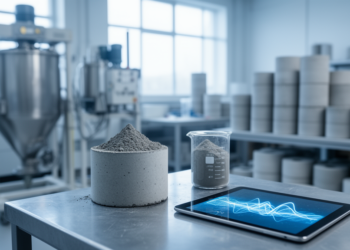
A new study combines CTGAN-generated synthetic data, hybrid machine learning, SHAP explainability, reliability analysis and multi-objective optimization to design fly ...
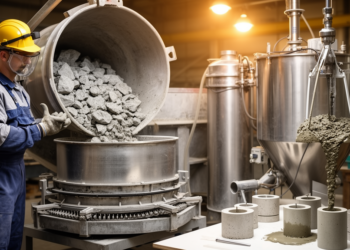
Researchers transformed tunnel excavation muck into fine-particle high-density concrete, showing that a coupled vacuum and vibration mixing process boosts compressive ...
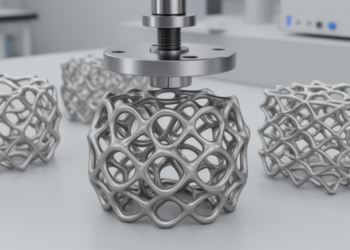
Experiments on electron-beam-manufactured Ti-6Al-4V gyroid lattices found that thicker walls increased stiffness and static strength, while all five designs exceeded ...
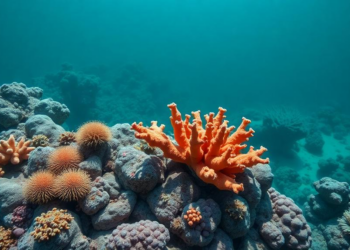
A response-surface-guided neural network predicted a balanced silica-fume and nano-silica formulation for coral aggregate concrete, reducing prediction error without additional ...
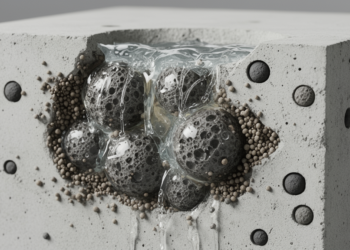
Laboratory tests found that sodium-hydroxide conditioning improved fly ash aggregate strength, concrete compressive capacity, interfacial bonding, and water resistance, while ...
Laboratory tests and simulations found that cement- and lithium-based consolidation allowed weathered coal gangue to replace part of the aggregate ...


Embark on a thrilling journey of discovery with Scienmag.com—your ultimate source for cutting-edge breakthroughs. Immerse yourself in a world where curiosity knows no limits and tomorrow’s possibilities become today’s reality!