

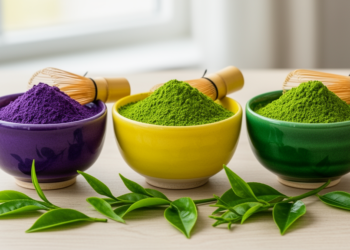
Purple, Yellow and Green Tea Leaves Yield Chemically Distinct Matcha, Study Finds
A new metabolomics study shows that matcha made from purple- and yellow-leaf tea cultivars has chemically distinct taste and aroma ...
A new metabolomics study shows that matcha made from purple- and yellow-leaf tea cultivars has chemically distinct taste and aroma ...

A comprehensive survey of the rare Chinese tea plant Camellia ptilophylla maps caffeine-free alkaloid chemistry, root-only theanine, and 89 aroma ...
A decade-spanning metabolomics study of Wuyi rock tea Rougui reveals stage-wise polyphenol remodeling and a dramatic enrichment of gallic acid ...
New metabolomics research shows that the fungi behind dark tea fermentation and rat gut microbiota transform the tea catechin EGCG ...
A new flavoromics and molecular docking study identifies the volatile and non-volatile compounds that distinguish the betelnut, stale, ginseng, and ...
A new metabolomics study shows that matching summer tea leaf tenderness with the right processing method can transform bitter, astringent ...
A new review reveals how carbohydrate allocation and source–sink dynamics govern tea plant growth, stress resilience and flavor quality under ...
A combined sensory and molecular networking study reveals how two probiotic strains transform the metabolites that make Liu-Pao dark tea ...
A systematic analysis of Zijuan oolong tea reveals how light, medium, and heavy roasting reshape anthocyanins, catechins, amino acids, and ...
Researchers show that tea catechin structure determines how insoluble rice bran waste particles can be engineered into stable, antioxidant Pickering ...

Embark on a thrilling journey of discovery with Scienmag.com—your ultimate source for cutting-edge breakthroughs. Immerse yourself in a world where curiosity knows no limits and tomorrow’s possibilities become today’s reality!