

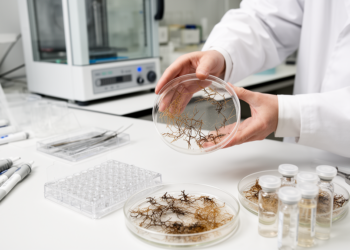
Lab tests reveal variable carbon use and heat tolerance in post-fire fungi
A seven-isolate laboratory study found varied growth, heat-tolerance and tissue-chemistry responses among fungi associated with pyrogenic carbon in a frequently ...
A seven-isolate laboratory study found varied growth, heat-tolerance and tissue-chemistry responses among fungi associated with pyrogenic carbon in a frequently ...

A comparative core study found contrasting microbial assembly, reactive iron cycling and carbon-cycling potential in the abandoned and present Yellow ...
A year-long study in Northeast China's forested swamps reveals that soil CO₂ emissions respond to air temperature with seasonally shifting ...
A new study in southwest China shows that limestone soils harbor significantly higher nutrient-cycling gene abundances than dolostone or clasolite ...
A field study on Hailing Island shows that mixing mangrove litter from different species alters carbon, nitrogen, and phosphorus composition ...
Metabarcoding of peat, litter, wood and mycorrhizal roots in a Siberian raised bog reveals roughly 11,500 fungal species hypotheses, with ...
A reciprocal litterbag experiment in Taiwan reveals that fire-tolerant and fire-avoiding pine species drive distinct fungal successions during needle decomposition, ...
Metagenomic and transcriptomic analysis of an acidic German fen reveals nearly 10,000 biosynthetic gene clusters, 97 percent of them new ...
A new 30-meter-resolution annual dataset shows China's forest trees rose from about 106 billion to 182 billion between 1985 and ...
A seven-year whole-soil warming experiment in a California forest reveals that soil depth, not temperature, dominates microbial carbon cycling strategies, ...

Embark on a thrilling journey of discovery with Scienmag.com—your ultimate source for cutting-edge breakthroughs. Immerse yourself in a world where curiosity knows no limits and tomorrow’s possibilities become today’s reality!