

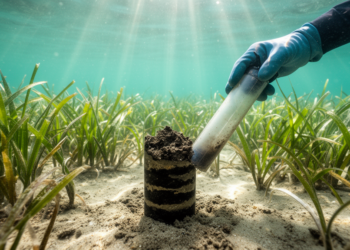
Seagrass sediments get an updated estimate of global carbon burial
A Nature Communications study compiled directly dated seagrass sediment cores to produce updated global estimates of carbon burial.
A Nature Communications study compiled directly dated seagrass sediment cores to produce updated global estimates of carbon burial.

A new modeling study finds that adding deciduous and evergreen shrub types to a nutrient-aware land surface model significantly changes ...
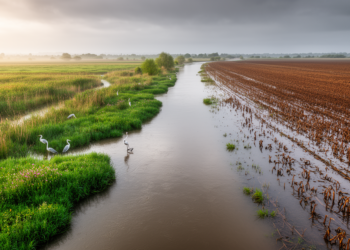
A global analysis combining satellite observations and climate model projections finds that wet events suppress vegetation productivity at northern high ...
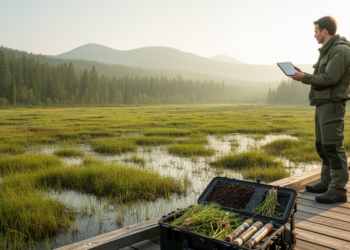
Adding six missing land carbon cycle processes to 11 CMIP6 models raises their TCRE by an average of 21.4 percent, ...

Under-ice measurements in Qinghai Lake show that dark-driven microbial carbon fixation contributes about 61 percent of total carbon uptake during ...

A 15-year airborne measurement study in Nature shows the Amazon is a net carbon source, with deforestation and fire as ...

A full-course survey of the Yarlung Tsangpo finds the Tibetan river is a strong net source of carbon dioxide, methane, ...

New model simulations from the University of St Andrews show that cooling confined to the far northern latitudes, mimicking growing ...
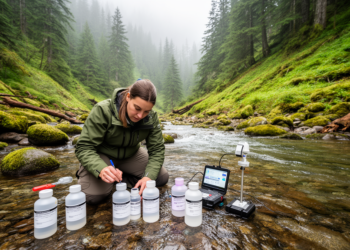
A 24-year Washington coastal study found that declining pH accompanied reduced dissolved silicon and a 92% drop in surface-water chlorophyll ...
Gross primary productivity, or GPP, is the amount of carbon captured by plants through photosynthesis before subtracting the carbon used ...


Embark on a thrilling journey of discovery with Scienmag.com—your ultimate source for cutting-edge breakthroughs. Immerse yourself in a world where curiosity knows no limits and tomorrow’s possibilities become today’s reality!