

Serum SAP emerges as strongest marker of white-matter lesions in older CSVD patients
In a cross-sectional study of 382 older patients with cerebral small-vessel disease, elevated serum amyloid P component had the strongest ...
In a cross-sectional study of 382 older patients with cerebral small-vessel disease, elevated serum amyloid P component had the strongest ...
A three-year longitudinal study finds that routine blood count markers—neutrophil count, NLR, and WLR—are independently associated with white matter hyperintensities ...
A new vision-language model fuses MRI, diffusion imaging and clinical scores to classify Alzheimer's disease, works even when data is ...
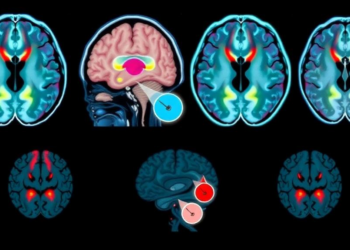
A hybrid CNN–BiLSTM network with additive attention classifies brain MRI into four Alzheimer's disease stages with 95.94% slice-level accuracy, while ...
A hybrid model pairing a ConvNeXt backbone with a Kolmogorov–Arnold Network head reaches 94.5 percent accuracy in four-way Alzheimer's staging ...
A new AI framework called SliceMap uses lightweight two-dimensional neural networks to efficiently localize subtle discriminative regions in brain MRI, ...
A two-center study found that a machine-learning model built from 13 multiparametric brain MRI features can distinguish moderate-to-severe intestinal fibrosis ...
A prospective study of 41 newborns with hypoxic-ischemic encephalopathy found that serum orexin-A followed divergent early trajectories depending on therapeutic ...
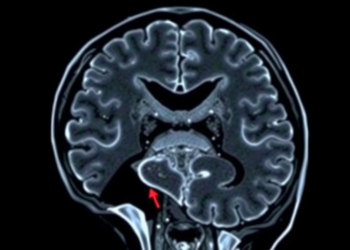
A systematic review of 206 patients finds that bilateral claustrum hyperintensity on MRI marks a distinct, fever-triggered subset of new-onset ...
A prospective study of 124 patients found that a deep learning reconstruction technique called DEPICTA can complete a multi-contrast brain ...


Embark on a thrilling journey of discovery with Scienmag.com—your ultimate source for cutting-edge breakthroughs. Immerse yourself in a world where curiosity knows no limits and tomorrow’s possibilities become today’s reality!