

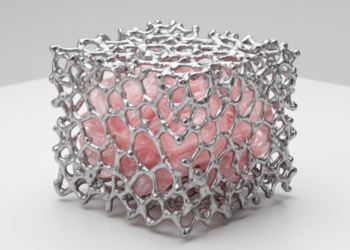
Titanium-Coated Sponge Scaffolds Show Promise for Bone Tissue Engineering
Researchers developed titanium-spongin composites by metallizing marine sponge scaffolds, showing enhanced osteoblast activity and cytocompatibility for tissue engineering.
Researchers developed titanium-spongin composites by metallizing marine sponge scaffolds, showing enhanced osteoblast activity and cytocompatibility for tissue engineering.

A new review in Materials Today Bio explores how gene-activated matrices use nanomedicine to sustain bone repair by integrating scaffold ...

A comprehensive scientific review examines how bioelectrical cues, ion channel activation, and advanced electroactive biomaterials accelerate bone regeneration and fracture ...

A new review argues that 3D-printed bone scaffolds still lack the functional, perfusable vascular networks needed for clinical translation.

Researchers have found that overexpressing the protein FRZB restores mitochondrial function and rescues the bone-forming capacity of periodontal ligament stem ...

A mesoporous silica nanoparticle system delivering Reln mRNA into Schwann cells accelerated calvarial defect and fracture healing in male mice ...

In mouse periodontal ligament stem cells, silencing the transcription factor ELK1 reduced STUB1-driven ubiquitin degradation of DLX2, raising osteogenic markers ...

A review in the Journal of Advanced Research synthesizes how single-cell chromatin accessibility studies are reshaping understanding of bone development, ...

In rat bone marrow stem cells, the TLR4 inhibitor TAK-242 suppressed LPS-induced inflammatory gene expression while leaving osteogenic differentiation largely ...

An editorial on a Frontiers Research Topic argues that smart biomaterials and additive manufacturing must be tied to measurable, reproducible ...


Embark on a thrilling journey of discovery with Scienmag.com—your ultimate source for cutting-edge breakthroughs. Immerse yourself in a world where curiosity knows no limits and tomorrow’s possibilities become today’s reality!