

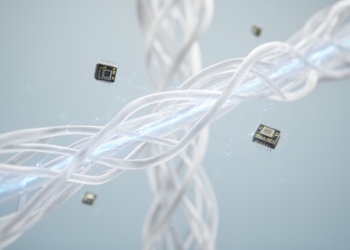
Collagen’s Hidden Electricity Could Power the Next Generation of Implants
A new review reveals how collagen's intrinsic piezoelectricity could power self-driven tissue regeneration and biosensing implants without external energy.
A new review reveals how collagen's intrinsic piezoelectricity could power self-driven tissue regeneration and biosensing implants without external energy.

The choice of CEACAM5, historically known as carcinoembryonic antigen (CEA) and assigned the cluster designation CD66e, as the model analyte ...
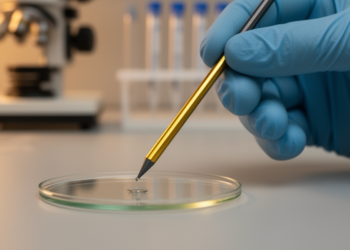
A receptor-free electrochemical sensor uses gold-thiol chemistry on pencil graphite electrodes to detect the breast cancer biomarker CA 15-3 at ...
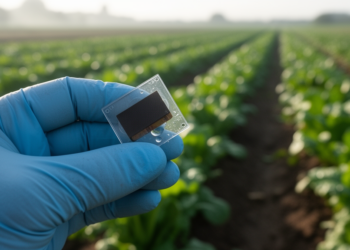
A new review highlights how graphene-based electrochemical sensors, from three-electrode systems to field-effect transistors, are achieving record-breaking limits of detection ...
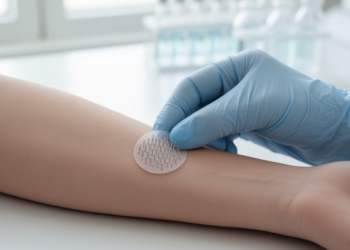
A new review examines how microneedle technologies can access dermal interstitial fluid biomacromolecules, revealing transport constraints, design principles, and the ...

A new Frontiers Research Topic gathers foundational, mechanistic, and translational studies probing whether quantum coherence, tunneling, and spin dynamics shape ...

A new review shows biosensor technologies are emerging as fast, cheap and ultrasensitive tools to detect persistent brominated flame retardants ...
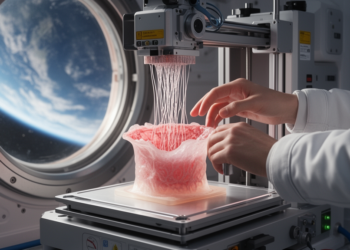
A new review details how tissue engineering, 3D bioprinting, tissue chips, and biosensors are turning orbital microgravity into a powerful ...

A new review in Nano-Micro Letters details how advanced manufacturing, heterogeneous integration, multimodal sensing, and AI are turning wearable electronics ...
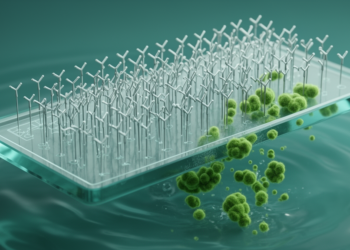
A new review from the University of Toronto charts the evolution of organosilane surface chemistry for biosensor probe attachment, from ...


Embark on a thrilling journey of discovery with Scienmag.com—your ultimate source for cutting-edge breakthroughs. Immerse yourself in a world where curiosity knows no limits and tomorrow’s possibilities become today’s reality!