


Deep inside your bones, tendons, and skin, a quiet electrical phenomenon has been at work all along. Every time you move, the collagen fibers that form the structural backbone of your body generate tiny electrical charges in response to mechanical stress. This intrinsic property, known as bio-piezoelectricity, has captivated scientists since the 1960s, when researchers first demonstrated that collagen exhibits piezoelectric effects. Now, a comprehensive review published in the Journal of Medical and Biological Engineering by Cheng-Tang Pan, S. Laya, Yow-Ling Shiue, Tulsi Paudel, and colleagues at National Sun Yat-sen University in Taiwan examines how this remarkable biological electricity could transform tissue engineering, regenerative medicine, and self-powered biosensing platforms.
Collagen is the most abundant protein in the human extracellular matrix, providing structural integrity to bones, skin, tendons, and virtually every connective tissue. What makes it scientifically extraordinary is its non-centrosymmetric triple-helical structure. Unlike materials whose molecular arrangement is symmetric in all directions, collagen’s helical architecture lacks a center of symmetry, which is the fundamental prerequisite for piezoelectricity. When mechanical force deforms the helix, the displacement of charged molecular groups within the structure creates a net electrical polarization. This means collagen can convert mechanical energy from body movement directly into localized electrical signals without any external power source, a property that has profound implications for how cells behave in their microenvironment.
The review, which surveyed literature from January 2000 to June 2026 across PubMed, Scopus, and Web of Science, identified that collagen-based piezoelectric biomaterials have shown promise across multiple tissue types, including bone, neural, skin, and cardiac tissue engineering. The key insight is that piezoelectric scaffolds can harness the body’s own endogenous mechanical stimuli, such as walking, breathing, or cardiac pulsation, and convert them into localized electrical cues at the implant site. These electrical signals influence cell adhesion, migration, differentiation, and extracellular matrix remodeling, all without the need for batteries, wires, or external stimulators. This self-powered approach represents a fundamental shift from traditional electrically active implants that require external energy.
At the nanoscale, the origins of collagen piezoelectricity have been progressively uncovered through advanced characterization techniques. Piezoresponse force microscopy has revealed nanoscale electromechanical heterogeneity within the subfibrillar structure of collagen fibrils, meaning that piezoelectric properties vary across the molecular building blocks of the protein. Molecular dynamics simulations have further clarified the polarization mechanisms within the super-twisted collagen structure, showing how the specific amino acid sequence and the spatial arrangement of alanine, hydroxyproline, and glycine residues contribute to the net piezoelectric response. These studies demonstrate that collagen’s piezoelectricity is not a uniform bulk property but emerges from the precise molecular geometry of its triple helix.
Fabrication strategies for collagen-based piezoelectric biomaterials have evolved considerably. Electrospinning, a technique that uses electrical forces to draw polymer solutions into nanofibers, has emerged as a leading method for creating collagen-containing piezoelectric scaffolds with controlled fiber alignment and porosity. Near-field electrospinning allows even greater precision in fiber placement, enabling researchers to pattern scaffolds that mimic the anisotropic architecture of native tissues. The alignment of electrospun fibers matters enormously, because the direction of fiber orientation determines the direction of piezoelectric response, which in turn influences how cells orient and migrate on the scaffold surface.
Hybrid systems that combine collagen with other piezoelectric or conductive materials have demonstrated enhanced electromechanical performance beyond what collagen alone can achieve. Barium titanate, a ceramic piezoelectric material with a high piezoelectric coefficient, has been incorporated into composite scaffolds to boost the overall electrical output. Conductive polymers have also been integrated to improve charge transport within the scaffold matrix. These hybrid approaches address one of the key limitations of pure collagen, which is that its piezoelectric coefficient is relatively modest compared to synthetic ceramics. By combining collagen’s biocompatibility and biodegradability with the superior piezoelectric performance of synthetic materials, researchers can create scaffolds that are both biologically compatible and electrically potent.
In bone tissue engineering, piezoelectric scaffolds have shown particular promise because bone itself is a naturally piezoelectric tissue. The review identified that piezoelectric signals play a role in vascularized bone regeneration, and that electrical stimulation can promote osteogenic differentiation of stem cells. Ultrasound-activated piezoelectric scaffolds have been developed to target specific intracellular signaling pathways, including calcium ion and NF-κB signaling, to orchestrate immunomodulation and osteogenesis for accelerated bone regeneration. The converse piezoelectric effect, where an applied electrical field produces mechanical deformation, has also been explored as a novel approach for applying mechanical stimulation to bone tissue without external loading.
In neural tissue engineering, electrospun piezoelectric scaffolds have been shown to support neurite extension of primary neurons, suggesting that the localized electrical cues generated by these materials can guide nerve regeneration. Biodegradable piezoelectric sensors have been developed for real-time evaluation of motor function recovery after nerve injury, demonstrating that the same materials used for tissue regeneration can also serve as diagnostic tools. In skin wound healing, piezoelectric film scaffolds have promoted healing with enhanced collagen deposition and blood vessel regeneration through upregulation of the PI3K/AKT signaling pathway. Three-dimensional printed piezoelectric wound dressings have been developed with dual piezoelectric response models for scar-prevention wound healing, and self-powered piezoelectric nanofibrous hydrogels have been designed for synergistic electro-pharmacological therapy of chronic wounds.
Beyond tissue regeneration, the review highlights the emerging potential of collagen-based piezoelectric materials for biosensing and energy harvesting applications. Piezoelectric nanogenerators can convert human motion into electrical energy for powering wearable and implantable devices, and self-powered sensors based on these materials can monitor physiological signals in real time without batteries. Collagen-gold nanoparticle conjugates have been developed for versatile biosensing, and collagen-based biopiezoelectric nanogenerators have been prepared from biological waste materials such as fish skin, demonstrating the sustainability potential of these approaches. Flexible pressure sensors, wearable patches for sweat analysis, and implantable BioMEMS devices all represent potential integration points for collagen-based piezoelectric platforms in next-generation healthcare systems.
Despite the remarkable progress, the review emphasizes that clinical translation of collagen-based piezoelectric biomaterials requires further advancement in several critical areas. Performance variability remains a challenge, as the piezoelectric properties of collagen can differ depending on source, processing method, and environmental conditions. Degradation stability must be improved to ensure that scaffolds maintain their electromechanical performance throughout the tissue regeneration process. Seamless integration with flexible electronic systems is essential for combining tissue engineering with biosensing functionality. The review concludes that standardized fabrication protocols, rigorous in vivo validation, and careful consideration of regulatory requirements will be essential for advancing these materials toward practical biomedical use. As research continues to unravel the molecular mechanisms of collagen piezoelectricity and refine fabrication strategies, these materials stand poised to redefine the interface between biology and electricity in medicine.
Subject of Research: Bio-piezoelectric mechanisms and biomedical applications of collagen-based piezoelectric biomaterials
Article Title: Bio-Piezoelectricity of Collagen: Mechanisms, Tissue Engineering Applications, and Biosensing Potential
Article References: Pan, C.-T., Laya, S., Shiue, Y.-L., & Paudel, T. (2026). Bio-Piezoelectricity of Collagen: Mechanisms, Tissue Engineering Applications, and Biosensing Potential. Journal of Medical and Biological Engineering. https://doi.org/10.1007/s40846-026-01059-1
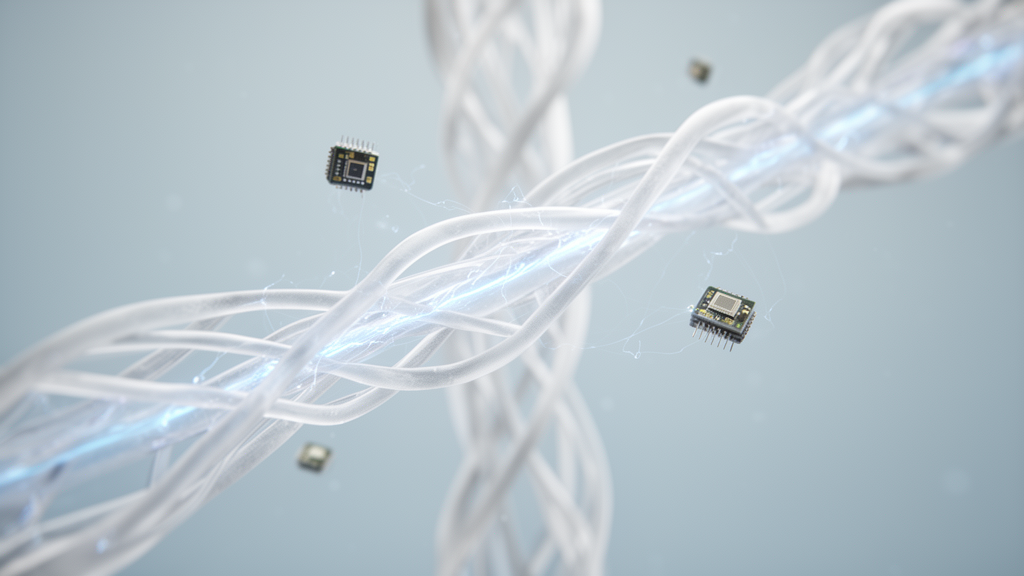
Image Credits: AI Generated
DOI: 10.1007/s40846-026-01059-1
Keywords: collagen, piezoelectricity, tissue engineering, regenerative medicine, biosensors, electrospinning, nanogenerators, biomaterials, bone regeneration, wound healing, energy harvesting, extracellular matrix
Cite Scienmag News
Ophelia Keating. (October 17, 2026). Collagen’s Hidden Electricity Could Power the Next Generation of Implants. Scienmag. https://scienmag.com/collagens-hidden-electricity-could-power-the-next-generation-of-implants/
Ophelia Keating. "Collagen’s Hidden Electricity Could Power the Next Generation of Implants." Scienmag, 17 October 2026, https://scienmag.com/collagens-hidden-electricity-could-power-the-next-generation-of-implants/. Accessed 17 October 2026.
Ophelia Keating. "Collagen’s Hidden Electricity Could Power the Next Generation of Implants." Scienmag. October 17, 2026. https://scienmag.com/collagens-hidden-electricity-could-power-the-next-generation-of-implants/


