


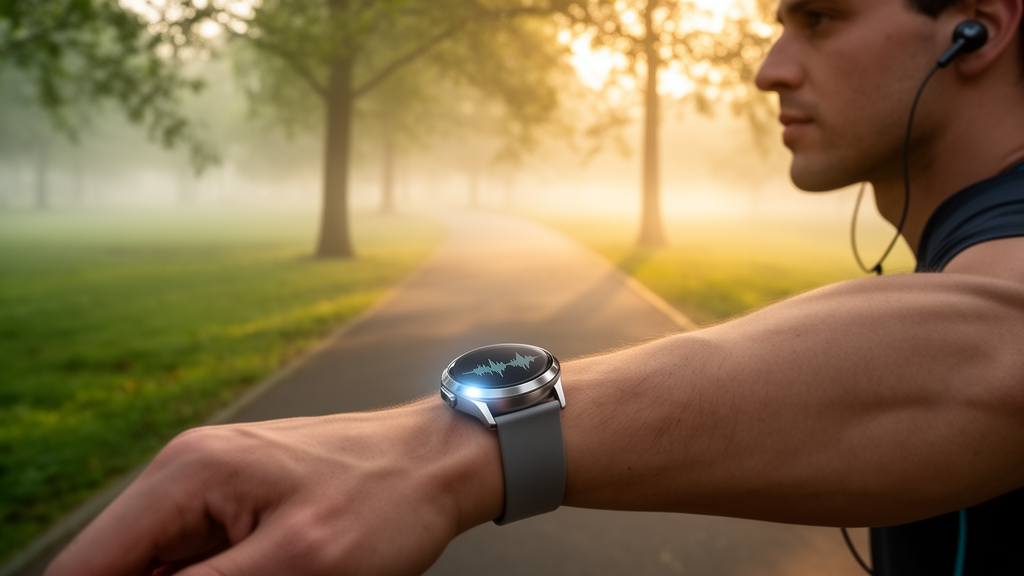
Chronic diseases now rank among the most stubborn burdens on global health, yet the way medicine diagnoses them has barely changed in decades. A patient typically receives care in episodic bursts: a visit to the clinic, a blood draw, a snapshot of vital signs, and then silence until the next appointment. That intermittent model struggles to capture the dynamic, hour-by-hour fluctuations of human physiology, and it often misses the subtle early signals that precede overt disease. A new review by researchers from the University of South China, the Technion–Israel Institute of Technology, and Sun Yat-Sen University argues that wearable electronics, powered by advanced manufacturing and artificial intelligence, are poised to replace those snapshots with a continuous, individualized film of health.
The review, published in the journal Nano-Micro Letters, traces the evolution of wearable devices from simple single-parameter gadgets into fully integrated, multimodal diagnostic platforms. According to the authors, the transformation rests on the convergence of three engineering pillars: materials science, micro- and nanofabrication, and heterogeneous system integration. Together, these advances allow compact, skin-conformal devices to sense, process, and transmit clinically meaningful data directly at the point of need, shifting healthcare from generalized, episodic assessment toward precision diagnosis guided by longitudinal, individualized data streams.
At the heart of the review is a systematic examination of four major sensing strategies. Electrical sensing captures electrophysiological activity such as heart rhythms and neural signals, as well as physical changes like pressure and strain. Electrochemical approaches excel at detecting metabolites, electrolytes, and other dissolved species in biological fluids. Transistor-based architectures amplify faint signals with high sensitivity, making them attractive for detecting trace biomarkers. Optical sensing, meanwhile, offers label-free or minimally invasive readout of molecular and physiological information. Each modality brings distinct advantages, and the review emphasizes that no single strategy suffices for comprehensive health assessment; instead, the future lies in fusing them.
The biological samples these sensors target are remarkably diverse. Wearable platforms can now interrogate sweat, saliva, tears, and interstitial fluid, harvesting information about metabolites, proteins, hormones, and other molecular biomarkers without needles or laboratory infrastructure. Because these biofluids are continuously produced and refreshed at or near the skin surface, they offer a real-time window into the body’s internal chemistry that conventional blood tests, taken days or weeks apart, cannot match. The ability to track molecular biomarkers noninvasively over hours, days, or months is what elevates wearables from fitness accessories into genuine diagnostic instruments.
Building sensors flexible enough to survive on moving, sweating skin requires equally sophisticated fabrication. The review highlights advanced manufacturing techniques including printing, coating, photolithography, three-dimensional fabrication, and laser writing. These methods allow engineers to construct delicate sensing components with micron-scale precision on soft, stretchable substrates. Printing approaches, for example, can deposit functional inks into patterned electrodes and sensing layers, while laser writing can sculpt three-dimensional microstructures that enhance sensor performance. The result is a toolkit for producing flexible electronics that conform to curved body surfaces without sacrificing the accuracy associated with rigid laboratory devices.
Individual sensors, however sophisticated, do not make a diagnostic system. The review devotes particular attention to heterogeneous integration, the engineering discipline of combining dissimilar components—sensors, electronic circuits, power supplies, and wireless communication modules—into a single compact platform. This is where wearables face some of their hardest problems: flexible sensing materials must coexist with rigid silicon chips, power budgets must stretch across days of continuous operation, and wireless links must remain dependable without draining batteries. The authors describe skin-conformal architectures that unify all of these functions, enabling long-term wear rather than short laboratory demonstrations.
Artificial intelligence supplies the interpretive layer that turns raw data streams into clinical insight. AI-enabled algorithms process complex multimodal signals, extract meaningful features, identify abnormal patterns, and support real-time interpretation. Some AI-assisted devices reviewed in the paper can distinguish clinically relevant patterns from background physiological noise, a capability that moves wearables beyond passive data collection toward intelligent health assessment. By learning each user’s personalized physiological baseline, these systems can flag deviations that would be invisible against population averages, supporting earlier detection, improved risk stratification, and more individualized treatment decisions.
The clinical breadth described in the review is striking. Wearable diagnostic platforms demonstrate potential applicability across neurological, cardiovascular, respiratory, ocular, musculoskeletal, oncological, diabetic, and inflammatory conditions. Examples include platforms for continuous cardiac monitoring, ongoing biochemical analysis, and detection of disease-associated biomarkers. By integrating multiple signals rather than relying on any single biomarker, multimodal systems construct a more comprehensive picture of physiological status—one that reflects the interplay of electrical, chemical, and molecular information across the body. That systems-level view is precisely what precision medicine demands.
Yet the path from laboratory prototype to clinical staple remains obstructed. The review catalogs the reliability threats that compromise measurement in real-world conditions: long-term sensor stability, motion artifacts from body movement, biofouling as biological material accumulates on sensor surfaces, signal drift over time, interference from the complex chemistry of biological samples, and variability between individual users. Each of these can erode the trustworthiness of data that clinicians are asked to act on. Integrating flexible sensing materials with rigid electronic components while maintaining low power consumption and dependable wireless communication also remains a difficult engineering balancing act.
Looking forward, the authors outline what widespread clinical adoption will require: scalable manufacturing, robust biointerfaces that maintain stable contact with skin and biofluids, improved multimodal data fusion, and AI models validated across diverse populations and real-world conditions rather than curated laboratory datasets. If those hurdles fall, the convergence of advanced manufacturing and intelligent data analysis could establish wearable electronics as accessible tools for early disease detection, longitudinal health monitoring, and personalized medical management. The review’s strategic outlook frames next-generation wearables not as gadgets but as infrastructure for a healthcare system in which diagnosis is continuous, individualized, and actionable in real time—a future in which the clinic travels with the patient.
Subject of Research: Wearable electronics for precision diagnosis through advanced manufacturing and heterogeneous integration
Article Title: Smart wearables bring personalized health monitoring closer to everyday life
Article References: Smart wearables bring personalized health monitoring closer to everyday life. (n.d.). Original publication
Image Credits: AI Generated
DOI: Not provided
Keywords: wearable electronics, precision diagnosis, health monitoring, advanced manufacturing, heterogeneous integration, multimodal sensing, artificial intelligence, biosensors, chronic disease, Nano-Micro Letters, biomarkers, flexible electronics
Cite Scienmag News
Denise Maddox. (October 16, 2026). Smart Wearables Move Personalized Health Monitoring Into Everyday Life. Scienmag. https://scienmag.com/smart-wearables-move-personalized-health-monitoring-into-everyday-life/
Denise Maddox. "Smart Wearables Move Personalized Health Monitoring Into Everyday Life." Scienmag, 16 October 2026, https://scienmag.com/smart-wearables-move-personalized-health-monitoring-into-everyday-life/. Accessed 16 October 2026.
Denise Maddox. "Smart Wearables Move Personalized Health Monitoring Into Everyday Life." Scienmag. October 16, 2026. https://scienmag.com/smart-wearables-move-personalized-health-monitoring-into-everyday-life/


