

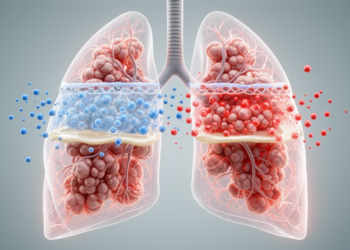
Why Oxygen Falls and Carbon Dioxide Rises in ARDS: The Bedside Physics of Failing Lungs
A new physiological review in Intensive Care Medicine explains why shunt drives hypoxaemia, dead space drives carbon dioxide retention, and ...
A new physiological review in Intensive Care Medicine explains why shunt drives hypoxaemia, dead space drives carbon dioxide retention, and ...

A retrospective MIMIC-IV analysis of 2,093 ICU patients found that a higher serum creatinine-to-albumin ratio was strongly associated with increased ...
A new systematic review and meta-analysis finds that prone positioning in brain-injured intensive care patients causes only a modest, transient ...
A new review in Intensive Care Medicine maps how high-flow nasal cannula, CPAP, and helmet ventilation can safely keep ARDS ...
SUNY Chancellor John B. King Jr. has announced $400,000 in Technology Accelerator Fund seed grants supporting nine faculty-led projects ranging ...
A newly published study identifies the VEGF-A splice variant VEGF165b as an endogenous protector that shields the lung's blood vessels ...
A retrospective study of 223 burn patients with inhalation injury finds that low total body surface area burned thresholds, ARDS, ...
Intensive care specialists from Marseille argue that severe obesity markedly raises chest wall elastance in ARDS, distorting airway pressure interpretation ...
New research identifies the endothelial protease ADAM17 as a master regulator of neutrophil migration, junctional integrity, and vascular leakage in ...
Researchers have engineered iron-dexamethasone nanoparticles that are selectively engulfed by neutrophils, calming acute lung inflammation in mice while avoiding the ...

Embark on a thrilling journey of discovery with Scienmag.com—your ultimate source for cutting-edge breakthroughs. Immerse yourself in a world where curiosity knows no limits and tomorrow’s possibilities become today’s reality!