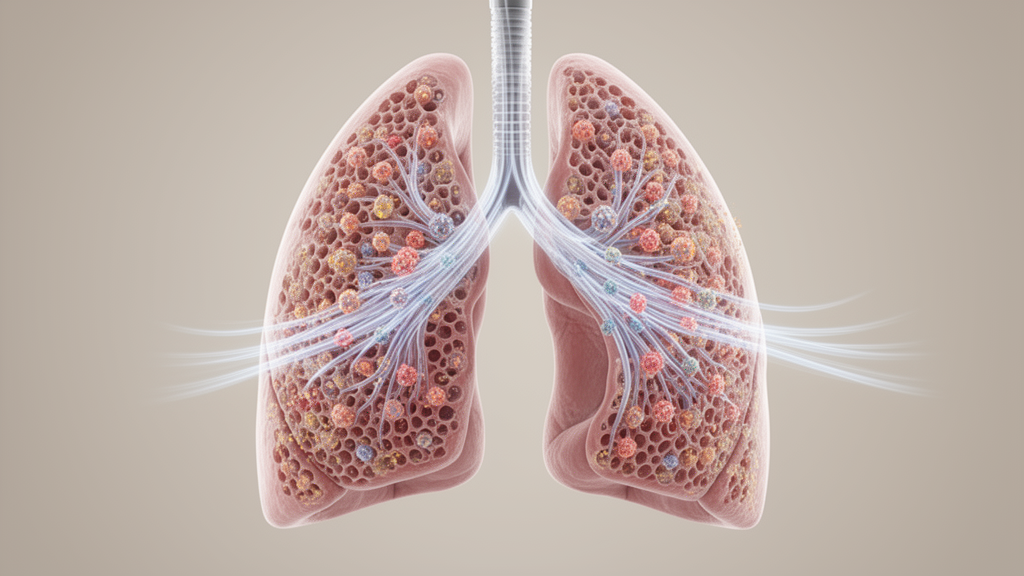
Sixty years after acute respiratory distress syndrome was first described, mechanical ventilation remains the cornerstone of supportive therapy for the condition. Low tidal volume ventilation transformed ARDS care by reducing ventilator-induced lung injury, and later concepts, including driving pressure, mechanical power, regional lung mechanics and individualized positive end-expiratory pressure, have further refined strategies to limit injurious mechanical stress and strain on damaged lungs. Yet a provocative question is now being raised in the pages of Intensive Care Medicine: has the field perfected the art of protecting the lung while neglecting the biology of repairing it?
In a hypothesis-driven article, researchers Ya Wang, Yonghao Xu and Haibo Zhang argue that lung protection has transformed ARDS care but that recovery remains incomplete. Many ARDS survivors experience persistent pulmonary and functional impairment long after their acute illness has resolved. Current ventilation, the authors observe, is designed primarily to prevent further injury.
The authors introduce the term “regenerative ventilation” to describe what they frame as a hypothesis-driven extension of lung-protective ventilation. The idea is to minimize injurious regional deformation while preserving physiological mechanical signals that may be required for endogenous repair. Crucially, they stress that this concept neither challenges low tidal volume ventilation nor advocates greater global tidal volumes. Rather, it asks whether, within the established boundaries of lung protection, the mechanical environment may also influence lung recovery, adding a second dimension to a field that has focused almost exclusively on avoiding harm.
The biological foundation for the hypothesis rests on the fact that mechanical forces are not exclusively injurious. Physiological cyclic deformation contributes to alveolar homeostasis and epithelial function. Experimental studies demonstrate that mechanosensitive pathways, including Yes-associated protein and transcriptional coactivator with PDZ-binding motif signaling, known as YAP/TAZ, regulate alveolar type II cell proliferation and repair. Pneumonectomy provides a striking biological example: increased mechanical tension in the remaining lung activates regenerative programs and promotes compensatory alveolar growth, suggesting that mechanical cues can indeed drive tissue regeneration.
However, the authors are careful to draw a sharp line between biological plausibility and clinical evidence. Pneumonectomy differs fundamentally from ARDS, in which inflammation, edema, surfactant dysfunction, regional collapse and heterogeneous tissue injury coexist. These experimental observations, they write, establish biological plausibility, not evidence that a specific range of ventilation-induced deformation promotes repair in human ARDS. The distinction matters, because translating mechanobiology from a surgically altered but otherwise intact lung to a diffusely inflamed, edematous organ is far from straightforward.
To make the hypothesis testable, the authors propose a more precise definition of strain. Static strain reflects deformation related to end-expiratory lung volume, including that imposed by PEEP, whereas dynamic strain reflects tidal deformation between end-expiration and end-inspiration. The proposed regenerative concept relates primarily to regional dynamic deformation, because cyclic deformation drives mechanotransduction, but its biological effect depends on the static mechanical background on which it is superimposed. A poorly recruited region may have low end-expiratory aeration yet experience substantial local dynamic deformation or tidal recruitment, whereas PEEP may increase static deformation while reducing tidal deformation in successfully recruited units. Regional dynamic strain can differ markedly despite identical global tidal volumes, and global tidal volume normalized to predicted body weight is itself an imperfect surrogate for functional lung size.
From this reasoning emerges the article’s central construct: the “regenerative strain window.” The authors propose it as a testable hypothesis rather than an identifiable therapeutic target, defining it as a potentially favorable range of regional dynamic deformation in which injurious mechanical stress is limited while mechanosensitive signaling relevant to repair may be preserved. They caution that the mechanical conditions that minimize injury and those that favor repair are not assumed to be identical, and that the position and width of this window may vary among patients and over time. Injury and repair, they argue, may follow distinct, partially overlapping dose-response relationships whose thresholds probably differ between individuals and shift as the disease evolves.
The framework also grapples with the notorious heterogeneity of ARDS. Morphology, recruitability, regional ventilation, overdistension, respiratory mechanics and spontaneous effort are physiological or imaging traits and dynamic states, while inflammatory and molecular phenotypes represent distinct biological constructs that should not be considered interchangeable. Recent evidence reinforces this distinction: inflammatory ARDS phenotypes can have markedly different outcomes despite broadly similar lung and chest-wall mechanics, and inflammatory phenotype assignments can evolve during the course of ARDS, underscoring the limitations of fixed classification. Morphological phenotypes may identify differing responses to interventions such as PEEP or prone positioning, although current evidence remains context-specific. Accordingly, the authors suggest that precision ventilation may be better informed by repeated assessment of actionable physiological traits and biological states than by assigning each patient to a single stable phenotype.
Regional information is increasingly measurable, although considerably more difficult to manipulate. Electrical impedance tomography can characterize regional ventilation distribution and changes during PEEP titration; quantitative computed tomography defines morphology, aeration and recruitability; lung ultrasound tracks regional changes in aeration; and esophageal pressure estimates transpulmonary pressure rather than regional strain. These measurements can nevertheless inform global interventions. For example, substantial dependent collapse with high recruitability may support cautious PEEP optimization and prone positioning, whereas low recruitability with non-dependent overdistension may favor limiting PEEP escalation and inspiratory pressure. Prone positioning is particularly relevant because it may redistribute transpulmonary pressure and reduce regional mechanical heterogeneity without independently ventilating individual lung regions. Multimodal assessment, the authors suggest, combined with repeated reassessment, allows strategies such as PEEP adjustment, driving pressure and tidal volume modification, prone positioning and recruitment maneuvers to adapt as lung physiology and patient factors evolve.
The authors are explicit about what their proposal is not. Derecruitment and repetitive opening-closing of lung units are established mechanisms of ventilator-induced lung injury and should not be equated with insufficient regenerative signaling. The immediate clinical objective remains established lung protection, and whether optimizing these mechanical conditions also preserves mechanotransduction that facilitates epithelial repair is an unanswered downstream hypothesis. The regenerative strain window remains a testable hypothesis and is not currently a quantitatively defined or clinically validated therapeutic target. The next frontier, they conclude, is not implementation of regenerative ventilation but experimental and clinical validation of its central premise: does clinically relevant cyclic deformation influence repair in the acutely injured human lung, are injury-minimizing and repair-promoting mechanical conditions concordant or distinct, and can they be measured and modified safely? Answering those questions, the authors argue, may determine whether mechanical ventilation can eventually evolve from protecting the lung during ARDS toward also supporting its recovery.
Subject of Research: A hypothesis on regenerative ventilation and a proposed "regenerative strain window" for ARDS recovery
Article Title: ARDS at 60: beyond lung protection to lung repair
Article References: Wang, Y., Xu, Y., & Zhang, H. (2026). ARDS at 60: beyond lung protection to lung repair. Intensive Care Medicine. https://doi.org/10.1007/s00134-026-08610-3
Image Credits: AI Generated
DOI: 10.1007/s00134-026-08610-3
Keywords: ARDS, mechanical ventilation, lung repair, ventilator-induced lung injury, regenerative ventilation, dynamic strain, PEEP, electrical impedance tomography, mechanotransduction, precision ventilation, YAP/TAZ signaling, lung protection
Cite Scienmag News
Ophelia Keating. (October 27, 2026). Sixty Years After ARDS Was Named, Scientists Ask Whether Ventilation Can Help Lungs Repair. Scienmag. https://scienmag.com/sixty-years-after-ards-was-named-scientists-ask-whether-ventilation-can-help-lungs-repair/
Ophelia Keating. "Sixty Years After ARDS Was Named, Scientists Ask Whether Ventilation Can Help Lungs Repair." Scienmag, 27 October 2026, https://scienmag.com/sixty-years-after-ards-was-named-scientists-ask-whether-ventilation-can-help-lungs-repair/. Accessed 27 October 2026.
Ophelia Keating. "Sixty Years After ARDS Was Named, Scientists Ask Whether Ventilation Can Help Lungs Repair." Scienmag. October 27, 2026. https://scienmag.com/sixty-years-after-ards-was-named-scientists-ask-whether-ventilation-can-help-lungs-repair/