

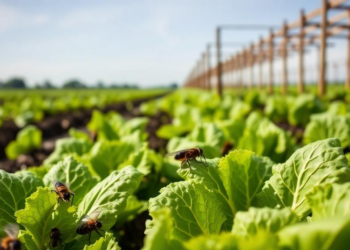
Heavy Pesticide Use Strips Insect Diversity but Boosts Pests in Lettuce Fields
A Chilean field study found that conventionally managed lettuce farms sprayed seven to nine times per cycle supported fewer insect ...
A Chilean field study found that conventionally managed lettuce farms sprayed seven to nine times per cycle supported fewer insect ...

A Portuguese field study of 19 blueberry cultivars shows that corolla size filters which bees visit legitimately, which are excluded, ...
A two-year study of rain-fed rice fields in Guinea-Bissau finds that the structure of the surrounding landscape, not local field ...
A systematic review of 41 studies spanning 1970 to 2025 compiles India's first national map of soil biodiversity, revealing 205 ...
A new ISSR marker study of 93 Moroccan fig cultivars reveals exceptionally high genetic diversity, with 89 percent of variation ...
A major review of 25 years of research finds that biochar, hydrochar and artificial humic substances can boost soil carbon ...
A new microcosm study finds that imidacloprid, thiamethoxam, and clothianidin seed treatments cause compound-specific and time-dependent shifts in soil fungal ...
The first systematic comparison of Swiss rice paddies with natural wetlands shows pesticide-free paddies support dense, distinct aquatic invertebrate communities ...
Researchers have created the first complete BBCH phenological framework for Chenopodium album, revealing that its hexaploid winter and tetraploid summer ...

Embark on a thrilling journey of discovery with Scienmag.com—your ultimate source for cutting-edge breakthroughs. Immerse yourself in a world where curiosity knows no limits and tomorrow’s possibilities become today’s reality!