


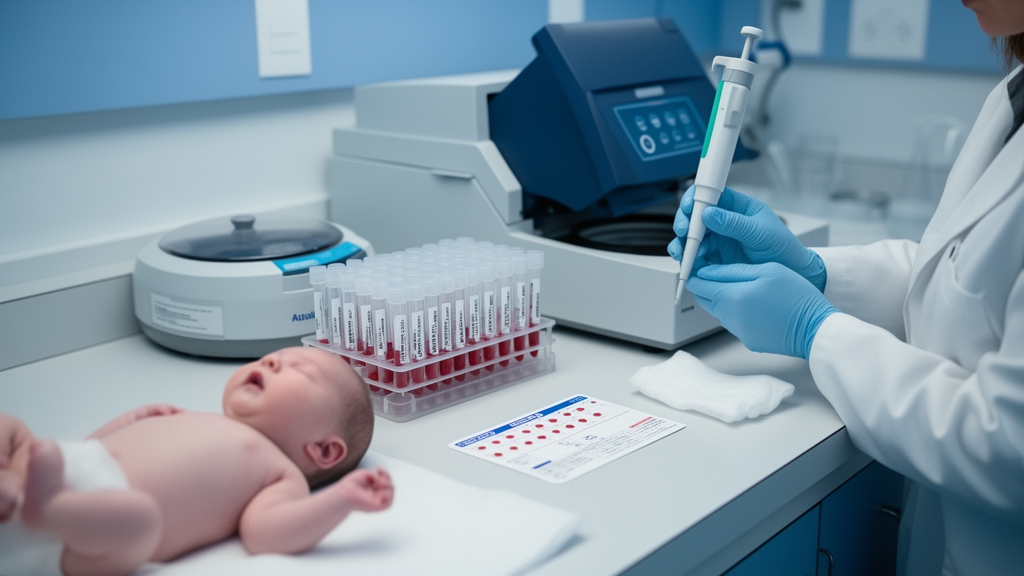
A systematic review found that PCR-based saliva testing and dried blood spot testing each showed favorable diagnostic performance for universal screening of congenital cytomegalovirus in newborns, but their sensitivity estimates differed in consistency. Saliva testing had reported sensitivity of 80.0%–98.6% and specificity of at least 96% in most studies, while dried blood spot testing had 97.2%–100.0% specificity but wider sensitivity estimates of 39.3%–93.0%. The review said methodological limitations, collection protocols and incomplete follow-up constrain comparisons between these approaches.
Congenital cytomegalovirus, abbreviated cCMV, is the most common congenital viral infection worldwide and a leading cause of non-genetic sensorineural hearing loss in children. Early identification through universal newborn screening may allow timely intervention and improved long-term outcomes, although the review evaluated diagnostic performance rather than clinical benefits. It examined studies of PCR-based screening conducted within the first three weeks of life using a universal screening approach.
The review followed Cochrane and PRISMA guidelines. Two reviewers independently selected studies, extracted data and assessed methodological quality with QUADAS-2 and QUADAS-C, tools designed to evaluate studies of diagnostic accuracy. Of 1,599 citations identified, 1,586 remained after deduplication, and 14 studies reporting findings from 19 cohorts published between 2009 and 2024 met the inclusion criteria.
Because the studies showed substantial heterogeneity, the results were synthesized narratively rather than pooled into a single overall diagnostic-accuracy estimate. Saliva-based PCR produced sensitivity estimates ranging from 80.0% to 98.6%. Specificity was at least 96% in most studies, and negative predictive values were high across settings.
The authors also cautioned that estimates may be influenced by variability in collection protocols and other methodological limitations. Dried blood spot PCR showed consistently high specificity in the included studies, with estimates from 97.2% to 100.0%, but more variable sensitivity, from 39.3% to 93.0%. The review described dried blood spot testing as feasible within existing newborn screening infrastructure, while noting that its variable sensitivity may limit its effectiveness as a standalone screening approach.
The findings therefore support considering dried blood spots alongside practical features such as integration with established laboratory systems, rather than judging the method by diagnostic accuracy figures alone. Pooled saliva testing provided a different way to organize screening. In this strategy, saliva samples from multiple newborns are combined, and individual retesting is triggered when a pool tests positive.
Pooled saliva testing showed sensitivity of 87.5%–98.6% and potential operational advantages, including reduced laboratory workload. Its positive predictive values varied widely, from 12% to 100%, but the review stated that this variation likely reflected differences in study design rather than true variation in test performance. The evidence nevertheless requires careful confirmatory testing pathways when a pooled result is positive.
Sequential testing designs and incomplete follow-up were common across the evidence base. These limitations mean that the reported sensitivity, specificity and predictive values should not be interpreted as definitive estimates for a single standardized assay or specimen-collection procedure. Substantial differences among studies also prevented meta-analysis.
The review concluded that saliva-based PCR has favorable diagnostic performance for universal cCMV screening, while dried blood spot testing offers high specificity and practical feasibility but may miss more cases depending on the study and protocol. Screening-program decisions must balance diagnostic accuracy with standardized collection procedures, confirmatory testing pathways, laboratory capacity, infrastructure and the consequences of missed cases. The authors called for future studies using standardized methods and complete follow-up to generate more robust estimates of test performance.
Central to the evidence is a distinction between detecting infection and demonstrating improved outcomes. The included studies evaluated PCR-based screening accuracy in newborns; they did not determine whether universal screening leads to better hearing or other long-term health outcomes. The review therefore supports saliva, dried blood spots and pooled saliva as screening options with different practical and diagnostic profiles, but it does not establish that any strategy produces superior clinical benefit.
Further standardized research is needed to clarify comparative performance and the consequences of missed cCMV cases in real screening programs.
Subject of Research: Diagnostic accuracy of PCR-based universal newborn screening for congenital cytomegalovirus
Article Title: Diagnostic accuracy of PCR-based screening methods for congenital cytomegalovirus in newborns: a systematic review of specimen types and testing strategies
Article References: Lai, T., Stafinski, T., & Menon, D. (2026). Diagnostic accuracy of PCR-based screening methods for congenital cytomegalovirus in newborns: a systematic review of specimen types and testing strategies. BMC Infectious Diseases. https://doi.org/10.1186/s12879-026-14216-3
Image Credits: AI Generated
DOI: 10.1186/s12879-026-14216-3
Keywords: congenital cytomegalovirus, newborn screening, saliva PCR, dried blood spots, pooled saliva testing, diagnostic accuracy, sensitivity, specificity, systematic review, polymerase chain reaction, Diagnostic, accuracy
Cite Scienmag News
Harold Sullivan. (October 26, 2026). Systematic review maps PCR accuracy for newborn cytomegalovirus screening. Scienmag. https://scienmag.com/systematic-review-maps-pcr-accuracy-for-newborn-cytomegalovirus-screening/
Harold Sullivan. "Systematic review maps PCR accuracy for newborn cytomegalovirus screening." Scienmag, 26 October 2026, https://scienmag.com/systematic-review-maps-pcr-accuracy-for-newborn-cytomegalovirus-screening/. Accessed 26 October 2026.
Harold Sullivan. "Systematic review maps PCR accuracy for newborn cytomegalovirus screening." Scienmag. October 26, 2026. https://scienmag.com/systematic-review-maps-pcr-accuracy-for-newborn-cytomegalovirus-screening/


