


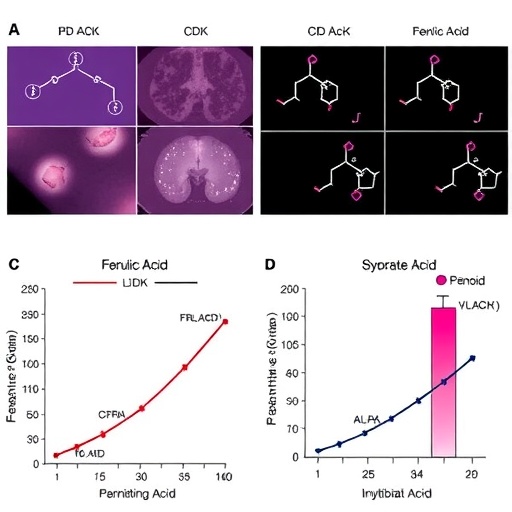
In a groundbreaking study poised to redefine breast cancer therapy, researchers have uncovered the remarkable potential of combining ferulic acid, a naturally occurring antioxidant, with state-of-the-art cyclin-dependent kinase (CDK) inhibitor drugs. This innovative synergy unravels an unprecedented approach to heighten the anti-tumor efficacy of breast cancer treatments, signaling a promising horizon in oncological pharmacotherapy.
At the core of this research lies the exploration of ferulic acid, a phytochemical renowned for its potent antioxidant properties and broad therapeutic promise across multiple medical disciplines. The study delves deeply into its bioactive mechanisms, particularly how it modulates oxidative stress and influences cancer cell proliferation dynamics. Ferulic acid’s intrinsic capability to mitigate cellular oxidative damage presents an alluring adjunctive prospect for enhancing the effectiveness of novel targeted therapies in oncology.
Cyclin-dependent kinase inhibitors represent a transformative class of anti-neoplastic agents that interfere with key regulatory checkpoints controlling cell cycle progression. These agents selectively inhibit CDK4 and CDK6, crucial enzymes that orchestrate the transition from the G1 to S phase in the cell cycle. By arresting this progression, CDK inhibitors effectively halt tumor cell proliferation. The new generation of these inhibitors possesses enhanced specificity and improved pharmacokinetic profiles, promising more robust clinical outcomes with reduced systemic toxicity.
The investigators meticulously examined the biochemical crosstalk underlying the combination of ferulic acid with these second-generation CDK inhibitors. Their findings elucidate a multifaceted interaction where ferulic acid not only potentiates the cytostatic effects of CDK inhibition but also amplifies apoptotic pathways within breast cancer cells. This synergistic phenomenon could translate into significant therapeutic advantages, enabling dose reduction of chemotherapeutic agents and attenuating associated adverse effects.
Extensive in vitro experiments on various breast cancer cell lines revealed that co-administration of ferulic acid and CDK inhibitors markedly suppressed cellular viability compared to monotherapies. The data indicate that ferulic acid enhances drug uptake and stabilizes intracellular drug concentrations, thereby intensifying the pharmacodynamic response. Moreover, this combination induced cell cycle arrest at a more pronounced level, disrupting cancer cell replication dynamics more effectively.
Molecular assays further illuminated the mechanistic basis of this interaction. Gene expression analyses demonstrated upregulation of pro-apoptotic markers, including Bax and cleaved caspase-3, coupled with the downregulation of anti-apoptotic genes such as Bcl-2. Such modulation confirms that the synergistic treatment not only impedes tumor growth but actively promotes programmed cell death, thus exerting a dual therapeutic assault on malignant cells.
Another pivotal aspect of the study involved assessing oxidative stress markers and DNA damage responses. Ferulic acid’s antioxidant function appeared to mitigate chemotherapy-induced oxidative damage to surrounding healthy tissues, suggesting a protective role in minimizing treatment toxicity. Concurrently, DNA repair pathways remained compromised in tumor cells, highlighting the selective efficacy of this combinatorial strategy.
The translational significance of these findings extends beyond cellular models. Preliminary in vivo studies using murine breast cancer xenograft models demonstrated that the combined therapy substantially reduced tumor volume and improved survival rates. These encouraging results support the rationale for advancing to clinical trials, aiming to evaluate safety, optimal dosing, and therapeutic efficacy in human subjects.
Importantly, the study also explored the pharmacokinetic interactions between ferulic acid and CDK inhibitors to ascertain potential alterations in drug metabolism and systemic clearance. The investigators reported favorable pharmacological compatibility with no significant antagonistic effects, reinforcing the feasibility of integrating this natural compound with established chemotherapeutics.
From a therapeutic development standpoint, this research underscores a paradigm shift where adjuvant natural compounds like ferulic acid can be leveraged to optimize cancer pharmacotherapy. Such integration embodies the principles of precision medicine, tailoring drug combinations to exploit synergistic mechanisms and improve patient outcomes while alleviating treatment burden.
Furthermore, the implications of this study extend to overcoming therapeutic resistance, a formidable challenge in breast cancer management. Resistance to CDK inhibitors often arises via compensatory signaling pathways or genomic alterations within tumors. The multifactorial mode of action exhibited by ferulic acid could counteract such resistance mechanisms, thereby sustaining or restoring drug sensitivity.
This pioneering investigation opens avenues for further research into combinational regimens that unite phytochemicals with synthetic anticancer agents. The identification and clinical validation of these synergistic partnerships hold immense promise in enhancing efficacy, reducing toxicity, and ultimately transforming the therapeutic landscape for breast cancer and potentially other malignancies.
In summary, the synergistic interaction between ferulic acid and new generation CDK inhibitors represents a compelling advancement in oncological therapeutics. By merging natural antioxidative properties with targeted cell cycle inhibition, this strategy offers a finely tuned assault on cancer cells, presenting a beacon of hope for patients confronting breast cancer. As research in this domain progresses, it may herald a new era of safer, more effective, and personalized cancer treatment protocols.
The scientific community eagerly anticipates the continuation of this line of inquiry through rigorous clinical evaluation. Should clinical results corroborate the in vitro and in vivo successes documented thus far, the integration of ferulic acid into standard chemotherapeutic regimens could dramatically improve the quality of life and prognosis for countless breast cancer patients worldwide.
As precision oncology evolves, studies like this exemplify the crucial role of multidisciplinary approaches, blending pharmacology, molecular biology, and natural product chemistry to unlock unprecedented therapeutic potentials. The journey from bench to bedside for this promising combination therapy is a testament to innovative science driving impactful medical advancements.
This research not only enriches the therapeutic arsenal against breast cancer but also exemplifies the transformative power of synergistic drug combinations. It challenges conventional monotherapy paradigms, advocating for integrative strategies that harness the benefits of diverse bioactive agents to combat the multifaceted nature of cancer.
With the growing urgency to develop more effective and less toxic cancer treatments, the fusion of ferulic acid with cutting-edge CDK inhibitors stands as a beacon of innovation. Its potential to significantly improve anti-tumor activity while safeguarding patient welfare marks a pivotal step toward next-generation oncological care.
Cite Scienmag News
Nathaniel Bowman. (December 11, 2025). Synergistic Effects of Ferulic Acid and CDK Inhibitors on Breast Cancer. Scienmag. https://scienmag.com/synergistic-effects-of-ferulic-acid-and-cdk-inhibitors-on-breast-cancer/
Nathaniel Bowman. "Synergistic Effects of Ferulic Acid and CDK Inhibitors on Breast Cancer." Scienmag, 11 December 2025, https://scienmag.com/synergistic-effects-of-ferulic-acid-and-cdk-inhibitors-on-breast-cancer/. Accessed 4 September 2026.
Nathaniel Bowman. "Synergistic Effects of Ferulic Acid and CDK Inhibitors on Breast Cancer." Scienmag. December 11, 2025. https://scienmag.com/synergistic-effects-of-ferulic-acid-and-cdk-inhibitors-on-breast-cancer/


