


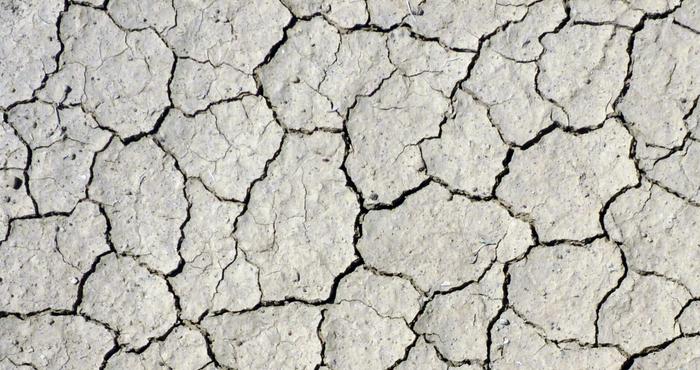
Milan, July 3, 2024 – A new theory has finally deciphered the physical mechanisms of fracture in soft materials. This revolutionary discovery will soon lead to new, defect-free materials that are more resistant and durable, thus “environmentally friendly”! The article Elastic Instability Behind Brittle Fracture was recently published by Physical Review Letters. “We have revealed that fracture propagates from the free surface of the material, starting from an elastic instability that breaks the symmetry of the object. Then, the rupture drastically extends with an intricate network of cracks spreading like a turbulence phenomenon similar to what we observe in fluids, like during vortex formation,” explains Pasquale Ciarletta from the MOX Laboratory, Department of Mathematics at Politecnico di Milano. This discovery stimulates significant applications in various technological sectors. For instance, in the production of micro and nano devices, where materials need to be extremely resistant and defect-free. Understanding how cracks form can lead to designing more robust and durable materials. In the consumer electronics field, this could lead to the creation of devices such as smartphones, tablets, and laptops with screens that better withstand shocks and drops, thus reducing the frequency of repairs and replacements. In the medical sector, implantable devices like pacemakers and prostheses could benefit from safer and longer-lasting materials, critically improving patient health. In the aerospace industry, understanding and preventing material fractures can lead to more robust and reliable structures, reducing the risks associated with space and air travel. “The results of this research not only pave the way for future studies aimed at developing materials with unprecedented mechanical properties but also have a positive environmental impact by reducing the need for frequent product replacements and decreasing waste. This can contribute to more sustainable production and more efficient use of natural resources,” concludes Davide Riccobelli from the Department of Mathematics at Politecnico di Milano. The study was conducted by an international team of researchers, led at Politecnico di Milano by Davide Riccobelli and Pasquale Ciarletta, in collaboration with Sorbonne Université, École Polytechnique, and ESPCI in Paris, demonstrating that international collaborations continue to play a crucial role in pushing the boundaries of materials science.

Credit: Politecnico di Milano
Milan, July 3, 2024 – A new theory has finally deciphered the physical mechanisms of fracture in soft materials. This revolutionary discovery will soon lead to new, defect-free materials that are more resistant and durable, thus “environmentally friendly”! The article Elastic Instability Behind Brittle Fracture was recently published by Physical Review Letters. “We have revealed that fracture propagates from the free surface of the material, starting from an elastic instability that breaks the symmetry of the object. Then, the rupture drastically extends with an intricate network of cracks spreading like a turbulence phenomenon similar to what we observe in fluids, like during vortex formation,” explains Pasquale Ciarletta from the MOX Laboratory, Department of Mathematics at Politecnico di Milano. This discovery stimulates significant applications in various technological sectors. For instance, in the production of micro and nano devices, where materials need to be extremely resistant and defect-free. Understanding how cracks form can lead to designing more robust and durable materials. In the consumer electronics field, this could lead to the creation of devices such as smartphones, tablets, and laptops with screens that better withstand shocks and drops, thus reducing the frequency of repairs and replacements. In the medical sector, implantable devices like pacemakers and prostheses could benefit from safer and longer-lasting materials, critically improving patient health. In the aerospace industry, understanding and preventing material fractures can lead to more robust and reliable structures, reducing the risks associated with space and air travel. “The results of this research not only pave the way for future studies aimed at developing materials with unprecedented mechanical properties but also have a positive environmental impact by reducing the need for frequent product replacements and decreasing waste. This can contribute to more sustainable production and more efficient use of natural resources,” concludes Davide Riccobelli from the Department of Mathematics at Politecnico di Milano. The study was conducted by an international team of researchers, led at Politecnico di Milano by Davide Riccobelli and Pasquale Ciarletta, in collaboration with Sorbonne Université, École Polytechnique, and ESPCI in Paris, demonstrating that international collaborations continue to play a crucial role in pushing the boundaries of materials science.
Journal
Physical Review Letters
Method of Research
Experimental study
Subject of Research
Not applicable
Article Title
Elastic Instability behind Brittle Fracture
Article Publication Date
14-Jun-2024
Cite Scienmag News
Reid Dalton. (July 3, 2024). Sustainable materials: unveiling the fracture mechanism in soft matter. Scienmag. https://scienmag.com/sustainable-materials-unveiling-the-fracture-mechanism-in-soft-matter/
Reid Dalton. "Sustainable materials: unveiling the fracture mechanism in soft matter." Scienmag, 3 July 2024, https://scienmag.com/sustainable-materials-unveiling-the-fracture-mechanism-in-soft-matter/. Accessed 4 September 2026.
Reid Dalton. "Sustainable materials: unveiling the fracture mechanism in soft matter." Scienmag. July 3, 2024. https://scienmag.com/sustainable-materials-unveiling-the-fracture-mechanism-in-soft-matter/

