


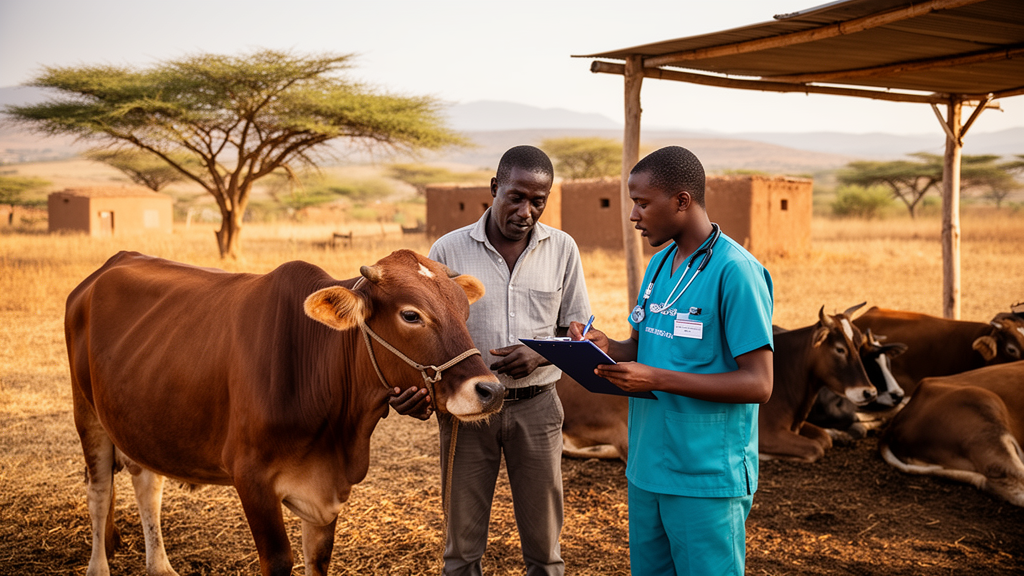
A cross-sectional survey of 204 dairy-producing households in Saesie-Tsaeda Emba District, Tigray, Ethiopia, found that farmers were motivated to use artificial insemination because they associated it with better cattle genetics, increased milk production, higher market value for offspring and other economic advantages. The study also identified low conception and pregnancy rates, poor heat detection, limited awareness of the technology’s benefits, inadequate communication, insufficient incentives for technicians and restricted access to services as constraints on adoption and effective use. The research combined face-to-face interviews, focus group discussions and key informant interviews to assess barriers and opportunities surrounding artificial insemination among smallholder dairy farmers.
Households were selected through systematic random sampling from two Kebeles in the district. Researchers analyzed the collected data using descriptive statistics, including frequencies and percentages. As a cross-sectional study, the results characterize the conditions reported in the surveyed area rather than measuring changes in adoption, reproductive performance, milk yield or household income over time.
Farmers reported being attracted to artificial insemination for its potential genetic and productivity benefits, including genetic merit, higher market value of offspring, increased milk production, affordable service costs, early pregnancy diagnosis and reliable service provision. These findings indicate that perceived economic and productivity advantages were important reasons for interest in the technology. However, the survey did not directly demonstrate that use of artificial insemination caused higher milk production, greater offspring value or improved household income among the participating households.
Participants identified several practical and organizational constraints. Limited awareness of artificial insemination’s benefits, insufficient communication among stakeholders, inadequate incentives for AI technicians and limited accessibility of services also impeded adoption or continued use. The authors proposed strengthening technician capacity, improving estrus detection and conception rates, enhancing farmer awareness, improving coordination among stakeholders, and providing adequate incentives and support for service providers.
These recommendations respond to the barriers recorded in the study; because the research did not test the effects of those measures, their prospective benefits remain unquantified. The findings are also geographically limited to the two surveyed Kebeles and should not be taken as a direct assessment of dairy productivity, pregnancy outcomes or economic effects across Tigray as a whole.
Subject of Research: Barriers and opportunities in smallholder dairy-cattle artificial insemination in Tigray, Ethiopia
Article Title: Barriers and opportunities for the use of artificial insemination among dairy cattle smallholder farmers, Tigray, Ethiopia
Article References: Gebre, Y. H., & Gebru, G. W. (2026). Barriers and opportunities for the use of artificial insemination among dairy cattle smallholder farmers, Tigray, Ethiopia. Discover Sustainability. https://doi.org/10.1007/s43621-026-04752-y
Image Credits: AI Generated
DOI: 10.1007/s43621-026-04752-y
Keywords: artificial insemination, dairy cattle, smallholder farmers, Tigray, Ethiopia, heat detection, conception rates, milk production, cross-sectional survey, livestock services, Barriers, opportunities
Cite Scienmag News
William Thompson. (October 20, 2026). Survey identifies barriers to artificial insemination among Tigray dairy farmers. Scienmag. https://scienmag.com/survey-identifies-barriers-to-artificial-insemination-among-tigray-dairy-farmers/
William Thompson. "Survey identifies barriers to artificial insemination among Tigray dairy farmers." Scienmag, 20 October 2026, https://scienmag.com/survey-identifies-barriers-to-artificial-insemination-among-tigray-dairy-farmers/. Accessed 20 October 2026.
William Thompson. "Survey identifies barriers to artificial insemination among Tigray dairy farmers." Scienmag. October 20, 2026. https://scienmag.com/survey-identifies-barriers-to-artificial-insemination-among-tigray-dairy-farmers/


