


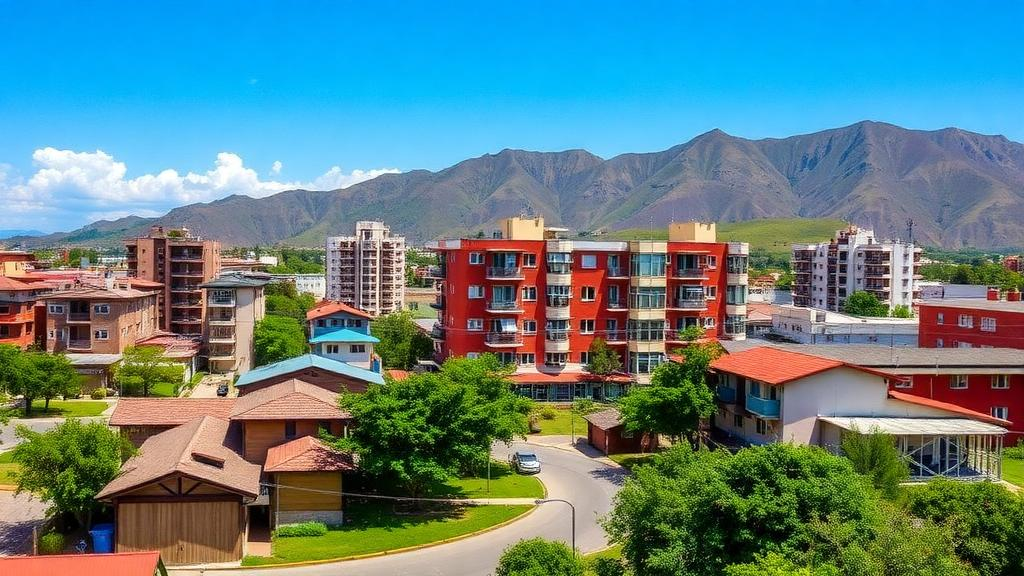
In the Lurín District of Metropolitan Lima, four ecosystems—sea, hills, valley and desert—converge within a few kilometres, alongside a sanctuary dedicated to the God Pachacamac that anchors the region’s cultural identity. Yet this environmental and landscape richness is under strain. Disordered urban expansion has transformed agricultural lands into urbanised areas, degraded natural ecosystems and pressured basic infrastructure such as water, sanitation and transportation. A new study published in One Ecosystem on 6 August 2024 offers a rare quantitative window into how residents themselves perceive these sustainability challenges, using social surveys and linear regression models to convert public opinion into measurable statistical relationships.
The research, led by a team examining urban sustainability indicators in a developing Latin American city, set out to quantify and evaluate essential elements linked to the management of natural resources, air and water quality, sustainable mobility, education and the well-being of urban residents. Rather than relying solely on technical metrics, the study built its indicator system directly from social surveys, in which the civilian population rated their perception of sustainability in Lurín across various categories. This approach responds to a persistent problem in urban sustainability research: composite indices often face barriers such as scarce data, political apathy, governmental resistance, lack of consensus on standard indicators and shortage of comparative analyses across disciplines and urban areas. The weighting of indicators, moreover, is inherently subjective and varies with the priorities of the parties involved.
Lurín’s selection as a case study is deliberate. The district grapples with critical problems that mirror broader Latin American urban challenges: deterioration of natural resources, with the loss of green areas and degradation of ecosystems affecting biodiversity; deficiencies in essential services stemming from unplanned growth; and the conversion of agricultural lands that compromises food security and threatens traditional practices rooted in the community’s history. The research aims to preserve the district’s cultural and environmental heritage, develop viable sustainable solutions, actively involve the community in identifying solutions and serve as a model for other regions facing similar dilemmas of urban development and environmental conservation.
Methodologically, the team surveyed 180 individuals drawn from a population of 89,195 inhabitants as of 2017, using a simple random sample calculated with a formula suitable for large populations and a 95% confidence level, a standard in social and demographic research. Responses were structured on a Likert scale from 1 to 5, where 1 indicated total disagreement and 5 total agreement. The study organised its variables hierarchically. The independent variable, Urban Environmental Management Systems (UEMS), comprised three dimensions: the Municipal Legal Framework, the Environmental Education System and Urban Management Instruments. The dependent variable, Sustainable Development (SD), comprised the Social, Economic and Environmental-Ecological dimensions, each broken down into indicators and sub-indicators covering quality of life, solid waste management, health, economic development, climate change knowledge and sustainable management of natural resources.
Statistically, the researchers first applied Kolmogorov-Smirnov tests to verify normality, obtaining a p-value of 0.053 for UEMS and 0.066 for SD, both above the 0.05 threshold, so the null hypothesis of normal distribution was accepted and parametric tests were justified. Pearson correlation coefficients were then computed to measure the strength of relationships, with values close to 1 indicating strong positive correlations. Linear regression models quantified the influence of independent variables on the dependent ones, and the Variance Inflation Factor (VIF) was calculated to detect multicollinearity; all VIF values were close to 1.5, indicating no significant collinearity problems and reliable coefficient estimates. Calculations were performed with Matlab R2023b.
The descriptive results paint a sobering picture. For UEMS, the consolidated data yielded a mean of 2.673 with a standard deviation of 0.4333, ranging from 1.857 to 4.714—low performance overall. Respondents considered Urban Management Instruments the least performing dimension, with the lowest mean and standard deviation, implying unanimity in perceiving it as the most neglected and demanding greater attention from decision-makers. The Environmental Education System had the highest mean, suggesting respondents believed it in the best condition, though the difference in means between the two dimensions was only 0.725. At the indicator level, Environmental Awareness scored highest (mean 3.311), while Planning Instruments, Instruments for Promotion and Development, and Instruments for Costs and Benefit Redistribution scored lowest (means of 2.430, 2.317 and 2.333 respectively), again with low standard deviations indicating widespread agreement.
For Sustainable Development, the picture was even more critical. The consolidated mean was 2.269 with a standard deviation of 0.5274, ranging from 1.458 to 3.750. All three dimensions contributed similarly to the total variable, and respondents unanimously considered that all three faced issues. Health exhibited the poorest performance, with the lowest mean of 1.726 and a significant accumulation of data below a score of 2. Satisfaction of Basic Needs followed with a mean of 1.850. Indicators including Economic Income, Activities and Occupations, Production with Environmental Criteria, Climate Change and Natural Resources showed most data between scores 2 and 3, suggesting widespread dissatisfaction. Interestingly, Quality of Life had a relatively higher mean, hinting at a potential sense of attachment to the location despite the problems.
The regression analysis revealed a high positive correlation (R = 0.656) between UEMS and SD, with the predictor variable explaining 43% (R² = 0.430) of the behaviour of Sustainable Development. An ANOVA with a significance value of 0.000 confirmed a linear relationship, and the resulting model took the form SD = 0.798 × UEMS, with the intercept excluded due to a non-significant p-value of 0.469. This equation demonstrates that the implementation of an Urban Environmental Management System has a positive impact on Sustainable Development in the Lurín District. Further models relating each UEMS dimension to each SD dimension showed that the Municipal Legal Framework played a pivotal role, with R² values of 37.8% for the social dimension, 37.2% for the economic dimension and 24.2% for the environmental-ecological dimension. Urban Management Instruments showed R² values of 28.6%, 24.0% and 15.9% respectively, while the Environmental Education System showed more moderate influence, with R² values of 14.5%, 9.7% and 2.5%.
Among the most striking findings, the Environmental Education System was perceived as the least important and even negligible within the multivariable models. In the multiple regression for the Social Dimension, the p-value for SEA was 0.681, not statistically significant, so its influence was less than that of Urban Management Instruments and the Municipal Legal Framework, and it could be removed from the model without detriment. Similar patterns emerged for the Economic and Environmental-Ecological dimensions, with p-values of 0.409 and a negative trend in the latter case. The researchers interpret this effect as a matter of temporal perception: investments in urban management and legal frameworks yield more visible short-term results, whereas educational investments, although necessary, take longer to show their best outcomes. The current perception, they argue, severely diminishes or undervalues the role of education, and future studies should include additional indicators to reinforce its weight within the models. The multivariable models themselves were statistically valid, with a p-value of 8.71 × 10⁻²³ and an adjusted R² of 0.442 for the Social Dimension, considered acceptable since R² values tend to be relatively low in social perception studies.
The study’s implications extend well beyond Lurín. The significant influence of the Municipal Legal Framework underscores the importance of coordinating efforts between government entities and civil society to strengthen and update municipal regulations. The effectiveness of Urban Management Instruments highlights the need for comprehensive urban planning that promotes equity in benefit distribution, environmental consideration in projects and citizen participation, with transparency in resource allocation as a critical aspect. Despite its moderate statistical impact, the Environmental Education System remains crucial for improving quality of life and social awareness, and tailoring educational programmes to the district’s specific needs—such as active student involvement in identifying local environmental issues—can strengthen the connection between education and critical awareness. The loss of environmental and cultural landscapes underscores the need to balance urban growth with the preservation of natural and cultural heritage, while community participation emerges as a crucial component for the success of any sustainability variable. The researchers recommend periodic assessments to measure progress, seeking external funding and partnerships, and extending the methodology to other relationships between variables and indicators. As one of the few contributions in the Latin American region to establish mathematical and statistical relationships between sustainability variables at the urban level, the study provides a robust framework for quantitative decision-making in the urban sphere and a more nuanced understanding of how social perception of urban sustainability influences policy formulation and decision-making processes across Latin America.
Subject of Research: Quantitative assessment of urban sustainability perceptions in Lurín, Peru, using surveys and linear regression models
Article Title: Quantitative assessment of urban sustainability perceptions in Lurin, Peru
Article References: Ojeda-Zaga, R., Moya-Almeida, V., Alvarado-Arias, N., & Zuleta-Mediavilla, D. (2024). Quantitative assessment of urban sustainability perceptions in Lurin, Peru. One Ecosystem, 9, Article e118668. https://doi.org/10.3897/oneeco.9.e118668
Image Credits: AI Generated
Keywords: urban sustainability, Lurin, Peru, linear regression, social surveys, sustainable development, environmental education, urban planning, Latin America, One Ecosystem, Quantitative, assessment
Cite Scienmag News
Sloane Callahan. (October 19, 2026). Survey and regression models reveal how residents of Lurin, Peru perceive urban sustainability. Scienmag. https://scienmag.com/survey-and-regression-models-reveal-how-residents-of-lurin-peru-perceive-urban-sustainability/
Sloane Callahan. "Survey and regression models reveal how residents of Lurin, Peru perceive urban sustainability." Scienmag, 19 October 2026, https://scienmag.com/survey-and-regression-models-reveal-how-residents-of-lurin-peru-perceive-urban-sustainability/. Accessed 19 October 2026.
Sloane Callahan. "Survey and regression models reveal how residents of Lurin, Peru perceive urban sustainability." Scienmag. October 19, 2026. https://scienmag.com/survey-and-regression-models-reveal-how-residents-of-lurin-peru-perceive-urban-sustainability/


