


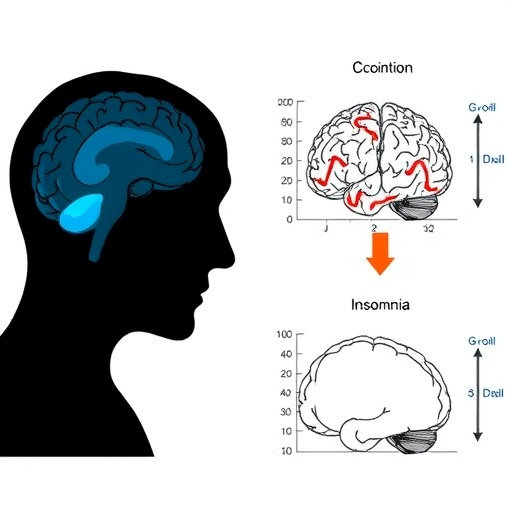
A groundbreaking study recently published in BMC Psychiatry presents compelling new insights into the intertwined relationship between suicide risk, psychopathological symptoms, and cognitive impairments among chronic schizophrenia patients suffering from insomnia. This large-scale cross-sectional analysis sheds light on the critical mental health challenges faced by this vulnerable population, revealing significant implications for clinical assessment and therapeutic intervention.
Chronic schizophrenia is a debilitating psychiatric disorder marked by hallucinations, delusions, and cognitive dysfunction, with insomnia frequently complicating its clinical course. Despite well-documented cognitive deficits and elevated suicide rates within this group, the precise nature of how insomnia exacerbates these risks remained elusive until now. The new research embarked on a mission to dissect these complex interrelations using robust psychiatric instruments and cognitive batteries within a considerable cohort.
The study enrolled 1,436 patients diagnosed with chronic schizophrenia, making it one of the most extensive investigations of its kind. Data collection extended to sociodemographic factors and a suite of psychometric evaluations tailored to pinpoint insomnia severity, suicide ideation intensity, and psychiatric symptomatology. The Positive and Negative Syndrome Scale (PANSS) measured the spectrum of schizophrenic symptoms, while the Insomnia Severity Index (ISI) identified sleep disturbances. The Beck Scale for Suicide Ideation (BSI) was employed to quantify suicidal tendencies, and cognitive functioning was rigorously tested using the Repeatable Battery for the Assessment of Neuropsychological Status (RBANS).
Findings revealed that insomnia afflicted nearly 10% of the schizophrenia patients in the cohort, a substantial subgroup warranting focused clinical attention. Notably, patients with concurrent insomnia exhibited an alarmingly higher suicide risk compared to their counterparts without sleep disturbances—38% versus 19.8%. This stark differential underscores how insomnia serves as a potent exacerbating factor for suicidal tendencies within this population.
Delving deeper, the study explored correlations between suicidal ideation severity and cognitive impairments, with language function emerging as a significant domain of interest. Results showed a negative correlation between suicidal ideation severity and language function scores, highlighting that poorer verbal communication and comprehension abilities were linked to heightened suicidal thoughts. This nuanced finding suggests cognitive deficits, particularly in language processing, might impair patients’ capacity to articulate distress, thereby elevating suicide risk.
Additionally, rigorous regression analyses pinpointed language function and general psychopathology—assessed via PANSS general subscale scores—as independent predictors of suicidal ideation severity. The statistical significance of these predictors (language function B = -0.59, p = 0.008; psychopathology B = 0.97, p = 0.010) demonstrates their valuable role in suicide risk assessment models for this demographic. These insights potentially pave the way for more tailored cognitive and psychiatric evaluations in routine clinical practice.
Intriguingly, language function and overall psychopathology were also significantly associated with the binary classification of suicide risk presence versus absence. Both variables contributed meaningfully to risk stratification algorithms, with a combined area under the receiver operating characteristic curve (AUCROC) of 0.758 indicating respectable predictive accuracy. Such metrics affirm the potential utility of integrating cognitive and symptom severity metrics into suicide prevention frameworks.
The study’s findings compel a reassessment of therapeutic approaches that currently may overlook the nuanced roles of cognition and sleep quality in suicide risk among chronic schizophrenia patients. Interventions targeting insomnia—not only through pharmacologic means but also via cognitive-behavioral therapies—are urgently warranted to mitigate suicidal tendencies. Cognitive remediation focusing on language function could further disrupt the trajectory toward suicidal ideation by enhancing patients’ communicative competencies.
Moreover, the integration of psychopathological assessment with cognitive evaluations emerges as a critical axis for identifying high-risk individuals. Employing comprehensive scales like PANSS and RBANS in parallel offers clinicians robust predictive power and facilitates the personalization of intervention strategies. This multidisciplinary approach echoes the growing consensus that effective mental healthcare must transcend symptomatic treatment alone.
This study’s scope and methodology epitomize contemporary trends in psychiatric research, where large datasets and precision assessment tools coalesce to unravel intricate biopsychosocial interdependencies. The disentangling of how insomnia intertwines with cognitive and psychiatric dimensions to amplify suicide risk in schizophrenia marks a pivotal advance in suicide prevention science within psychiatric cohorts.
Given the chronicity and complexity of schizophrenia, early identification of modifiable risk factors such as insomnia and cognitive impairments can significantly improve patient outcomes. This research not only reinforces insomnia’s detrimental impact but also elevates language dysfunction and psychopathology as integral components of the suicide risk profile. These revelations advocate for broadened screening protocols in psychiatric settings.
Future inquiries might explore longitudinal trajectories to determine causal pathways and intervention efficacy. Additionally, neurobiological underpinnings linking sleep disturbances, cognition, and suicidality await further elucidation through neuroimaging and electrophysiological studies. Such endeavors promise to enrich therapeutic armamentaria and ultimately reduce suicide mortality rates among schizophrenia patients.
In conclusion, this landmark research vividly illustrates the heightened suicide risk facing chronic schizophrenia patients plagued by insomnia. Language function and general psychopathology emerge as pivotal predictors, empowering clinicians with actionable insights to identify and support those most vulnerable. Harnessing these findings could herald a new era of integrative psychiatric care—where cognition, sleep, and symptom severity collectively inform lifesaving strategies.
Cite Scienmag News
Glenn Wilkins. (October 2, 2025). Suicide Risk, Cognition, and Insomnia in Schizophrenia. Scienmag. https://scienmag.com/suicide-risk-cognition-and-insomnia-in-schizophrenia/
Glenn Wilkins. "Suicide Risk, Cognition, and Insomnia in Schizophrenia." Scienmag, 2 October 2025, https://scienmag.com/suicide-risk-cognition-and-insomnia-in-schizophrenia/. Accessed 4 September 2026.
Glenn Wilkins. "Suicide Risk, Cognition, and Insomnia in Schizophrenia." Scienmag. October 2, 2025. https://scienmag.com/suicide-risk-cognition-and-insomnia-in-schizophrenia/


