


Even as the nation’s opioid epidemic continues to ravage families and communities nationwide — with more than 100,000 Americans dying of drug overdoses each year — stigma remains a barrier for many people accessing treatment for addiction.
Even as the nation’s opioid epidemic continues to ravage families and communities nationwide — with more than 100,000 Americans dying of drug overdoses each year — stigma remains a barrier for many people accessing treatment for addiction.
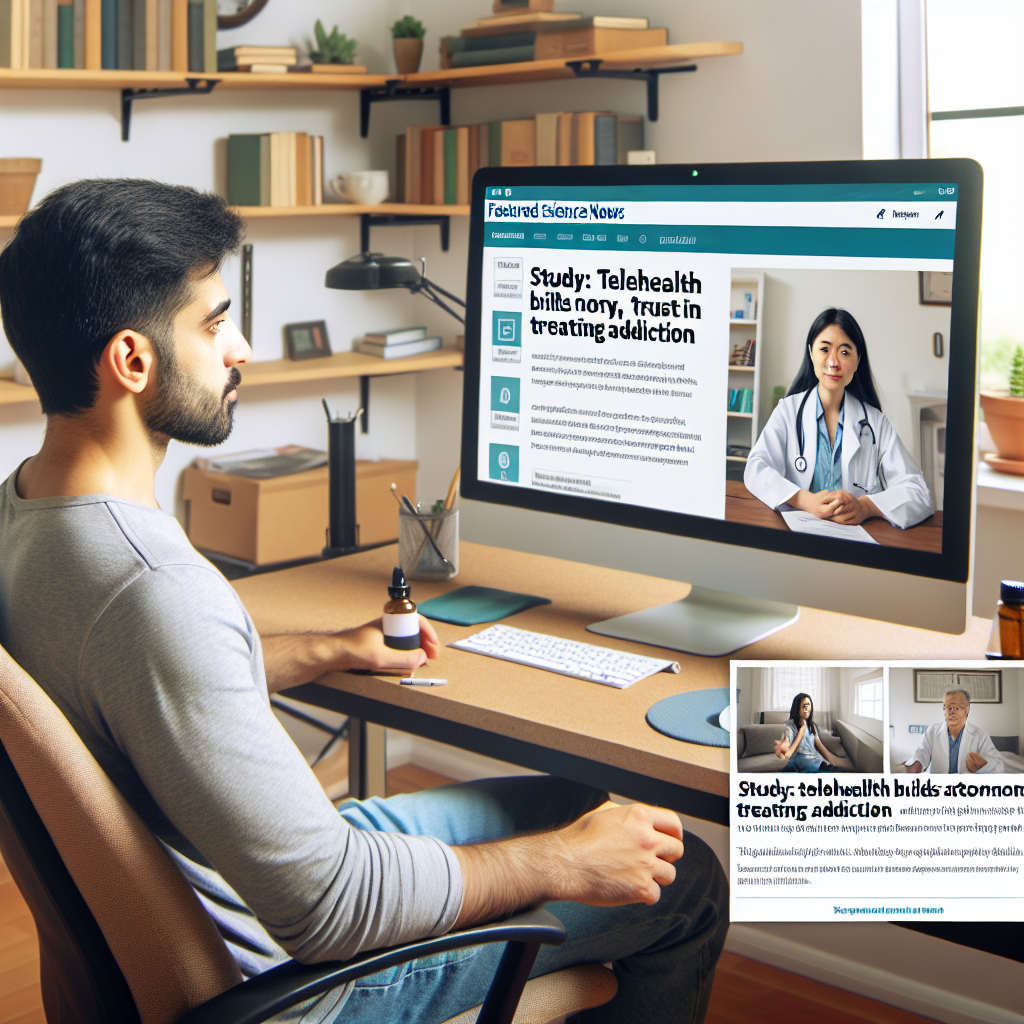
A new study from Oregon Health & Science University suggests telehealth may be an important antidote to overcoming stigma and reducing barriers for people seeking out the treatment they need.
The study, published recently in the Harm Reduction Journal, compiled in-depth interviews with 30 people treated for substance use disorder at OHSU from March of 2020 to December of 2021. Due to the COVID-19 pandemic, federal regulations eased the ability of people to enter treatment through virtual visits during that time, as opposed to having to visit a clinic in person.
“You feel like you’re being watched or judged by everyone, and telehealth can reduce that sense whether it’s real or perceived,” said senior author Ximena Levander, M.D., assistant professor of medicine (general internal medicine and geriatrics) in the OHSU School of Medicine. “Telehealth can lower that barrier.”
Patients reported that they appreciated the implicit sense of autonomy and trust involved in being able to connect with clinicians through video or telephone visits. Patients received prescriptions for buprenorphine, a partial opioid receptor agonist that inhibits opioid withdrawal symptoms.
Co-authors identified four themes among patients interviewed in the study:
- Autonomy: Telehealth offers improved control over the treatment setting.
- Patient-centered: Concern over stigma and privacy can cut both ways: In some cases, patients preferred in-person visits, especially if they live in congregant settings where others might see or hear their virtual visit.
- Social distancing: The social distance of telehealth presents an opportunity to reduce or worsen perceptions of stigma by clinicians — especially if patients perceive the clinician isn’t fully paying attention or maintaining eye contact.
- Flexibility: Patients reported the flexibility of telehealth translated into perceptions of increased trust and respect from clinicians.
“Our results support a more individualized approach to care, whereby patients may choose whether they receive care in person or via telehealth,” the authors write. “Given that aspects of both telehealth and in-person treatment left some participants feeling judged by their clinicians, our findings also highlight the need to further explore how clinicians perpetuate stigma through telehealth-based programs, and how training and clinical guidelines could mediate this.”
In addition to Levander, OHSU co-authors included Jessica V. Couch, Mackenzie Whitcomb, M.D., Bradley M. Buchheit, M.D., David A. Dorr, M.D., Darren J. Malinoski, M.D., Todd Korthuis, M.D., and Sarah S. Ono, Ph.D.
The research was supported by the Agency for Healthcare Research and Quality, grant award K12 HS026370, the National Institute on Drug Abuse of the National Institutes of Health, grant awards UH3DA044831, UG1DA015815 and National Center For Advancing Translational Sciences of the National Institutes of Health grant award UL1TR002369; and a seed award through the OHSU Division of General Internal Medicine’s Section of Addiction Medicine.
Journal
Harm Reduction Journal
Method of Research
Survey
Subject of Research
People
Article Title
Patient perceptions of and experiences with stigma using telehealth for opioid use disorder treatment: a qualitative analysis
Article Publication Date
27-Jun-2024
Cite Scienmag News
Ophelia Keating. (July 8, 2024). Study: Telehealth builds autonomy, trust in treating addiction. Scienmag. https://scienmag.com/study-telehealth-builds-autonomy-trust-in-treating-addiction/
Ophelia Keating. "Study: Telehealth builds autonomy, trust in treating addiction." Scienmag, 8 July 2024, https://scienmag.com/study-telehealth-builds-autonomy-trust-in-treating-addiction/. Accessed 7 September 2026.
Ophelia Keating. "Study: Telehealth builds autonomy, trust in treating addiction." Scienmag. July 8, 2024. https://scienmag.com/study-telehealth-builds-autonomy-trust-in-treating-addiction/


