


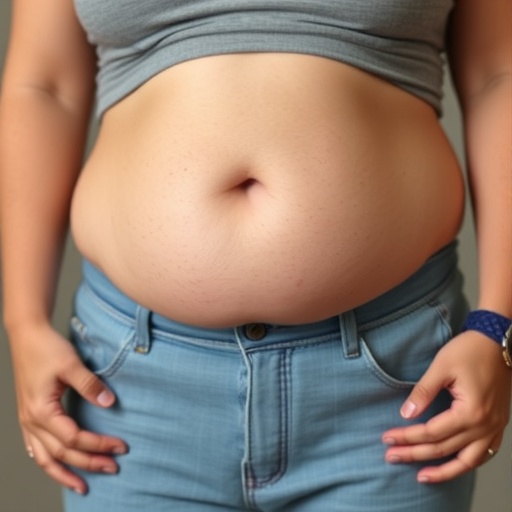
Groundbreaking research from the University of Bristol has provided fresh perspectives on how the distribution of body fat influences the risk of developing various obesity-related cancers. Published on September 24, 2025, in the esteemed Journal of the National Cancer Institute (JNCI), this international study challenges conventional views that rely solely on body mass index (BMI) as the primary metric for assessing obesity-related cancer risk. By employing advanced genetic statistical approaches, the team has uncovered intricate relationships between where fat accumulates in the human body and the susceptibility to twelve distinct types of cancer.
For decades, obesity has been recognized as a significant risk factor for multiple cancers. Traditionally, BMI has served as the principal tool to quantify obesity, defined as a person’s mass relative to their height squared. However, growing evidence—particularly from cardiovascular research—highlights BMI’s limitations. BMI does not distinguish between muscle and fat, nor does it account for the location of adipose tissue. This realization has triggered a reevaluation of obesity assessment, especially in relation to cancer, where nuanced factors may be at play but remain largely unexplored.
The University of Bristol’s Integrative Cancer Epidemiology Programme (ICEP) undertook an ambitious investigation using Mendelian randomization, a sophisticated method that integrates genetic data with epidemiological statistics. This technique leverages the natural genetic variations randomised at conception to infer causal relationships between specific traits—in this case, fat distribution—and disease outcomes, thus minimizing confounding factors that often hamper observational studies. By applying this method to large-scale genomic data, the researchers could dissect the effects of adiposity distribution on cancer risk with unprecedented granularity.
The study specifically focused on twelve cancers recognized as obesity-related: endometrial, ovarian, breast, colorectal, pancreatic, multiple myeloma, liver, renal cell carcinoma (kidney), thyroid, gallbladder, oesophageal adenocarcinoma, and meningioma. This comprehensive scope allowed the team not only to confirm connections but also to unravel the heterogeneity in how fat distribution contributes to different cancers. Their results indicated that, in some cases, the anatomical location of fat bears more relevance than the sheer quantity stored; in others, the total amount remains the dominant risk factor. Moreover, for several cancers, both the amount and location of fat intertwine to influence carcinogenesis.
Such complexity overturns the simplistic narrative that excess weight uniformly increases cancer risk. For example, visceral fat accumulation—fat located deep within the abdominal cavity around internal organs—has been previously linked with metabolic disturbances and inflammation, both drivers of tumor progression. This study reinforces that notion but differentiates it further by cancer type. In certain malignancies, subcutaneous fat—the layer beneath the skin—may be comparatively inert or even protective, revealing the multifaceted biological roles fat depots play in tumor biology.
Dr. Emma Hazelwood, lead author and recent PhD graduate at the University of Bristol, emphasizes the importance of precision in interpreting these findings. She remarks that BMI’s utility at the population level does not translate into effective individual risk assessment due to the complexity of fat’s influence across the body. The research advocates abandoning the one-size-fits-all approach in favor of tailored strategies that incorporate fat distribution patterns for predicting and preventing cancer in people with obesity.
The implications extend into clinical practice and public health policies. Emerging frameworks like the 2024 guidelines from the European Association for the Study of Obesity and the Lancet Commission on Obesity underscore the inadequacy of BMI as a diagnostic tool. They encourage integrating body composition metrics, such as waist-to-hip ratio and imaging-based fat depot analysis, to better gauge health risks. In light of this study, addressing obesity’s impact on cancer demands refining screening protocols and prevention efforts to account for these variables.
Looking ahead, the University of Bristol team calls for expanded research utilizing complementary methodologies and diverse populations beyond European ancestry, as genetic variability profoundly influences fat distribution and disease susceptibility. Equally crucial is understanding the underlying biological mechanisms that link specific fat depots to oncogenic processes—such as endocrine signaling, insulin resistance, chronic inflammation, and adipokine secretion.
Furthermore, Dr. Hazelwood points out the potential for obesity treatments, whether lifestyle modifications or pharmacological interventions, to modulate these harmful pathways. Investigating how such treatments alter fat distribution and subsequent cancer risk could pave the way for novel prevention and therapeutic strategies specifically targeted to vulnerable adipose tissue compartments.
Dr. Julia Panina, Head of Research Funding at the World Cancer Research Fund (WCRF), stresses the translational significance of these insights. She acknowledges that WCRF’s Cancer Prevention Recommendations have long advocated maintaining a healthy weight to reduce cancer risk but recognizes that expanding the focus to include body composition nuances represents a vital evolution in cancer prevention science. The study’s findings, enabled by generous donor funding, amplify the urgency and promise of integrating genetic epidemiology into public health to combat obesity-related cancers more effectively.
This research was supported by the World Cancer Research Fund UK, Cancer Research UK through the Integrative Cancer Epidemiology Programme, and conducted at the MRC Integrative Epidemiology Unit, with additional backing from the Medical Research Council and the University of Bristol. By merging cutting-edge genetic tools with epidemiological expertise, the team’s work underscores a paradigm shift in understanding obesity’s role in cancer development—one that could ultimately transform risk assessment, prevention, and treatment strategies on a global scale.
As obesity rates continue to climb worldwide, scientific endeavors like this illuminate the critical need for sophisticated approaches that go beyond surface measurements. This innovative study highlights the intricate interplay between fat distribution and cancer risk, encouraging a future where personalized medicine can harness detailed body composition profiles to safeguard individuals against the deadly burden of obesity-related cancers.
- Integrative Cancer Epidemiology Programme: http://www.bristol.ac.uk/icep
- 2024 European Association for the Study of Obesity framework: https://easo.org/a-new-framework-for-the-diagnosis-staging-and-management-of-obesity-in-adults/
- Lancet Commission on the future of obesity: https://www.thelancet.com/commissions-do/clinical-obesity
- World Cancer Research Fund: https://www.wcrf.org/
References: Published in JNCI Journal of the National Cancer Institute
Keywords: Cancer, Obesity, Body mass index
Cite Scienmag News
Nathaniel Bowman. (September 24, 2025). Study Suggests Fat Distribution May Impact Cancer Risk. Scienmag. https://scienmag.com/study-suggests-fat-distribution-may-impact-cancer-risk/
Nathaniel Bowman. "Study Suggests Fat Distribution May Impact Cancer Risk." Scienmag, 24 September 2025, https://scienmag.com/study-suggests-fat-distribution-may-impact-cancer-risk/. Accessed 3 September 2026.
Nathaniel Bowman. "Study Suggests Fat Distribution May Impact Cancer Risk." Scienmag. September 24, 2025. https://scienmag.com/study-suggests-fat-distribution-may-impact-cancer-risk/


