


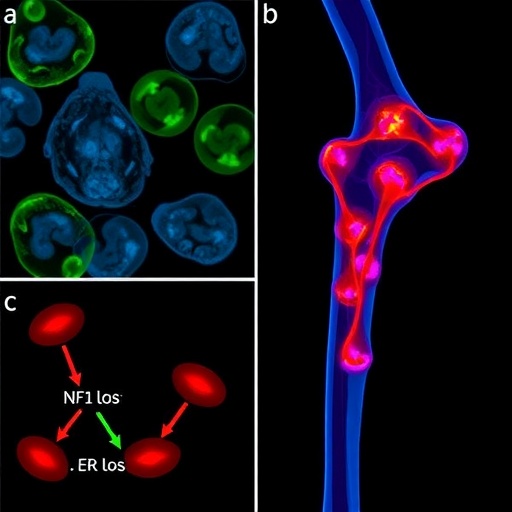
A Baylor College of Medicine-led research team has identified a molecular route by which estrogen receptor-positive (ER+) breast cancer cells may become especially capable of colonizing bone after losing the tumor suppressor neurofibromin, encoded by the NF1 gene. The study, published in Cancer Letters, suggests that NF1 loss does more than make tumors resistant to hormone-based treatment. It may also reprogram cancer cells to alter bone biology and weaken immune surveillance, creating a biological environment in which metastatic cells can survive, expand and damage the skeleton. The findings offer a possible explanation for why NF1-deficient ER+ tumors may be associated with aggressive metastatic disease and raise the prospect of using NF1 status to help guide treatment strategies.
ER+ breast cancer accounts for more than 70% of breast cancer diagnoses, and although many tumors initially respond to endocrine therapies that block estrogen signaling, metastatic disease remains the leading cause of death in this subtype. Bone is one of the most frequent destinations for breast cancer cells that spread beyond the primary tumor. Once established in the skeleton, metastatic lesions can cause pain, fractures, spinal cord compression and other serious complications. The new study focuses on a central question in cancer biology: why do certain breast cancer cells preferentially migrate to and thrive in bone? According to the researchers, the answer may involve a combination of tumor-cell plasticity, destructive changes in bone remodeling and suppression of anti-cancer immune activity.
NF1 normally produces neurofibromin, a protein that helps restrain intracellular growth signals, particularly those connected to the RAS signaling network. When NF1 is lost or significantly reduced, these growth-control systems can become dysregulated, allowing cancer cells to proliferate and adapt to changing conditions. Previous research has linked NF1 loss to resistance to endocrine therapy in ER+ breast cancer, meaning that tumors may continue growing despite treatments designed to deprive them of estrogen-driven stimulation. In the current investigation, analysis of a metastatic breast cancer dataset indicated that approximately 62% of patients with ER+ disease showed evidence of NF1 loss. While this association does not by itself prove that NF1 loss causes metastasis, it strengthens the case that the gene may be involved in disease progression and treatment-resistant tumor behavior.
Using cell-based experiments and animal models, the investigators found that ER+ breast cancer cells depleted of NF1 acquired characteristics that resembled those of bone-associated cells. This form of cellular plasticity can be important during metastasis because cancer cells must adjust to an unfamiliar tissue environment after leaving the breast. The altered tumor cells expressed genes normally active in bone biology and released signals capable of stimulating the formation and activity of osteoclasts. Osteoclasts are specialized cells responsible for breaking down bone tissue as part of the body’s normal remodeling process. In the setting of cancer, however, excessive osteoclast activation can transform controlled remodeling into pathological bone destruction.
That process can create a self-reinforcing metastatic cycle. As osteoclasts resorb bone, they release growth factors and other signaling molecules stored within the mineralized matrix. These factors can stimulate nearby cancer cells, helping them survive and multiply. The expanding tumor can then produce additional molecules that recruit or activate osteoclasts, accelerating further bone loss. This so-called vicious cycle between tumor growth and skeletal destruction is a defining feature of many bone metastases. The Baylor-led experiments indicate that NF1-deficient ER+ breast cancer cells may be unusually effective at initiating this cycle, even before a large metastatic colony has formed. In laboratory cultures, the cells promoted osteoclast development and produced changes consistent with increased bone breakdown.
The researchers also uncovered evidence that NF1 loss affects the immune landscape surrounding the tumor. Examination of patient samples showed that tumors with lower NF1 expression contained fewer active CD8-positive T cells, a population of immune cells capable of recognizing and killing abnormal cells. These tumors also displayed molecular signs associated with T-cell exhaustion, a dysfunctional state that can arise when immune cells are exposed to persistent cancer-related stimulation. Exhausted T cells may remain present in a tumor but lose some of their ability to proliferate, produce signaling molecules and destroy malignant targets. The findings suggest that NF1-deficient cancer cells may not simply evade immune detection; they may actively reshape their surroundings to reduce the effectiveness of anti-tumor immunity.
Laboratory experiments supported that interpretation. Compared with cells retaining NF1 activity, NF1-deficient breast cancer cells suppressed T-cell proliferation and reduced the production of immune signaling molecules. The altered tumor cells also made it more difficult for engineered cancer-killing T cells to destroy them. These observations point to a functional connection between NF1 loss and immune suppression, although the precise molecular signals responsible remain an important subject for further investigation. In metastatic cancer, immune escape can be particularly consequential because disseminated cells must survive in distant tissues that contain different immune and stromal conditions from the original tumor. A tumor that simultaneously weakens T-cell responses and stimulates bone destruction may gain two advantages during the metastatic process.
Taken together, the results portray NF1 loss as a biological switch with effects that extend beyond uncontrolled cell growth. The loss of neurofibromin appears to help ER+ breast cancer cells adopt bone-compatible features, activate osteoclasts and suppress immune responses that might otherwise eliminate them. This combination could help explain why endocrine-resistant tumors with NF1 alterations are capable of persisting and spreading despite treatment. It also suggests that the consequences of NF1 loss may be highly context-dependent: the same alteration that promotes growth in the primary tumor may later influence the distant organ environment, making bone more hospitable to metastatic colonization.
The findings could eventually support a more individualized approach to metastatic risk and treatment, but they do not yet establish a clinical therapy. NF1 status might become a biomarker for identifying patients whose tumors are more likely to develop bone metastases or respond poorly to endocrine treatment. Such patients could potentially be evaluated for strategies that inhibit abnormal bone remodeling, interrupt osteoclast activity, restore immune function or target signaling pathways altered by NF1 loss. Existing therapies that protect bone, including drugs that interfere with osteoclast-mediated resorption, could be particularly relevant to this hypothesis. However, whether combining these treatments with endocrine therapy or immunotherapy can prevent metastasis specifically in NF1-deficient ER+ breast cancer will require prospective clinical studies.
The study’s authors emphasize that matching a patient’s NF1 tumor status with currently approved treatments could be an important direction for future research. Before that approach can be adopted in routine care, investigators will need to validate the association in larger patient cohorts, determine how different types of NF1 alteration affect tumor behavior and clarify whether NF1 loss directly drives immune suppression or acts through additional genetic and environmental changes. Even with these questions remaining, the work provides a mechanistic framework for understanding how therapy resistance, bone remodeling and immune escape may converge in ER+ breast cancer. By revealing how a tumor suppressor alteration can influence both cancer cells and the tissue they invade, the research brings scientists closer to disrupting the biological cycle that allows breast cancer to take hold in the skeleton.
Web References: https://www.sciencedirect.com/science/article/abs/pii/S030438352600399X; https://doi.org/10.1016/j.canlet.2026.218636
References: Cancer Letters, DOI: 10.1016/j.canlet.2026.218636; article publication date: 29 May 2026
Cite Scienmag News
Nathaniel Bowman. (August 22, 2026). Study reveals how NF1 loss enables ER-positive breast cancer bone metastasis. Scienmag. https://scienmag.com/study-reveals-how-nf1-loss-enables-er-positive-breast-cancer-bone-metastasis/
Nathaniel Bowman. "Study reveals how NF1 loss enables ER-positive breast cancer bone metastasis." Scienmag, 22 August 2026, https://scienmag.com/study-reveals-how-nf1-loss-enables-er-positive-breast-cancer-bone-metastasis/. Accessed 4 September 2026.
Nathaniel Bowman. "Study reveals how NF1 loss enables ER-positive breast cancer bone metastasis." Scienmag. August 22, 2026. https://scienmag.com/study-reveals-how-nf1-loss-enables-er-positive-breast-cancer-bone-metastasis/


