


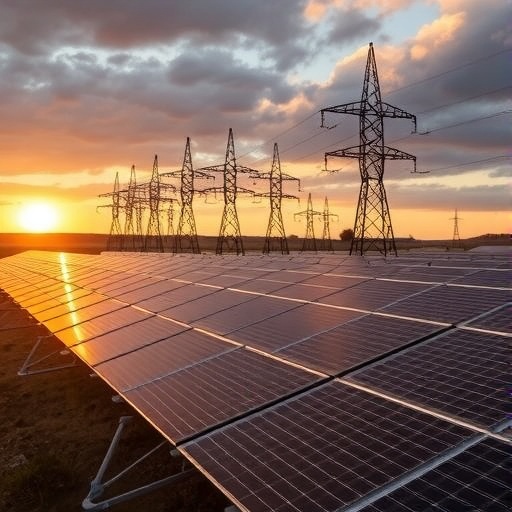
A groundbreaking study released today reveals a troubling paradox at the heart of the global clean energy transition: pollution from coal-fired power plants is directly cutting the output of solar photovoltaic (PV) systems, undermining efforts to shift toward renewable energy. The research, conducted jointly by the University of Oxford and University College London (UCL) and published in Nature Sustainability, harnesses state-of-the-art satellite data and machine learning to provide the most comprehensive global assessment to date of this covert energy loss phenomenon.
The investigators analyzed more than 140,000 solar PV installations scattered across the globe, integrating precise solar electricity generation models with atmospheric measurements to estimate how aerosols—microscopic particles emitted chiefly by fossil fuel combustion—impair sunlight reaching solar arrays. Their findings are stark: in 2023 alone, air pollution caused by aerosols curtailed solar PV output worldwide by approximately 5.8%, equating to a staggering 111 terawatt-hours (TWh). To put this into perspective, this loss is comparable to the annual electricity produced by 18 medium-sized coal plants, effectively negating a significant portion of global renewable energy gains.
Critically, this hidden drag on solar power challenges prevailing assumptions about the effectiveness of renewable deployment. While annual additions of solar capacity between 2017 and 2023 delivered an average increase of 246.6 TWh, roughly thirty percent of those advances—about 74 TWh each year—were offset by aerosol-related losses. This interaction exposes a paradox where fossil fuel combustion not only emits greenhouse gases but also creates atmospheric conditions that suppress the performance of clean technologies designed to replace them, thereby entangling fossil and renewable energy systems in an unexpected feedback loop.
At the epicenter of this dynamic is coal-fired power generation, pinpointed by the study as a primary source of the detrimental aerosol emissions that scatter and absorb incoming sunlight before it can be converted to electricity by solar panels. This phenomenon is particularly pronounced in China, the world’s largest producer of solar energy. In 2023, China generated 793.5 TWh of solar PV electricity, representing over 40% of global output, but concurrently faced the greatest solar energy losses attributable to aerosols—a reduction of 7.7%. Approximately 29% of these losses within China were traced specifically back to coal-fired power plants, underscoring the localized effect of particulate pollution near co-located fossil fuel and solar infrastructures.
The implications of coal’s particulate pollution extend beyond simple dimming of the sun’s rays. Aerosols also influence cloud formation and atmospheric properties, which can further diminish solar radiation reaching the surface. This secondary effect hints that current estimates of solar power reduction due to aerosols may be conservative, potentially understating the true scale of the impact. Such findings call for urgent attention to controlling coal emissions, as unchecked pollution not only damages air quality and public health but also hampers renewable energy generation capability crucial for climate mitigation.
Encouragingly, the analysis identifies a subtle but meaningful positive trend in China’s aerosol-related solar losses, which declined on average by 0.96 TWh annually over the past decade. This improvement appears tied to tougher emissions standards and the widespread adoption of ultra-low-emission technologies at coal power facilities, rather than a reduction in coal capacity itself. This suggests that technological and regulatory interventions can partially alleviate the negative interplay between air pollution and renewable energy output.
Methodologically, this research exemplifies the power of combining cutting-edge satellite imaging with advanced computational models to monitor energy infrastructure on a planetary scale. By leveraging geospatial data and machine learning, the team accurately located solar installations and simulated their electricity generation capabilities under real atmospheric conditions, providing a detailed, global snapshot of how aerosol pollution degrades solar power production. Such integrative approaches herald a new era for environmental monitoring with direct policy and operational relevance.
Looking forward, the study’s corresponding author highlights imminent advances expected with new satellites capable of delivering near real-time assessments of aerosol and cloud impacts on solar energy at unprecedented temporal resolutions. These insights could revolutionize the ability of grid operators and planners to optimize renewable integration by anticipating fluctuations driven by atmospheric pollutants and weather patterns on an hourly basis.
Co-author Dr. Chenchen Huang emphasizes the policy ramifications, warning that failure to account for pollution-induced losses risks overestimating renewable energy contributions in achieving sustainable development goals. As countries aim to reduce carbon footprints, policymakers must consider the hidden drag air pollution exerts on solar power and implement solutions including stringent emission controls, cleaner transportation, and strategic planning of solar farms away from pollution hotspots. Such integrated energy and environmental governance is crucial to unleashing the full potential of renewables.
The study also resonates with broader climate science perspectives, as underscored by independent expert Professor Myles Allen. He notes that the continued economic attractiveness of coal is partly due to the unaccounted externalities, such as this undermining of solar power generation, which obscure coal’s true societal costs. This research provides vital evidence supporting accelerated coal phaseouts to realize the goals of the Paris Agreement and avert the risks of prolonged reliance on fossil fuels.
Region-specific insights also highlight variations in mechanism and scale of solar energy losses. For example, in the UK, aerosol-related reductions are relatively modest compared to other regions; here, cloud cover variability plays a more dominant role in influencing solar output. Enhanced Earth observation systems, including the Meteosat Third Generation series, now enable improved cloud tracking and solar power forecasting, assisting grid managers in handling fluctuations and improving renewable integration efficiency.
Together, these findings paint a complex picture of the entwined fate of fossil fuel pollution and renewable energy advancement. They mark a paradigm shift in understanding how deep decarbonization efforts must factor in atmospheric pollution control to optimize solar power deployment. As the world races to address climate crisis imperatives, clear, multidisciplinary strategies integrating energy production, air quality, and environmental policies will be paramount to accelerate a just and effective energy transition.
In sum, this authoritative investigation uncovers an insidious barrier to clean energy progress wrought by the very technologies solar power aims to replace. It lays bare the urgent need for a holistic approach that reconciles existing fossil fuel infrastructures with the aspirations and realities of a sustainable energy future. Failure to tackle the intertwined challenges of coal pollution and renewable energy output risks compromising climate targets and prolonging dependence on harmful, carbon-intensive sources.
By illuminating the tangible impacts of coal emissions on the performance of global solar PV assets, the study delivers a clarion call to deepen emission controls and embrace cleaner alternatives. The transition to renewables is not merely an expansion of capacity but must be matched by improved environmental management to realize its true promise. This vital knowledge empowers scientists, policymakers, and citizens alike in charting pathways toward a resilient, low-carbon world.
News Publication Date: 15 May 2026
References:
Song, R., Huang, C., Muller, J-P., et al. (2026). Coal plants persist as a large barrier to the global solar energy transition. Nature Sustainability. DOI: 10.1038/s41893-026-01836-5
Cite Scienmag News
Russell Cooper. (May 15, 2026). Study Reveals Coal Pollution Reduces Solar Power Efficiency. Scienmag. https://scienmag.com/study-reveals-coal-pollution-reduces-solar-power-efficiency/
Russell Cooper. "Study Reveals Coal Pollution Reduces Solar Power Efficiency." Scienmag, 15 May 2026, https://scienmag.com/study-reveals-coal-pollution-reduces-solar-power-efficiency/. Accessed 4 September 2026.
Russell Cooper. "Study Reveals Coal Pollution Reduces Solar Power Efficiency." Scienmag. May 15, 2026. https://scienmag.com/study-reveals-coal-pollution-reduces-solar-power-efficiency/


