


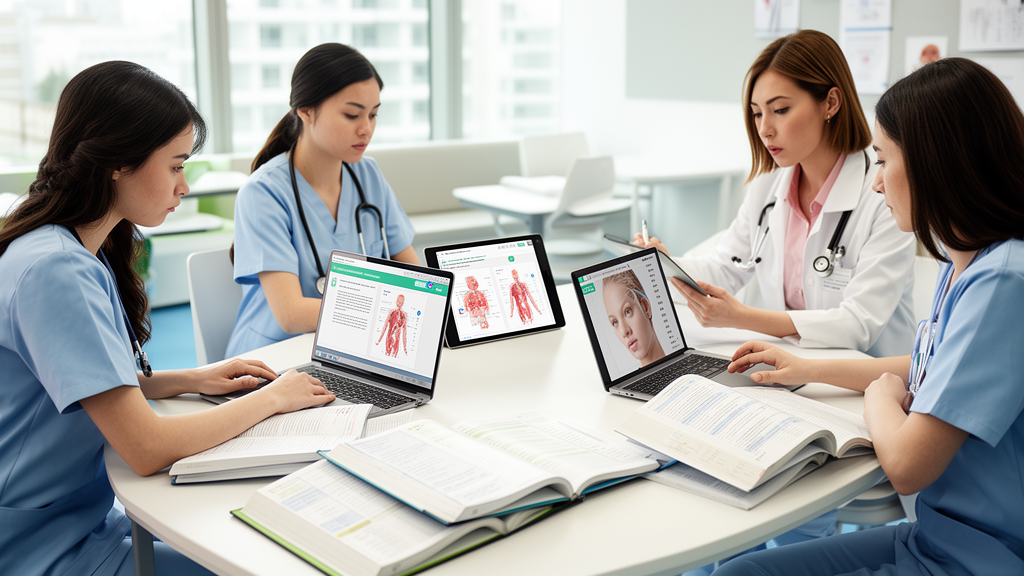
An entirely online flipped classroom model was associated with higher post-test infection-control knowledge scores among first-year nursing students in a quasi-experimental study of 76 learners. The study, reported in BMC Medical Education , compared the model with traditional online teacher-centered instruction. After researchers adjusted the analysis for students’ pre-test knowledge scores, the online flipped classroom group showed a statistically significant advantage in post-test performance, with a moderate effect size.
Findings for psychomotor skills were less conclusive: the flipped classroom group performed better in hand hygiene and sterile glove donning and doffing, but those differences did not remain statistically significant after correction for multiple comparisons. Participants were matched by gender and grade-point-average band before an independent statistician allocated 38 students each to the experimental and control groups. The experimental group followed a fully online flipped classroom model comprising asynchronous, interactive video learning with embedded formative questions and synchronous sessions that included case discussions, self-directed skill practice and peer-assessed skill demonstrations.
The control group received traditional online instruction delivered by teachers. Researchers assessed infection-control knowledge before and after the intervention through a knowledge test. Pre-test scores were similar between the groups, with no significant difference at p = 0.095.
The adjusted post-test comparison favored the flipped classroom group at p = 0.002, indicating a moderate difference in knowledge scores under the study conditions. Psychomotor performance was evaluated across four procedural domains: hand hygiene, sterile glove donning and doffing, personal protective equipment use and sterile field preparation. Two independent, blinded assessors judged student performance, and inter-rater reliability coefficients ranged from 0.721 to 0.989.
The experimental group had higher post-intervention performance in hand hygiene and sterile glove donning and doffing, with small-to-moderate effect sizes, but the adjusted between-group differences were no longer significant after correction for multiple comparisons. No significant differences were detected for personal protective equipment use or sterile field preparation. Interpretation of the psychomotor results is limited by the absence of a baseline skill assessment.
Unlike knowledge, which was measured before and after the intervention, skills were assessed only after the instructional period. The study therefore could not determine whether post-intervention differences reflected changes from a common starting point. The knowledge finding, which incorporated adjustment for pre-test scores, provides stronger support than the skill findings, while the procedural results remain preliminary.
The research also involved one cohort of first-year nursing students and a particular combination of asynchronous videos, synchronous case discussions, self-directed practice and peer assessment. The authors noted that adding brief in-person or simulation-based practice may help support psychomotor competency, but that combined approach was not tested in the study. Overall, the results identify a clear adjusted difference in infection-control knowledge and weaker, skill-specific evidence for differences in procedural performance following fully online flipped learning.
Subject of Research: Effects of fully online flipped classroom instruction on nursing students’ infection-control knowledge and psychomotor performance
Article Title: Effects of an online flipped classroom model on nursing students’ infection control knowledge and psychomotor skills
Article References: Yıldız, R., & Ünlüsoy Di̇nçer, N. (2026). Effects of an online flipped classroom model on nursing students’ infection control knowledge and psychomotor skills. BMC Medical Education. https://doi.org/10.1186/s12909-026-10667-z
Image Credits: AI Generated
DOI: 10.1186/s12909-026-10667-z
Keywords: nursing education, online learning, flipped classroom, infection control, knowledge assessment, hand hygiene, psychomotor skills, sterile procedures, quasi-experimental study, Effects, online, flipped
Cite Scienmag News
Courtney Benton. (October 22, 2026). Study links online flipped learning to higher nursing knowledge scores. Scienmag. https://scienmag.com/study-links-online-flipped-learning-to-higher-nursing-knowledge-scores/
Courtney Benton. "Study links online flipped learning to higher nursing knowledge scores." Scienmag, 22 October 2026, https://scienmag.com/study-links-online-flipped-learning-to-higher-nursing-knowledge-scores/. Accessed 22 October 2026.
Courtney Benton. "Study links online flipped learning to higher nursing knowledge scores." Scienmag. October 22, 2026. https://scienmag.com/study-links-online-flipped-learning-to-higher-nursing-knowledge-scores/


